


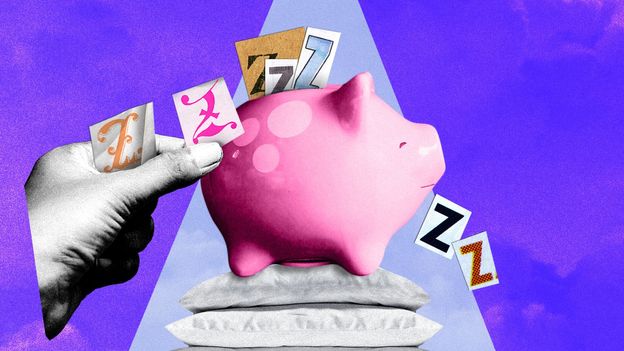
Is it really possible to ‘bank’ sleep for later?
One element researchers can’t agree on is whether sleep banking can be effective if you’re already in debt by being significantly sleep deprived. Rupp and her colleagues argue that it can, but state that “sleep debt should be paid off as soon as possible”.
Elizabeth Klerman, professor of neurology at Massachusetts General Hospital and Harvard Medical School, refutes this idea. “In order to show that sleep banking occurs, you need to show that somebody can sleep when they’re not tired, and there is no evidence for that,” she says, citing experiments where participants were given more time in bed but failed to sleep for longer. That’s why she argues that sleep is more like a credit card than a piggy bank. “In other words, you can build up a debt, but you can’t build up a surplus.”
Klerman is concerned that if people believe sleep banking is effective, they might feel it is ok to deprive themselves of sleep provided they have slept well previously. “That means they are depriving themselves now of something that is fundamentally important to their health and wellbeing,” she says. She is, however, in favour of catching up on lost sleep, but cautions against afternoon naps longer than 45 minutes as they can cause sleep inertia, the technical term for that groggy feeling when you wake up after a deep doze.
More like this:
• How gut microbes control your sleep
• Why do some people feel tired all the time?
• The forgotten habit of communal sleep
Regardless of whether we are banking sleep for the future or simply paying off a debt we owe ourselves, it appears an extra half an hour or so of kip each night does appear to be beneficial (unless you regularly need more than 12 hours a night, as it could be a sign of an underlying issue, Howell says).
First Appeared on
Source link






