


3 Years After F-22 Raptor Shot Down Chinese Spy Balloon, NATO’s Eastern Flank Rattled By Cigarette Balloons
After deploying lethal Iskander and Oreshnik missiles, Russia’s closest ally, Belarus, has now been accused of threatening NATO’s Eastern Flank with “packs of cigarettes.”
NATO is currently grappling with the threat posed by balloons filled with helium or hydrogen, launched frequently and intruding into the airspace over Lithuania and Poland.
The catch is that these balloons are not stuffed with explosives but with bundles of cigarettes, which are far cheaper in Belarus than in other European countries.
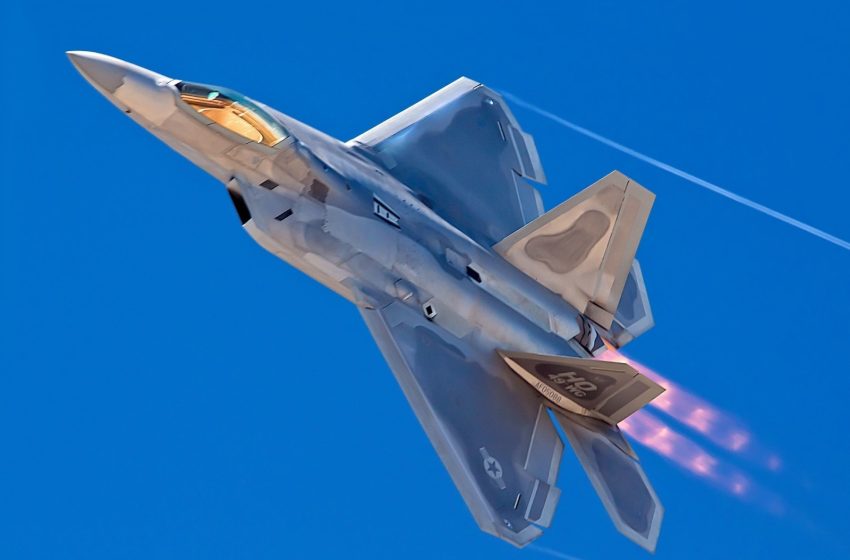
The development comes three years after the United States Air Force’s F-22 Raptor shot down a Chinese weather balloon using an AIM-9X Sidewinder missile, accusing it of spying over North America.
These balloons are low-tech, slow-moving, hard-to-track objects that often fly at altitudes up to several kilometres, triggering radar detections, airspace alerts, and temporary closures of civilian airports.
In the past week, two major incursions into Lithuania and Poland forced officials to shut down air traffic. For instance, about 42 balloon flights from neighbouring Belarus were reported over Lithuania on January 27, forcing the airport in the Lithuanian capital, Vilnius, to halt aviation operations repeatedly.
Separately, Poland’s military operational headquarters said Polish airspace was closed to civilian flights on the night of January 28 due to intrusions by “balloon-like objects.”
“No threat to the security of the airspace of the Republic of Poland was identified,” the operations command said on X, but it described the incident as “part of the catalogue of hybrid activities Poland is experiencing” along its eastern border.
Lithuania, on the other hand, has reported hundreds of balloon incursions into its airspace since at least the fall of 2025. The country was forced to declare a statewide emergency in December, following months of balloon-related incidents that caused nationwide disturbances and flight disruptions.
Belarus was accused of launching about 600 balloons in 2025 alone, mainly to smuggle cigarettes into Lithuania.
Russia has been rapidly deploying weapons in Belarus, such as the Iskander ballistic missile and the Oreshnik intermediate-range hypersonic missile, which is seen as a massive security threat by NATO, as recently reported by the EurAsian Times.
Belarus became a staging ground and logistics hub for Russian troops, which launched attacks on northern Ukraine from its territory. Since the invasion, Minsk and Moscow have struck a broad security deal, and NATO remains wary of the rising hostility from Minsk under Russian patronage.
Although the cigarette packs-laden balloons do not pose an explicit security threat, officials fear it is merely an intensification of Russia’s hybrid warfare against the European Union and NATO.
Belarus has repeatedly rejected these claims and said it does not want war with its neighbours.
Hybrid Warfare
Speaking in Brussels last week, the Polish Foreign Minister Radoslaw Sikorski charged Belarus with “waging a hybrid war” against the country.
The Minister said the incident demonstrated the “nature of the regime” led by Alexander Lukashenko in Minsk, and accused him of combining foreign policy with unlawful conduct.
The most acceptable explanation of hybrid attacks is that they involve a mix of military, cyber, economic, and psychological strategies to covertly attack or destabilise a target, and enable the attacker to evade responsibility.
Although its impact on Europe has not been severe, officials and experts warn that a bungled scheme may eventually cause widespread damage or even loss of lives.
Christina Harward, a Russia expert at the Institute for the Study of War, a Washington-based think tank, took a more alarmist tone, saying she prefers to describe the balloon flights and other Russian-linked incursions as “phase zero” of a conflict with NATO, setting the stage for a potential direct engagement. The goal is to sow confusion and discord within the alliance.” “The NATO states are having to sit down and figure out: Was this an attack?” she said. “Was it Russia? Was it truly cigarettes from smugglers?”
There is a looming concern that these balloons could be used to carry explosives or weapons in the future. “Who can guarantee that one day, instead of cigarettes, there will be no bombs, explosives, or anything else?” Laurynas Jonavicius, adviser to the Lithuanian Foreign Ministry and a lecturer at Vilnius University, was quoted as saying.

“So it’s really a security threat. It may be a criminal activity, but knowing the history of what the Belarusian regime does to Lithuania, it’s quite obvious that it’s also a test.”
During World War II, Japan used hydrogen-filled balloons carrying incendiary and explosive payloads to strike North America. These balloons were designed to ignite forest fires in the US Northwest and Canada, thereby diverting American resources from the Pacific theatre.
On its part, the Lithuanian government has expressed concern that these balloons could eventually be tailored to smuggle weapons into the country, as the government is actively mulling the option to mine the borders.
“It’s only a question of time when balloons will also be used to smuggle arms, weapons, other substances,” said Rustamas Liubajevas, Lithuania’s border commander.
Liubajevas cited “clear information” from Lithuania’s intelligence community to support his description of these threats as a “kinetic hybrid operation” that endangers the European Union (EU), adding that some of the balloons hover at 10 kilometres in altitude and reach speeds of up to 200 kilometres per hour, depending on the winds.
According to reports, the Lithuanian government had earlier offered a €1 million reward to any company that could figure out how to intercept the balloons, as they fly too high for air defences to shoot them down.
The Polish Armed Forces Operational Command noted that the balloons were intended to reconnoitre and test Polish air defences and their response times.
The balloon flights force NATO member states to activate protocols, scramble resources, thereby revealing response times and coordination among civil aviation authorities, border guards, military radar, and air policing units. It may also be used to gather data on sensor coverage or interception thresholds.
These balloon overflights have particularly worried the Eastern Flank states, following notable drone incursions last year. Several Russian drones flew into countries like Poland and Romania last fall, and a Russian MiG-31 entered Estonian airspace, prompting NATO to accuse Moscow of testing the alliance’s air defences.
“Every time a Russian drone or plane violates our airspace, there is a risk of escalation, unintended or not. Russia is gambling with war,” EU’s foreign policy chief Kaja Kallas said during a visit to Kyiv, following weeks of similar incidents.
Notably, several drone sightings were reported across NATO countries, including Germany, Sweden, and Denmark. The origins of these drones, however, could not be established.
For now, NATO chief Mark Rutte is in talks with Lithuania, and the alliance is “monitoring the situation closely” and “stands in full solidarity with its ally,” according to a statement released by NATO on January 30.
First Appeared on
Source link






