


Free HIV drugs save lives. Why one state is restricting access for thousands.
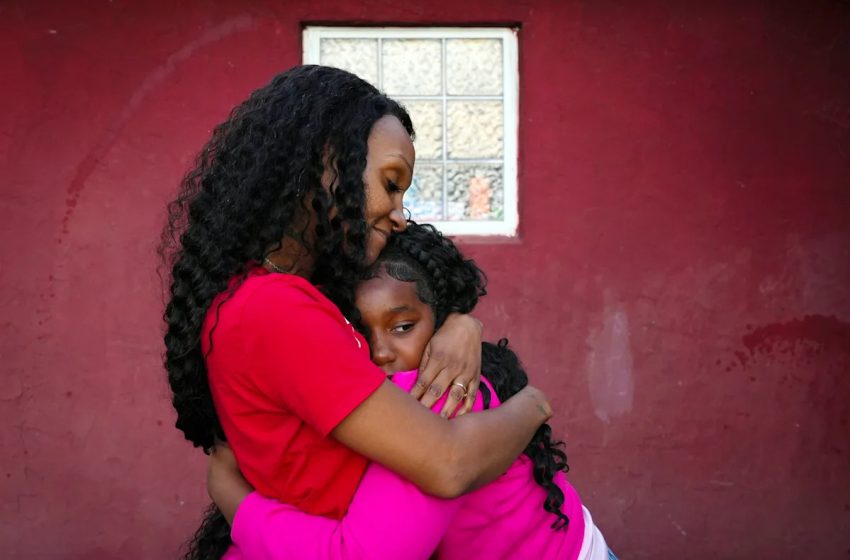
Medications have kept Tori Samuel’s HIV at bay for decades. The part-time worker from Ocala, Florida, has thrived, marrying her husband and giving birth to three children, none of whom have the virus.
But now she risks losing access as Florida prepares to drastically restrict eligibility for free medication, putting treatment potentially out of reach for thousands of residents. A caseworker told Samuel, 43, that her family’s household income of just over $3,800 a month is too much to receive assistance for pills that can cost more than $5,000 a month.
Her medications are provided by the Florida AIDS Drug Assistance Program, funded through a federal initiative that has long served as a lifeline for hundreds of thousands of Americans living with HIV who otherwise could not afford expensive antiretroviral drugs and care. State officials, citing financial difficulties, are lowering the income threshold to receive benefits and are no longer covering certain medications.
Samuel, whose job processing packages doesn’t offer health insurance, does not know how she’ll pay for her medication when the restrictions take effect March 1.
“It’s terrifying – and it’s not just me,” she said. “There’s so many other people who are affected.”
The National Alliance of State and Territorial AIDS Directors (NASTAD) estimates that 16,000 Floridians will lose assistance for either the drugs or premiums for health plans that cover them. The Jan. 8 announcement blindsided HIV nonprofits, public health advocates and doctors who are scrambling to help patients find coverage and stay on medications.
They call the Florida changes a dangerous move for public health at a time when millions of Americans – including people with HIV – are losing access to insurance. A new federal law will limit Medicaid eligibility, and some Americans can no longer pay for Affordable Care Act health plans because of the expiration of covid-era subsidies. And some advocates fear other red states could use Florida as a blueprint to pare back their drug-assistance programs.
“People forget about the early days of the epidemic, where without access to medication, people died,” Harold Phillips, who headed the White House Office of National AIDS Policy under President Joe Biden and now serves as executive director of NMAC, an organization that advocates for people living with the virus. “Those individuals who are on medication now need to stay on medication.”
The Florida health department said in a statement that the changes in the program stem from rising health care costs and a lack of sufficient federal funding. The shift will prevent a shortfall of $120 million and “ensure resources to the greatest number of individuals within our funding constraints,” the agency said. It did not answer questions about how the state managed the program.
Florida Surgeon General Joseph A. Ladapo told state senators on Jan. 14 that the program’s rising costs stemmed from this year’s expiration of subsidies for ACA plans, which resulted in higher premiums nationwide. He said the drug assistance program’s financial state “may become a crisis without intervention.”
The AIDS Healthcare Foundation, which provides care for thousands of Floridians, filed an administrative petition on Tuesday seeking to overturn the new eligibility rules, arguing that Florida illegally changed them. The health department did not respond to a request for comment on the petition.
LGBTQ+ groups have criticized cuts to the HIV treatment program as the latest way the administration of Gov. Ron DeSantis (R) is marginalizing the community. Transgender women and men who have sex with men disproportionately have HIV, which spreads easily in smaller communities.
Michael Rajner, a Fort Lauderdale activist who said he receives assistance through the program and has met with officials in Tallahassee to push for its restoration, said that past anti-diversity measures such as limiting discussions of LGTBQ+ issues in schools have fueled activist fears that “the program’s collapse was intentional.”
DeSantis’s office referred questions about the program to the health department. The agency did not respond to a request for comment on criticism from LGBTQ+ activists.
Asked about Florida, the U.S. Health Resources and Services Administration, which oversees federal funding for HIV treatment, said it is working to ensure states have the support to “maximize all available resources and statements” to help people with HIV access medication.
– – –
Mounting drug costs
Florida’s program is funded through the landmark 1990 Ryan White federal law, which assists more than 500,000 people diagnosed with HIV or AIDS. The federal government provides grants based on the number of people with HIV reported living in the state, which in turn provides a smaller share of funds.
Medical advances mean HIV is no longer a death sentence. Demand for care has grown as more people live longer with the virus, driving up costs for state drug assistance programs.
In 2010, as Florida officials grappled with a strained budget and a surge in unemployment, the state slashed ADAP funding and stopped accepting new participants as a waiting list swelled to nearly 1,500. Drug companies stepped in to help with low-cost medications.
The health department considered restricting eligibility the next year, but backed down after protests from Floridians living with HIV and others, including singer Elton John, who runs a foundation dedicated to HIV care and awareness.
Now, Floridians earning up to 400 percent of the federal poverty line, about $64,000, qualify for the drug assistance program. Starting March 1, only people earning up to 130 percent – about $21,000 – will be eligible.
Democratic state lawmakers are calling on DeSantis to stabilize the program with rainy-day funds, or declare a public health crisis to use emergency dollars. “I don’t understand how there can be such a tremendous shortfall for a program where funding is provided by the federal government,” said Florida Sen. Carlos Guillermo Smith (D).
HIV remains a persistent problem, particularly in the South. According to the most recent federal data, Florida ranked behind only Georgia and Washington, D.C., in its rate of new cases.
Florida is not the only state grappling with costs of HIV treatment, said Tim Horn, director of medication access for NASTAD, whose members administer such programs. The overall federal budget has not changed for the program, but more states are competing for a limited pool of supplemental and emergency grants, he said. Some states have imposed more modest cuts – for example, Rhode Island recently tightened eligibility from 500 percent of the poverty line to 400, Horn said.
“We haven’t seen a change this extreme in years,” Horn said of Florida.
– – –
Costs of care
The cuts to Florida’s drug assistance program, which also pays for insurance premiums, also places patients at risk of losing their health coverage.
The monthly costs will be prohibitive for patients such as Shawn Tinsley, 53, of Fort Lauderdale, an activist for Black women with HIV. Her $1,372-a-month ACA plan is paid by Florida’s program, which covers medications that cost more than $4,100 a month.
Tinsley was forced to stop working as a self-employed long-haul trucker because of other health issues – for which she also needs care. “My health care is out the window,” she said.
Tinsley and others losing subsidies will have to turn to community health clinics or medical facilities supported by separate funding under the Ryan White law for care. But experts worry those facilities won’t be able to absorb such an influx, prompting patients to stop taking medications that suppress their viral loads. They may spread HIV through unprotected sex or sharing needles after their viral loads rebound, causing outbreaks.
Interruptions in medication are also dangerous because HIV can mutate quickly and become drug resistant when viral levels rebound in the body, said Paul Arons, a former medical director for the Florida health department’s HIV/AIDS program. “That’s exactly the opposite of where public health should be going,” he said.
Florida will no longer cover the medication Biktarvy, often preferred by patients because it combines three antiretroviral medications into one single pill, for any residents. Another drug, Descovy, will be limited to patients with failing kidneys. Asked if it would lower prices, drug manufacturer Gilead Sciences, which makes both drugs, said in a statement that it committed to not changing prices for state programs through 2026 and already provides significant discounts to Florida’s.
Across the state, patients are frantically planning with caseworkers, doctors and activists about how to secure Biktarvy. Some patients with extra pills are offering to share with those who may be cut off, Miami HIV activist Maria Mejia said.
In Southwest Florida, a 44-year-old house cleaner named Bobbie said she was stunned when she received a letter from the health department informing her she might no longer be eligible. She previously lived in Iowa and California and always got medications through the state drug assistance programs while working restaurant and hotel jobs.
Bobbie, who spoke on the condition that her last name not be used because she worries clients will fire her if they learn she has HIV, said she will try to get on her husband’s insurance at his new job. But she has no idea whether Biktarvy will be covered.
“I’m really struggling mentally with this,” she said.
—
Video Embed Code
Video: Florida’s rollback of HIV medication assistance threatens to cut off access to life-changing drugs for thousands of residents, including Ocala mother Tori Samuel, for whom medication has meant a healthy marriage and three children born without HIV.(c) 2026 , The Washington Post
Embed code:
Related Content
Brace for brutal cold as bomb cyclone drives bitter winds into D.C.
Crossing guard’s assist prompts $8K in donations: ‘I like being a helper’
A teddy bear, an ice skate, a wife’s note: DCA crash relics return home
First Appeared on
Source link






