


What Bad Bunny’s Grammy wins mean for Latinos in the US
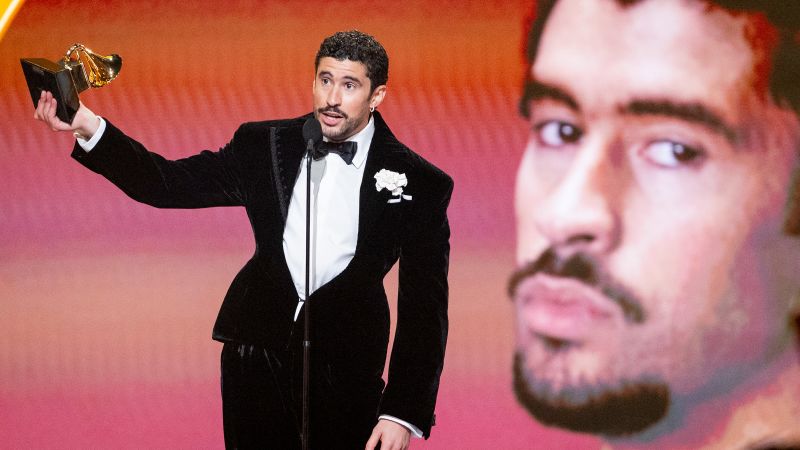
When Bad Bunny’s album “Debí Tirar Más Fotos” won album of the year at this year’s Grammy Awards, the moment changed history.
For the first time, a Spanish-language album took the Recording Academy’s most prestigious prize in an industry that has long treated Latino music as a category, not a centerpiece.
For millions of US Latinos, the win from Bad Bunny – who on Sunday will headline the Super Bowl halftime show – is more than a musical milestone. It is an affirmation of visibility, and proof of belonging.
“It’s beyond inspirational,” said Jeffrey Vargas, a Nuyorican from Bushwick, Brooklyn.
“It’s validating and ground-shifting in a moment when it feels like we’re all under attack. The album was more than a vibe. It was a spiritual uplift and a balm for the aching soul,” Vargas told CNN.
Across social media and Latino communities nationwide, similar sentiments poured in: pride mixed with relief, celebration layered with resilience, after Bad Bunny clinched three Grammys total this weekend, including best global music performance.
“As a Puerto Rican woman, I am beyond proud to see our culture, language, and history elevated globally. We are joyous, defenders of humanity, and our music is infectious,” said Lucria Ortiz, a Puerto Rican community leader from New Bedford, Massachusetts.
For many Latinos, Bad Bunny’s success has always felt intimate. The Puerto Rico-born superstar never switched languages to break into the mainstream. He never softened his accent. He never diluted his musical and cultural references.
“Instead of watering himself down to be more palatable, he added more sofrito to the pot,” said Liz Arreola, a Mexican-American content creator based in Houston, referencing the popular Caribbean/Latino seasoning blend used to build flavor.
In her social media post, Arreola said she was incredibly proud of Bad Bunny’s win and the dignified way he is representing Puerto Ricans and Latinos on the global stage.
“You can earn the world’s respect by being authentic to yourself, your people, your roots, your culture, your music, your island. That album was so authentic and so real, and it was precisely that authenticity that made the rest of the world connect and fall in love with it,” Arreola said in the post.
For decades, Latino artists have been told that “crossing over” required crossing out parts of themselves: less Spanish, fewer regional sounds, more “universal” themes.
But Bad Bunny did the exact opposite. He centered Caribbean rhythms, street slang and political commentary in an unapologetic celebration of Latino and Puerto Rican pride, which carried over into his acceptance speeches on Sunday night.
That matters, says longtime political consultant, activist, philanthropist and producer Luis Miranda.
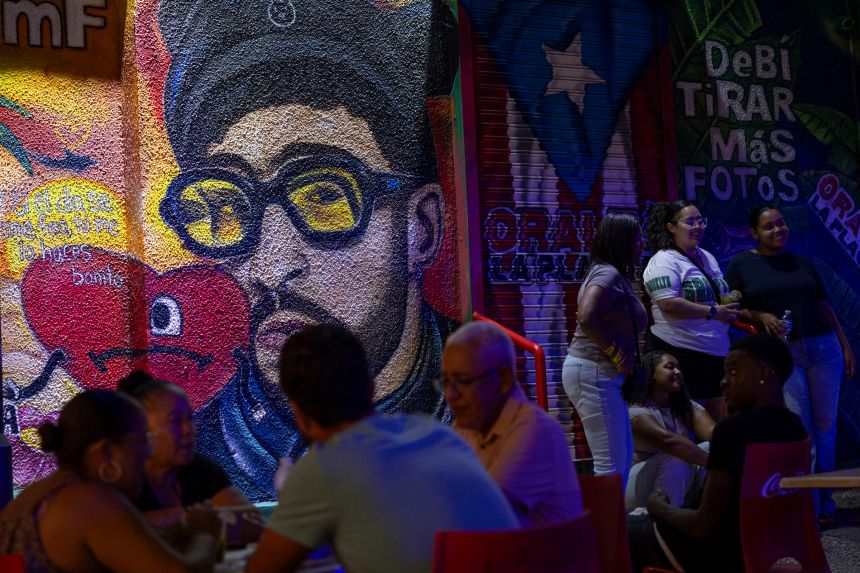
“Bad Bunny’s win, and ‘Buena Vista Social Club’s,’ is recognition that Spanish-language music is part of the fabric of this country,” said Miranda, a producer of the hit Broadway musical whose original Spanish-language cast recording won the 2026 Grammy for best musical theater album.
“Our music, our language, our people, have been here forever and will continue to thrive, forever,” Miranda said.
The artist’s victory also comes at a time when Latino communities are facing intensified political rhetoric, immigration crackdowns, and perceived cultural erasure.
Accepting the award for best música urbana album, Bad Bunny began his speech saying, “Before I say thanks to God, I’m gonna say: ICE out! We’re not savage, we’re not animals, we’re not aliens. We are humans and we are Americans.”
He added: “The hate gets more powerful with more hate. The only thing that is more powerful than hate is love. So, please, we need to be different. If we fight, we have to do it with love.”
In that context, his wins feel even more urgent, making it not just about streams, sales, sold-out concerts or even awards, but about dignity and humanity.
“We Latinos are being demonized in this moment. We all needed a reminder that centering love right now is exactly what America needs,” said Ortiz.
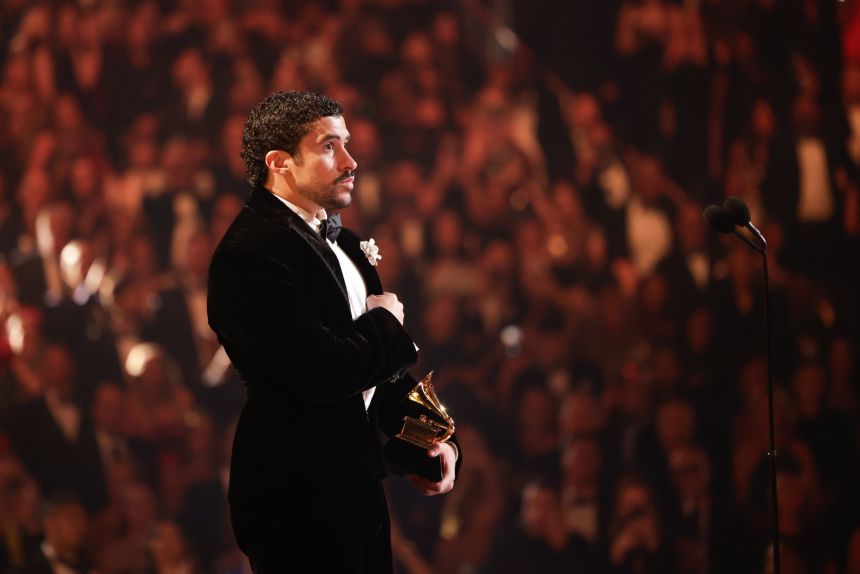
His acceptance speech for best album, delivered almost entirely in Spanish, emphasized immigrants, dreamers, and those forced to leave home in search of opportunity.
For many viewers, his words echoed the experiences of immigrants living in the United States.
“On a global stage, his voice joined that of millions of immigrants who today live in fear, but also with hope. It wasn’t just an award. it was an act of solidarity with our community,” posted the staff of Noticias Para Inmigrantes, a media organization serving Latino immigrants in the US.
First Appeared on
Source link






