


The New Mexico cave expanding our search for alien life
When cave biologist Hazel Barton ventured into the pitch darkness, the last thing she expected to find were organisms harnessing energy from light. This new understanding of photosynthesis in the dark, she realised, means life elsewhere in the Universe could exist in places we never thought possible.
“The wall was bright green. It was the most iridescent green you’d ever seen, and yet the microbes were living in complete darkness,” says Barton, professor of geological sciences at the University of Alabama.
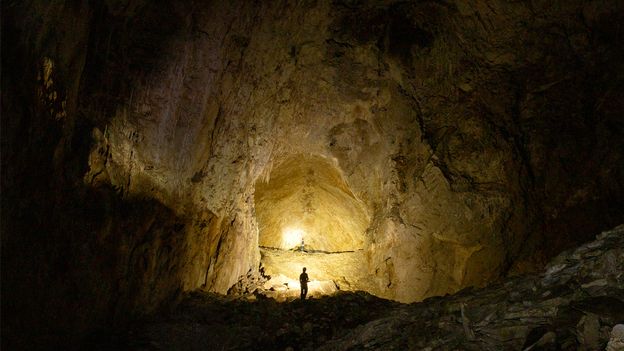
Beneath the deep rocky canyons of the Chihuahuan Desert in southern New Mexico, lies a network of 119 caves. The caves, part of the Carlsbad Caverns National Park, formed four to 11 million years ago due to sulphuric acid dissolving the limestone rocks.
The primary attraction of the park is the show cave, Carlsbad Cavern. Here, glittering stalactites cling to the roof of the Big Room, a huge underground chamber measuring almost 4,000ft (1,220m) long and 625ft (191m) wide.
“The Carlsbad cavern is very easily accessible. It’s a very large limestone cave that tourists can visit that has steps and ladders and everyone can go down,” says Lars Behrendt, a microbial biologist at Uppsala University. Parts of the cave system, he adds, are even wheelchair accessible.
First Appeared on
Source link






