



Inside Switzerland’s extraordinary medieval library
Apart from its vast tomes, what makes the library so compelling is its age. Its origins date to the early 7th Century, when the Irish missionary Saint Gall founded a hermitage on this site, later giving rise to the abbey. Although the original library was replaced in 1767 by the present Baroque hall, the continuity is remarkable. Today, the library and its two vast underground depositories contain one of the world’s most valuable bodies of written heritage, including 160,000 manuscripts and early printed works, including more than 2,100 medieval codices – some 400 of them written before the year 1000.
Among these are the largest assemblage of Irish manuscripts in mainland Europe, brought to St Gallen in the early Middle Ages when Irish pilgrims visited on their way to Rome, leaving gifts at St Gall’s tomb. Equally rich for academics is the archive of old High German manuscripts, containing the earliest examples of the language preserved in writing. Every book has its own story, and together they express the spiritual and sublime power of the written word.
The other most impressive thing about the library, according to Holenstein, is how the Abbey Library of St Gallen managed to survive centuries of religious and political upheaval. In England, Wales and Ireland in the mid-16th Century, Henry VIII dismantled more than 800 monasteries to seize their wealth, with library collections confiscated and redistributed. During the French Revolution and German mediatisation at the turn of the 18th century, church property was again seized and nationalised.
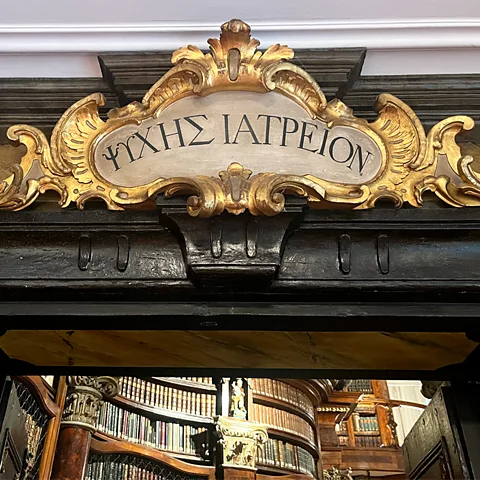 Mike MacEacheran
But thanks to the foresight of St Gallen’s librarians, the holdings survived the Protestant Reformation unscathed. Even between 1797 and 1805, when the abbey itself was dissolved, its holdings were fiercely guarded, transferred and rescued by the Catholic denomination within the newly founded Canton of St Gallen.
First Appeared on
Source link






