


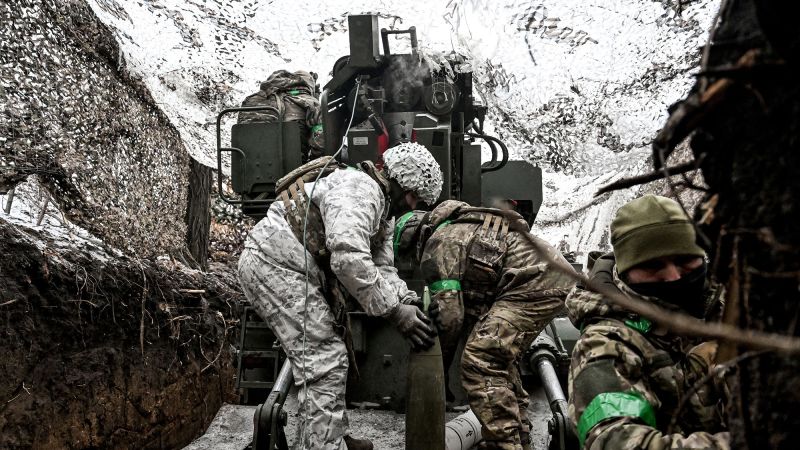
Ukraine’s strategy is to kill 50,000 Russian soldiers a month. A sign of confidence or an indicator of weakness?
Volodymyr Zelensky has been talking up Russia’s battlefield fatalities and has asked his new defense minister to make it a priority.
In December alone, more than 35,000 Russian soldiers were killed or seriously wounded, Ukraine’s leader says, and the aim should be to raise the number even higher – to 50,000 per month.
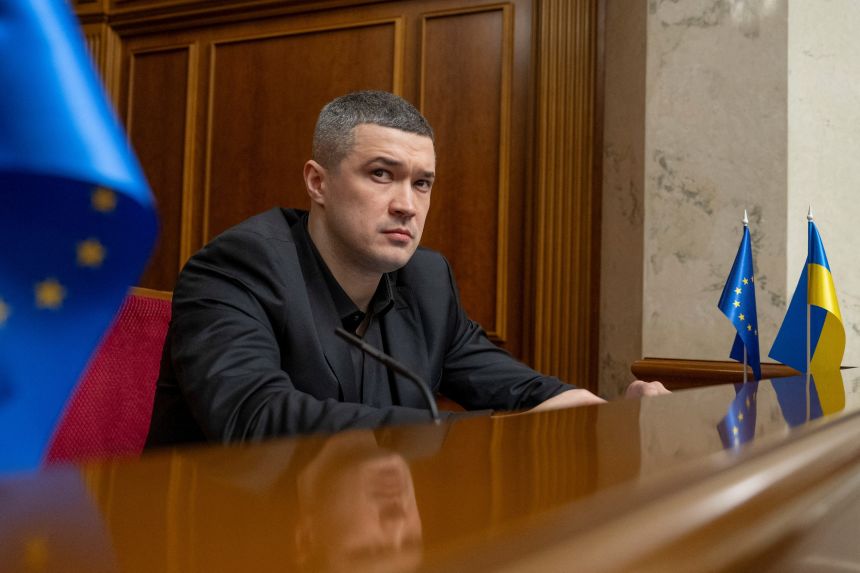
“Make the cost of war for Russia one it cannot sustain, thereby forcing peace through strength” – this was the task set him by the president, Mykhailo Fedorov told reporters in his first briefing as Defense Minister.
The suggestion that Russia is suffering heavy losses is not new. A new report last week estimated that 1.2 million Russians have either been killed, wounded or are missing since the full-scale invasion of Ukraine almost four years ago – the highest casualty figure suffered by a major military power since World War II. The report put the number of Ukrainian casualties between 500,000 and 600,000.
“The data suggests Russia is hardly winning,” the report’s authors wrote.
Maybe not, but as senior officials from Ukraine, Russia and the United States prepare for the next round of direct talks in Abu Dhabi on Wednesday, it would be a mistake for Ukraine’s supporters to get carried away.
“Highlighting the huge numbers of Russian fatalities is an indicator that Ukraine’s main strategy is attrition. But we need more than that if we are going to move the war dynamics in a better direction,” a former Ukrainian official told CNN.
On the one hand, focusing on headline-grabbing numbers offers important perspective on Ukraine’s refusal to give up Donetsk as part of any “peace” deal with Russia.
The logic behind Kyiv’s position is simple: Very few Ukrainians believe Putin has any goal other than the total subjugation of their country. So, why hand over territory for nothing if Ukraine can expect to kill hundreds of thousands of Russian soldiers while Moscow keeps trying to capture Donetsk by force?
Ukrainian soldiers still hold about 20% of the eastern region, which includes heavily fortified cities like Kramatorsk and Sloviansk, and latest estimates by the Institute for the Study of War suggest it could be another 18 months before Russia captures it all.
If those Russian soldiers are not killed fighting – the logic continues – they will remain in occupied Ukrainian territory ready to restart the war, from a more advantageous position, just as soon as the Kremlin has contrived a pretext to do so.
Very few in Ukraine believe Putin will drop his territorial demands, and most have lost faith that US President Donald Trump will apply necessary pressure to make him change his mind.
“Despite the government negotiating in good faith, many think the whole process is done to ensure US government support,” the former Ukrainian official said.
“People are exceedingly skeptical about the negotiating process.”
But if there is no confidence that negotiations are headed anywhere, what about Ukraine’s battlefield strategy? Is piling up the other side’s body bags the best way forward?
An American former fighter, Ryan O’Leary, who led an international volunteer unit called Chosen Company, believes not, triggering a vigorous debate after he laid out his arguments in a social media post.
He took issue with the much vaunted “e-points” scheme, whereby Ukraine’s units earn points for each Russian soldier killed or piece of materiel destroyed. The points are exchanged for new equipment, and the Defense Ministry says the scheme provides a wealth of data that helps shape future plans.
But O’Leary suggested they create the wrong incentives, causing Ukrainian commanders to prioritize more straightforward drone strikes against infantry targets around the line of combat, rather than tougher but more significant deep strikes against Russian logistics – like vehicles and communication hubs, as well as Russian drone crews operating from rear positions.
“Drone warfare is not about who hits more soldiers today … Operational depth is where wars are decided. If the enemy can move fuel, ammo, drones, crews, and repair vehicles 10 to 40 km behind the line without fear, they own depth even if they lose 5x the men in trenches,” O’Leary wrote on X.
In truth, his accusation lays bare Ukraine’s two key structural challenges.
Firstly, in drone technology, operating tactics and countermeasures, Russia has caught up and is quite possibly ahead.
Writing on Facebook, Oleksandr Karpyuk, an aerial reconnaissance officer in the 59th Separate Assault Brigade, complained that Ukraine had failed to capitalize on its early advantage in this space, particularly by not diversifying the number of radio frequencies used by its drones to transmit signals.
Consequently, once Russia improved its electronic warfare (EW) technologies, it needed to jam just two frequencies to put a significant dent in Ukraine’s ability to fly drones behind Russian lines.
In addition, Karpyuk writes, Russia’s tactical air defense crews are much improved, and Moscow continues to benefit from taking a lead in developing fiber-optic drones, which are impervious to Ukraine’s own EW countermeasures, because they do not transmit signals.
And then there is Ukraine’s manpower issue.
The infantry shortage is well known. Rob Lee of the Foreign Policy Research Institute estimates there are fewer than ten Ukrainian infantry soldiers per kilometer of front line. He also estimates that most brigades have at most 10% of their total personnel in the infantry. Traditionally, that number would be upwards of 30%.
Lee told KI Insights, a strategic intelligence unit powered by the Kyiv Independent, that even those low numbers have been enough to prevent a major breakthrough by Russian forces, which have succeeded only in making small, incremental advances.
But in a war where drones – not infantry – matter most, it is Ukraine’s shortfalls in drone crews that are most pressing, especially in the key battle for operational depth – the destruction of targets up to 25 miles (40 kilometers) behind the line of combat.
In a forthright defense of the fighters under his command, the head of Ukraine’s Unmanned Aerial Vehicle (UAV) Forces, Robert Brovdi, said last week there needed to be a threefold increase in the number of drone operators. Just 30% of the frontline – which stretches 745 miles – is currently covered, he wrote on his Facebook page.
Fedorov, the new defense minister, acknowledges the scale of the problem, telling the Ukrainian parliament some 2 million people are ignoring their call-up papers, while 200,000 others have deserted.
Much now rests on his ability to address the manpower issue and to regain Ukraine’s technical edge, all the while ensuring he is hitting Zelensky’s targets.
“Unless we constantly stay ahead of Russians in technology and battle tactics, I cannot say the chance we will prevail is high,” cautioned the former Ukrainian official.
CNN’s Victoria Butenko and Daria Tarasova-Markina in Kyiv contributed to this report.
First Appeared on
Source link






