


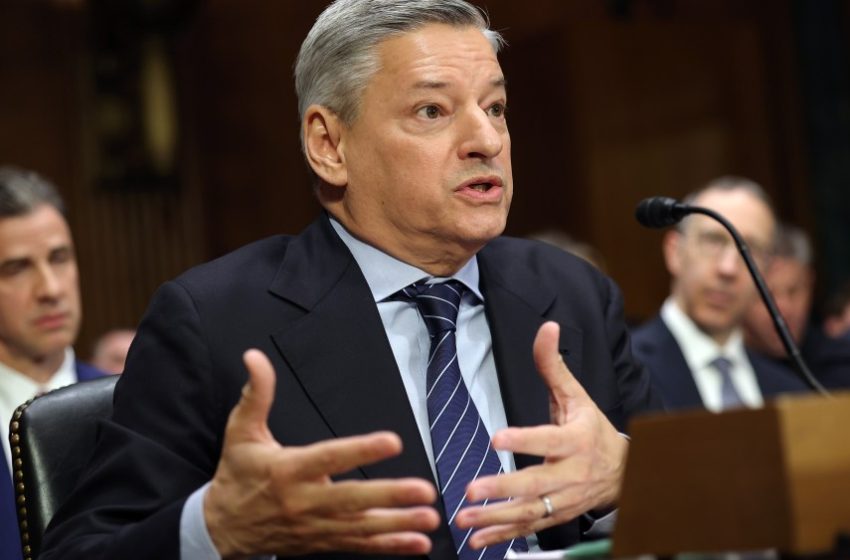
Ted Sarandos Defends Netflix-Warner Bros Deal at Senate Hearing
Netflix co-CEO Ted Sarandos was in the hot seat defending the streaming giant’s $83 billion deal for Warner Bros. at a Senate hearing Tuesday, amid pointed questions from lawmakers about the threat the pact poses to competition, jobs and streaming prices.
The hearing, “Examining the Competitive Impact of the Proposed Netflix-Warner Brothers Transaction,” was called by the Senate Judiciary Committee’s Subcommittee on Antitrust, Competition Policy and Consumer Rights. It ran just over two hours.
Sen. Mike Lee (R-Utah), the subcommittee’s chair, opened the hearing by saying the deal raises “antitrust concerns” that warrant scrutiny. Netflix and HBO Max both offer subscription streaming services, and Netflix and Warner Bros. compete to produce TV shows and films, he said. Netflix, with WB’s library and production capabilities, would have “the incentive and the ability to put rivals at a disadvantage” by limiting content licensing, he said, and it could starve movie theaters of films.
Through the deal, Netflix could become the “one platform to rule them all,” Lee said.
Sen. Cory Booker (D-New Jersey), the subcommittee’s ranking member, said the sale of Warner Bros. “to any competitor” raises concerns about competition and could have a negative impact on “tens of thousands” of workers in Hollywood by reducing the amount of TV shows and films that get produced. “We know Netflix’s power,” he said, noting that he streams a lot of content on the service. “I have concerns about Netflix gaining more power over consumers” and leaving them with “fewer options.”
Sarandos, in his opening remarks, asserted that a combined Netflix-Warner Bros. “will strengthen the American entertainment industry, preserve choice and value for consumers, and give creators more opportunities.”
SEE ALSO: Ted Sarandos Hedges on Netflix Residual Payments at Senate Hearing: ‘Not a Yes or No’
According to Sarandos, Netflix’s original productions have generated 155,000 jobs, with productions in all 50 states, and the company has contributed over $225 billion to the U.S. economy over the last 10 years. He said the Warner Bros. businesses that Netflix is acquiring are “very different from ours,” and that Netflix plans to operate those businesses “largely as they are today.”
“We’re buying a company that has assets we do not,” said Sarandos, reiterating Netflix’s pledge to preserve a 45-day theatrical window for WB’s movies. He said Netflix-WB does not have “the Noah’s ark problem,” where there are two of everything “and you cut everything in half.”
Sarandos insisted Netflix and HBO Max are complementary, and claimed that 80% of HBO Max subscribers also subscribe to Netflix. “We will give consumers more content for less.” He also said Netflix faces increasing competition from “deep-pocketed tech companies trying to run away with the TV business,” naming Google’s YouTube, Apple and Amazon’s Prime Video. He noted that Netflix’s share of U.S. TV viewership for December was 9% and that with HBO Max will be around 10%, still behind YouTube’s share of TV viewing. Among premium streaming services, according to Sarandos, Netflix has about 18% share in the U.S. while HBO Max has about 3%, meaning the combination would hold about 21%.
On Dec. 5, Netflix and Warner Bros. Discovery announced their megadeal under which Netflix will acquire Warner Bros. Discovery’s studios and HBO Max for $27.75/share. Two weeks ago, Netflix switched to an all-cash offer, replacing its previous cash-and-stock terms — a change driven by pressure from David Ellison’s Paramount Skydance, which has been pursuing a hostile takeover attempt of Warner Bros. Discovery with what it alleges is a superior deal for WBD shareholders.
Booker said he invited David Ellison to the hearing given his company’s $108 billion hostile bid — but that Paramount declined to participate, citing the WBD’s board rejection of its offer.
Lee asked Sarandos why Netflix needs to buy WB’s studios, if Netflix is already planning to spend $20 billion on original and licensed content in 2026, up 10% from last year. “Warner Bros. is both a competitor and a supplier,” Sarandos said. “Our history is about adding more” content and choices for consumers.”
Lee also questioned Sarandos’ assertion that YouTube is a competitor, given that YouTube doesn’t fund original content directly. “They’re not in the same business,” the senator said, pointing out YouTube doesn’t require a subscription or login. Sarandos said Netflix and YouTube are competing for the same content, viewers and ad dollars, and he pointed to “Iron Lung,” a self-financed movie from YouTube creator Markiplier, which led the box office over the weekend.
Booker asked Sarandos why there was a “universal set of concerns, if not fears” from theater owners, producers, writers and others that the Netflix-WB deal would be harmful to their livelihoods. Sarandos responded that Netflix has a track record of growing content spending and productions, and said “I’m proud” that Netflix has a business model that ensures “the ongoing production and viewing of movies.” Booker commented that the market trend is “away from the theater experience,” to which Sarandos said, “Now that we are in the theatrical business [by buying Warner Bros.], we want to win in the theatrical business.”
Booker also questioned Sarandos about the exec’s meeting with President Trump and asked whether it was appropriate that the U.S. president insert himself in the government review of Netflix’s WB deal. Sarandos said he met with Trump “a few times,” largely to discuss the state of the entertainment industry and ways to protect and create U.S. jobs. “He asked about the [Warner Bros.] deal, I gave him a general overview, that was it,” Sarandos said. “It was a very small part of the meeting.” Sarandos said he was confident the deal would be appropriately reviewed by U.S. regulators.
Booker also raised the point that Trump bought at least $1 million in bonds in both Netflix and Warner Bros. Discovery within the two weeks following the companies’ deal announcement. Sarandos said he “can’t comment on the president’s personal finances” but he agreed that anyone with inside information about a company should not be trading its stock.
Sen. Amy Klobuchar (D-Minnesota) asked Sarandos what kinds of guarantees Netflix could offer to keep streaming “affordable” if it ends up owning HBO Max, given that Netflix raised prices in the U.S. last year while it also added more subscribers. Sarandos replied that streaming remains a very competitive sector and that consumers can vote with their wallets: “We are a one-click cancel.”
Several Republican senators used the occasion to attack Netflix’s “woke” content, wondering aloud why the U.S. should approve the Warner Bros. deal and give Sarandos’ company even more power. Sen. Ted Cruz (R-Texas) alleged that “Netflix has long been a left-wing company”; he noted that former Obama administration official Susan Rice is on Netflix’s board and alleged Netflix paid the Obamas “$50 million” to produce no “discernible” content. (The Obamas’ Higher Ground Productions has produced 23 projects for Netflix, including “Leave the World Behind,” “Rustin” and Oscar-winning documentary “American Factory.”)
Why wouldn’t Netflix be even more empowered to produce and distribute leftist “propaganda” if it wins the Warner Bros. deal? Sarandos answered that “we would fail” if Netflix pushed “propaganda” instead of entertaining its customers.
During the hearing Sen. Josh Hawley (R-Missouri), asked Sarandos why Netflix “promotes a transgender ideology” in its children’s programming, claiming that almost half of the content for minors on Netflix promotes such an agenda.
Sarandos responded, “Netflix has no political agenda of any kind,” adding that the company streams a broad range of content for a wide diversity of tastes. Regarding the senator’s claim that nearly half the kids’ content on Netflix pushes a transgender agenda, Sarandos said, “I don’t have any idea where that comes from.” He also said that Netflix offers parental controls to restrict their kids’ viewing. Later in the hearing, Sarandos commented, “We also value the First Amendment.”
Netflix and WBD say that their deal will preserve industry jobs, as Netflix doesn’t have a studio operation of the size of Warner Bros., and they’ve pointed to Paramount Skydance’s claim that it could realize $6 billion in cost savings through the acquisition of Warner Bros. Discovery as predicated on massive layoffs. Sarandos said Netflix consumers spend on average 35 cents per hour of content viewed, whereas for Paramount+ that number is more than 90 cents per hour.
In addition, Netflix asserts that retail streaming prices will go down, arguing that consumers see HBO Max as complementary to Netflix’s service, and as such competitors like Amazon’s Prime Video and Disney+/Hulu will be forced to keep pricing in check to fight for market share.
Also testifying at the hearing was Bruce Campbell, WBD’s chief revenue and strategy officer. He said the deal will give Warner Bros.’ studios business access to Netflix’s distribution capabilities, while giving Netflix’s “nascent” productions operations a boost through WB’s studios.
Campbell said Netflix will be able to offer Netflix and HBO Max streaming services together “at a discount” and that Netflix will be able to put more Warner Bros. content on its core streaming offering: “I think that too will be pro-consumer.”
Netflix and WBD say they have proactively reached out to antitrust regulators in the U.S. and Europe to make their case for why the deal should go through. Indeed, the companies’ lawyers reached out to representatives in the Justice Department’s antitrust division the day Netflix and Warner Bros. Discovery announced their pact.
First Appeared on
Source link






