



Banning Leaded Gas Was A Good Thing, Says Century-Old Wad Of Hair
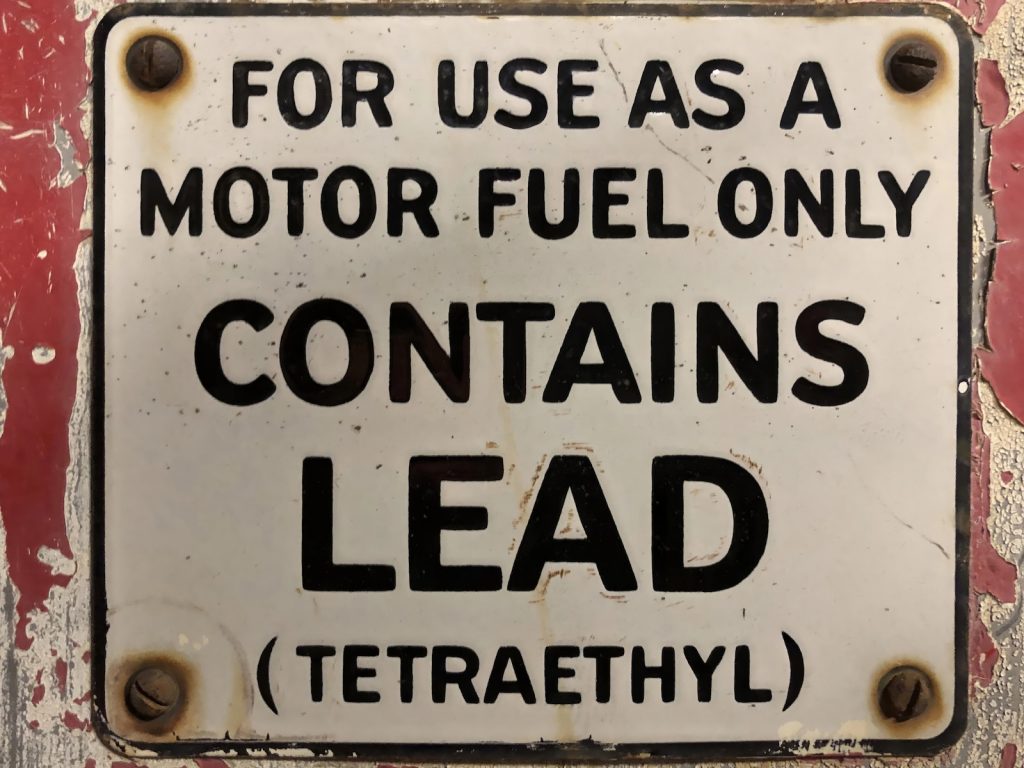
Humans have known that lead is bad for our health for centuries. But in a quest to improve engine performance and alleviate engine knock in the 1920s, during the dawn of the mass-produced automobile, a few scientists at General Motors discovered that lead was pretty helpful. The result was decades of leaded gasoline use globally.
It wasn’t until 1970 that the Environmental Protection Agency (EPA) officially declared that lead from automobile exhaust was a direct threat to human health. In 1973, the agency began to impose regulations on leaded gasoline, which would lead to its eventual phase-out from gas stations in America by 1996.

Amazingly, it was only in 2021 that Algeria, the last country to allow leaded gasoline, stopped selling the stuff at fueling stations. But those toxic fumes aren’t totally gone from our air. There are still nearly a quarter-million airplanes in the world that still use leaded gas.
Thanks to a study released by the University of Utah, we now have proof that the reduction in lead in gasoline mandated by the EPA has led to decreased exposure to people. The evidence, interestingly, was found by analyzing 100 years’ worth of human hair.
Here’s How They Got The Data
The study, published yesterday in the Proceedings of the National Academy of Sciences journal, analyzed strands of hair from Salt Lake City residents, both children and adults, that were up to 100 years old, that the university had in its archives. Unsurprisingly, the amount of lead in hair dropped significantly after the EPA stepped in in the ’70s. From the study:
Concentrations of Pb in human hair from the Salt Lake City region population had very high levels from 1916 to 1969 before the establishment of the EPA, with individual values ranging between 28 and 100 ppm. In the decades of the 1970s through the 1990s, the average values declined from about 50 ppm in the 1970s to 10 ppm in the 1990s. The decline has continued to the present day with average values post-2020 of <1 ppm. Therefore, the lead concentrations in hair have declined by about 2 orders of magnitude since the establishment of EPA and implementation of measures to reduce human exposure to Pb.
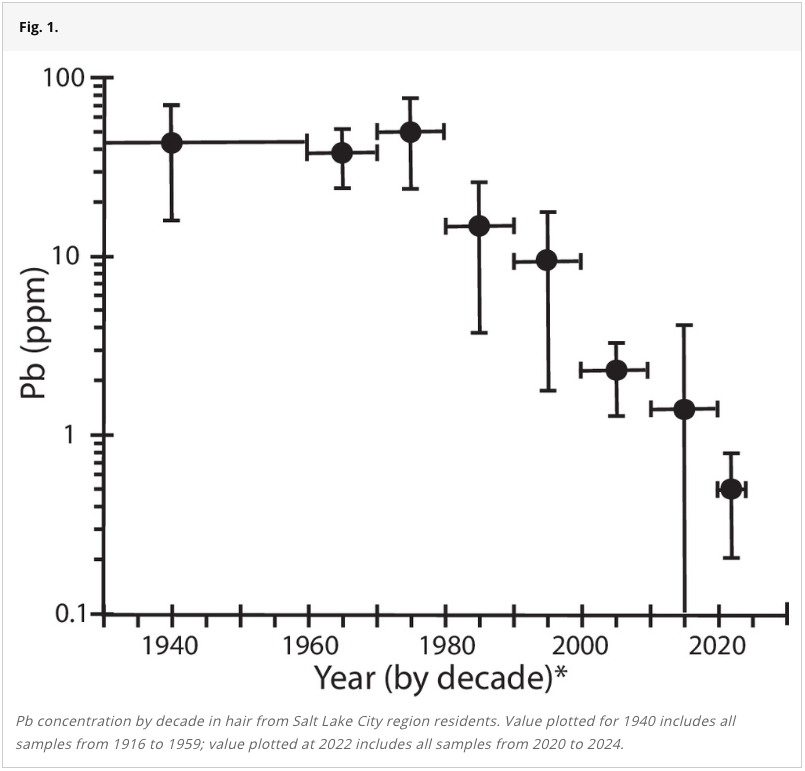
Essentially, this means that lead levels in humans were around 100 times higher back in the 1920s than they are now, after the regulations have taken effect. That seems like a pretty good improvement.
It’s worth noting that the study also says some of these lead levels can also be attributed to other sources of lead, such as lead piping, lead-infused paint, and two major lead smelters that were active in the Salt Lake Valley area, where the hair samples were sourced, from the 1910s to the 1960s. But the study makes it clear that leaded gasoline was a “principal source” of environmental lead exposure for humans.
Here’s What It Means
Lead, in case you weren’t aware, can be absolutely devastating to human health. It accumulates in the body in places like living tissue and bone, and even low levels can be toxic, according to the University. This is especially true concerning children, according to the World Health Organization:
Exposure to very high levels of lead can severely damage the brain and central nervous system causing coma, convulsions and even death. Children who survive severe lead poisoning may be left with permanent intellectual disability and behavioural disorders. At lower levels of exposure that may have no obvious symptoms, lead can lead to a spectrum of injury across multiple body systems. In particular, lead can permanently affect children’s brain development, resulting in reduced intelligence quotient (IQ), behavioural changes including reduced attention span and increased antisocial behaviour, and reduced educational attainment. Lead exposure also causes anaemia, hypertension, renal impairment, immunotoxicity and toxicity to the reproductive organs.
The WHO adds that lead exposure could be attributed to more than 1.5 million deaths and a combined 33 million years lost to disability in 2021 alone. So basically: Lead is bad for you, and you should do your best to avoid it whenever possible, especially if you’re a small child.
This data comes to the pretty obvious conclusion that if there is less lead in the environment, humans will be exposed to less of it. But thanks to this hair analysis, we can see exactly how quickly that trend occurred, and how it very clearly coincides with the EPA’s efforts to curb, and eventually eliminate, leaded gasoline use in cars. It also demonstrates exactly how effective the regulations were at solving the problem. And I’d say a 99% reduction in lead from hair samples is pretty effective.
Top graphic images: DepositPhotos.com
First Appeared on
Source link






