


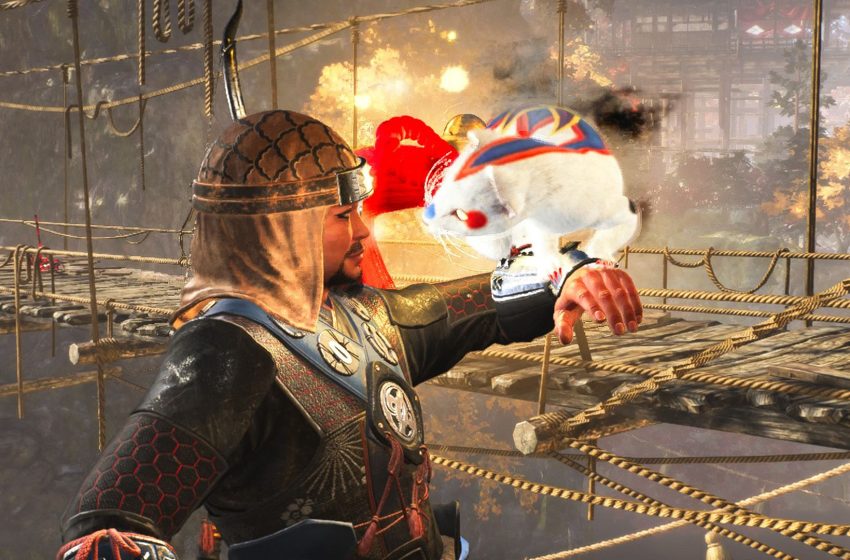
Nioh 3 review: “Brutal samurai and ninja clashes across wide maps avoid retreading Elden Ring – this Soulslike is all demon killer, no filler”
Why you can trust GamesRadar+
Our experts review games, movies and tech over countless hours, so you can choose the best for you. Find out more about our reviews policy.
Nioh 3 wants you dead, and it will get its way many, many times. Prepare to be kicked, stabbed, flattened, burned, shot, bitten, and much more by a wide variety of enemies both natural and supernatural. You’ll primarily be facing yokai (weird, wonderful, and occasionally darkly comic demons), many of which fans will recognise from the first two games. One of Nioh 3’s additions to the series, though, is a legendary creature that until now had only been known by myth; a jump button.
Does this mean a new way to die? Yes, of course it does. Don’t worry, there are only a handful of mid-air platforms in the entire game, so there’s no shift to a Super Mario fever dream. There are, however, plenty of opportunities to fall to your death if you’re not careful while exploring or fighting on cliff edges and narrow walkways, so be careful. Even more than usual.
Nioh chance in hell
Fast facts
Release date: February 6th, 2026
Platform(s): PC, PS5
Developer: Team Ninja
Publisher: Koei Tecmo
This newfound ability to let your feet leave the ground whenever you like ties into Nioh 3’s shift from a traditionally linear adventure to what Team Ninja is describing as “open field” gameplay. This sounds more suitable than ‘open world’ because, while there’s fast travel, huge maps, and side quests, it generally feels like a large number of linear setpieces stitched together in the best possible way. This isn’t Team Ninja going full Elden Ring for this entry, even if the wider design does echo recent Soulslike developments. Nioh 3 is a tight experience with no filler, and no boring empty areas.
This new approach to level design, and your shiny new jump button, means there’s more verticality to the environments. It also means more opportunities to launch (and get caught in) ambushes. It’s never been a good idea to rush in when there’s loot lying suspiciously unguarded in the middle of an open space, but now you have to carefully look around all corners and heights before going for it. If you’re lucky, you can get onto a nearby roof for a better look.
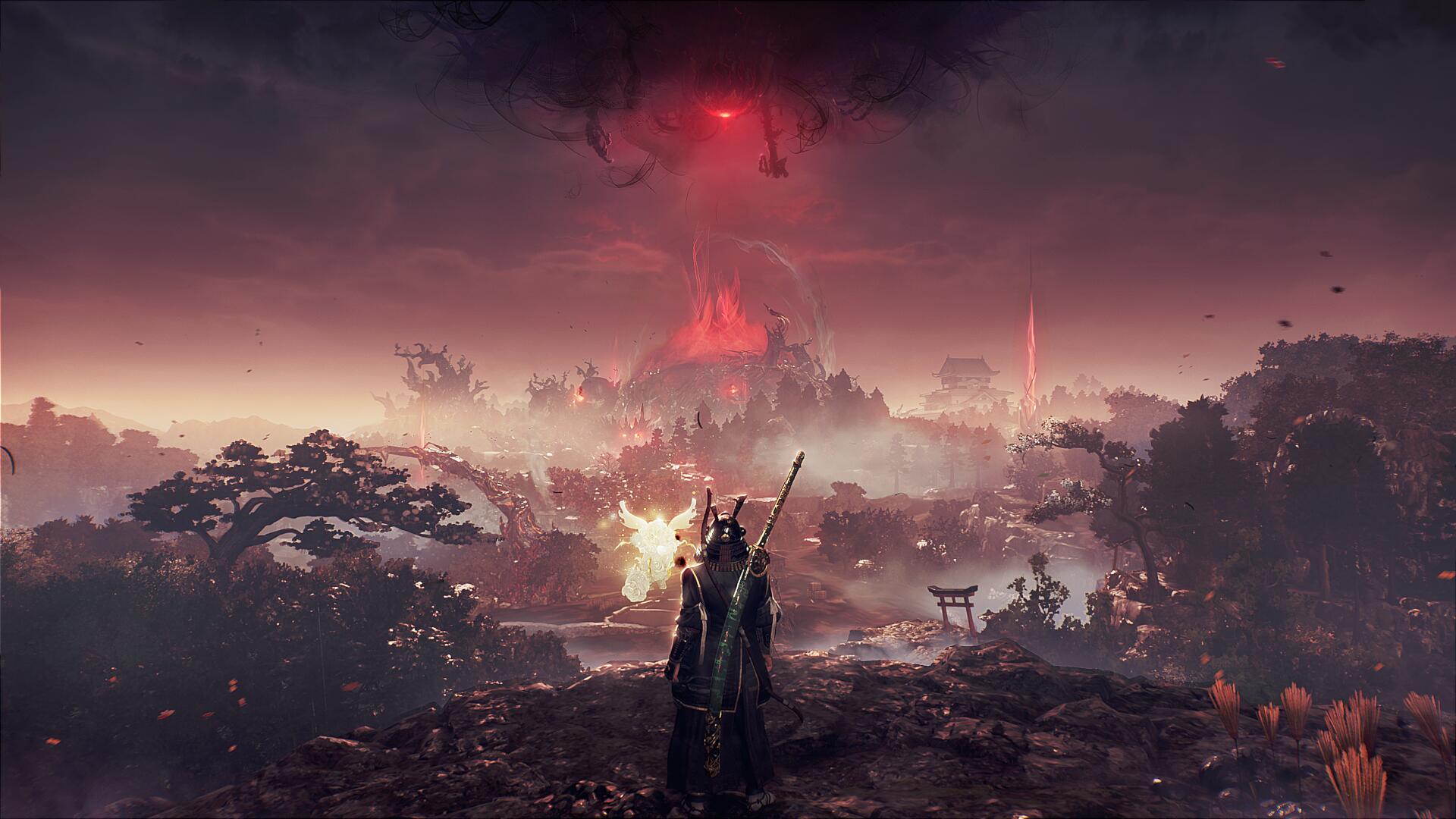
The open field shift is significant, but pales in comparison in terms of gameplay impact when put next to the new samurai and ninja system. Your character is split into two playstyles that you can instantly switch between at any time, and if you’re thinking of Yasuke and Naoe in Assassin’s Creed Shadows, that comparison’s a good starting point for understanding the differences.
Samurai style is essentially how the protagonist played in Nioh and Nioh 2. The precise qualities of the character depend on the attributes you assign as you level up, but guarding and countering are key to survival, as is mastering the timing of the Ki Pulse after an attack in order to speed up your Ki (i.e. stamina) recovery. The ninja style, meanwhile, opens up opportunities never before possible in the series.
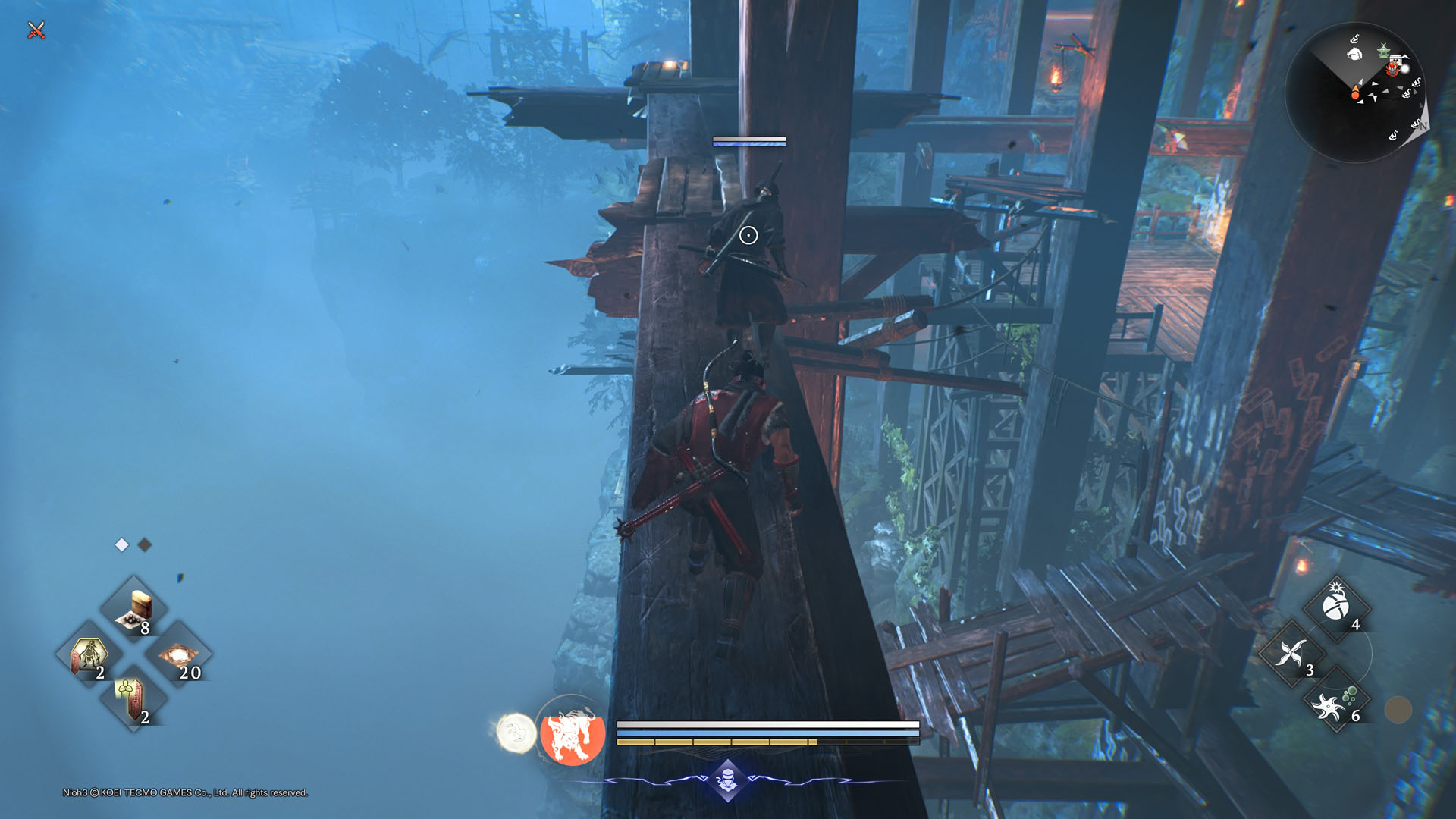
Again, the attributes you upgrade determine the specifics of your strengths and weaknesses; but broadly speaking, the ninja is more fragile yet faster, leaning more heavily on evading rather than guarding and generally depleting Ki at a slower rate. There’s no Ki Pulse for the ninja, but the equivalent ability is Mist, which grants a brief moment of invulnerability if timed correctly. In addition, while the samurai can unlock and adopt different stances that affect the damage and Ki use of the equipped weapon, the ninja can unlock and equip Ninjutsu abilities that are recharged by landing hits on enemies. Many allow you to attack from a distance, and that’s what I ended up leaning on the feature for.
The two styles are significantly different, with unique loot pools and differing stats. The ability to switch between the two with a button press, combined with the many different weapons on offer, presents a whole new range of combat opportunities. I found that the versatility of switchglaives or the power of axes worked best for my samurai, while claws or tonfas and their rapid attacks suited my ninja hit-and-run playstyle. Likewise, easily-interrupted human enemies were usually best dispatched as a ninja, and the samurai would sometimes give me the best chance against tougher yokai. I’d mix it up in some fights, charging Ninjutsu as a samurai before switching to ninja so I could throw in a few shrapnel bombs or pinwheel shuriken.
Personal ninjury claim
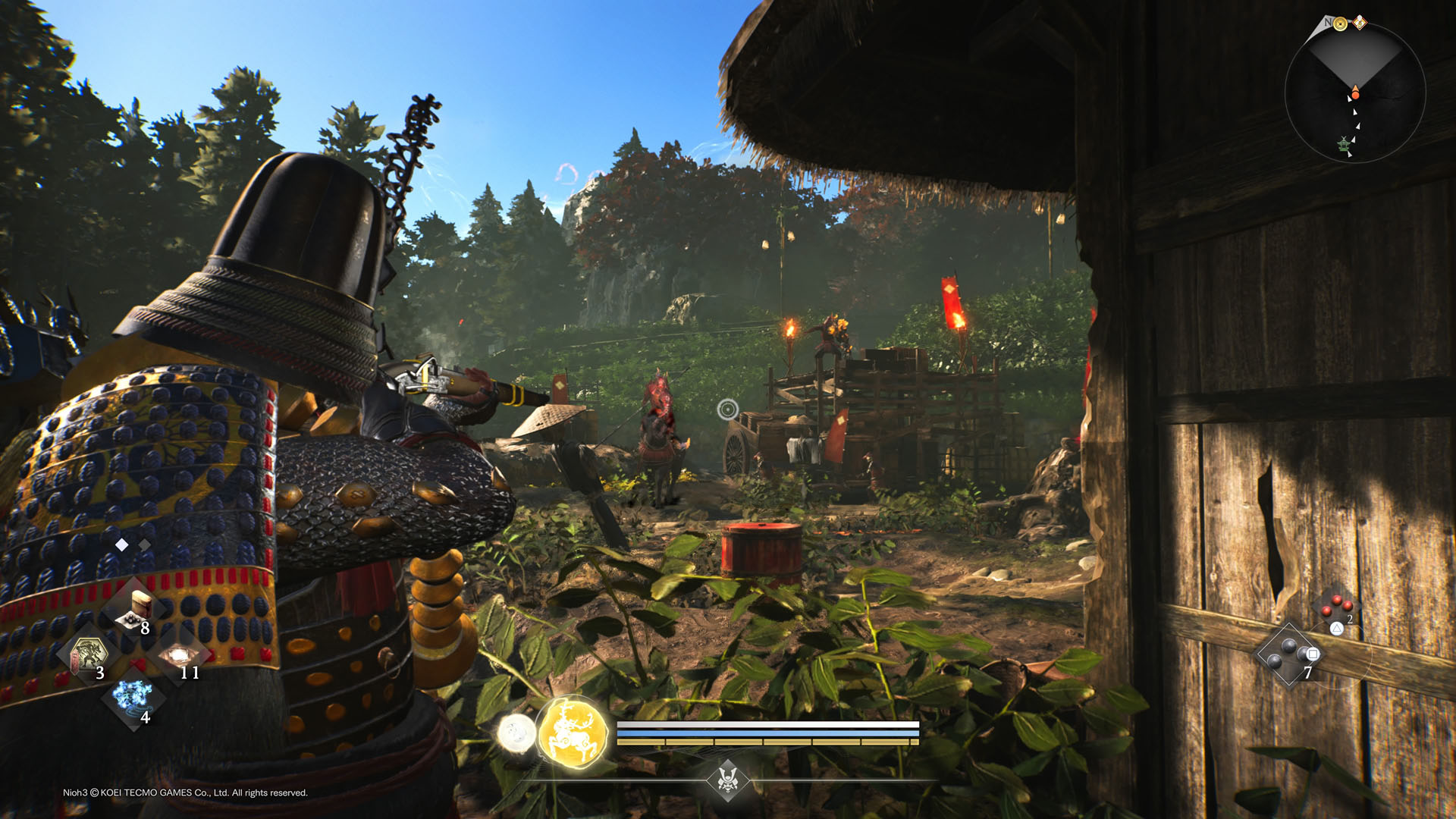
Some Nioh fans get grumpy when you call the games Soulslikes; but if it looks like a Soulsike and walks like a Soulslike, it’s probably a duck. Even minor enemies can wipe you out quickly if you’re careless, no matter how high your character level gets. That just makes landing on a combination of weapons, tactics, and unlocked abilities that work for you all the more satisfying – and therein lies the thrill of combat. You know you’re always potentially just a few seconds or less from death, each mistake very painfully felt. Sneaking behind an enemy to instantly kill them or take off a chunk of health, then storming in with a combo that could see you lose half your HP if mistimed, is a real rush when it works. As for the one and only time I managed to kill a boss on the first try, I felt like a god.
You know you’re always potentially just a few seconds or less from death, each mistake very painfully felt.
Nioh 3 is crammed full of boss fights, to the extent that it feels like the code would fall apart if you tried removing any. I soon resigned myself to the fact that I would have to die to each at least a few times before victory (apart from the time above where I was cool and awesome) in order to learn attack patterns and weaknesses. Although there are a few commonalities across most or all of them – such as an unblockable attack you can counter with Burst Break to reduce their maximum Ki, and an unblockable attack that will see them grab you and deal huge damage if not dodged – each is unique, and needs to be learned on their own terms.
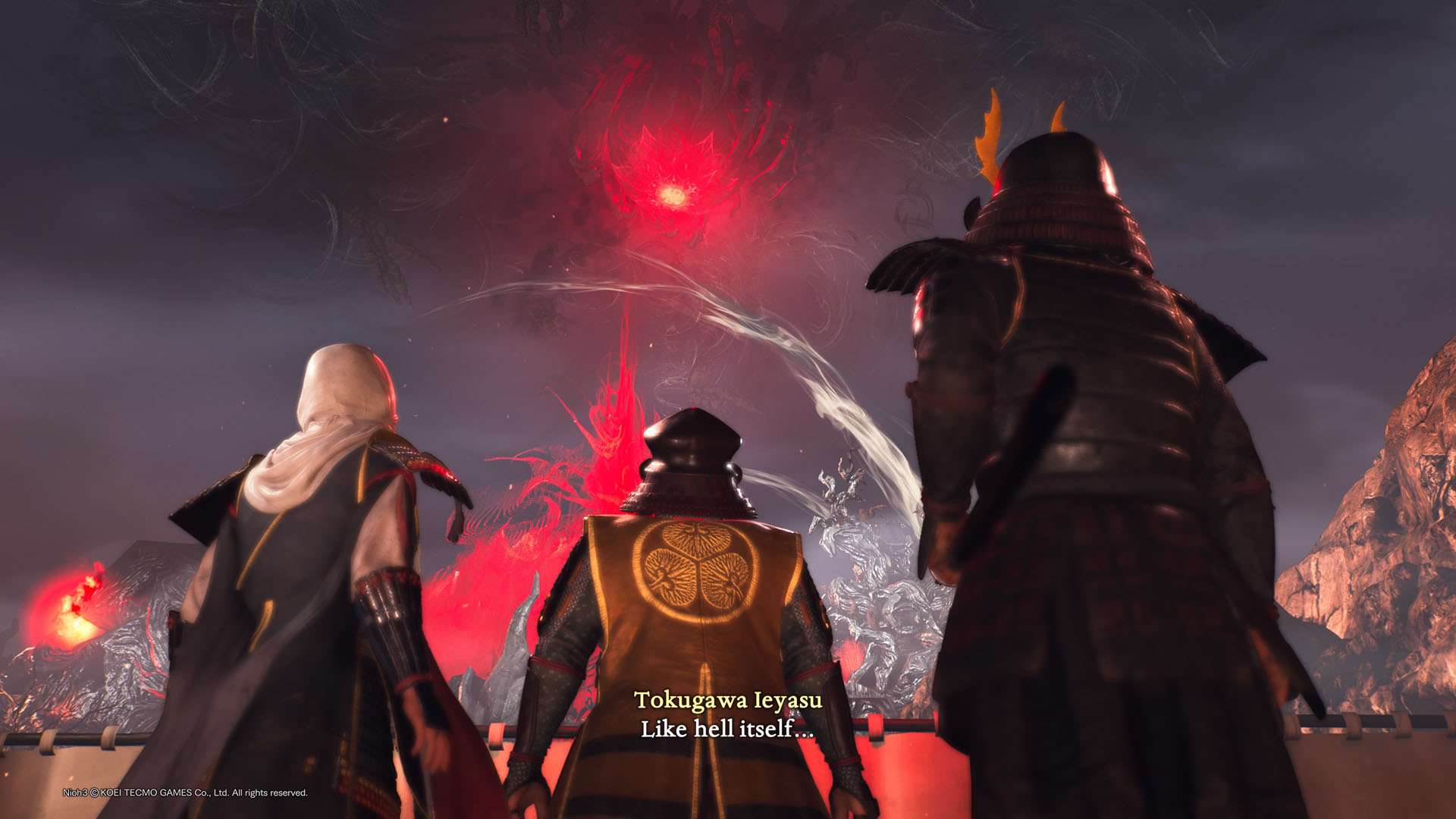
Guardian of Eden
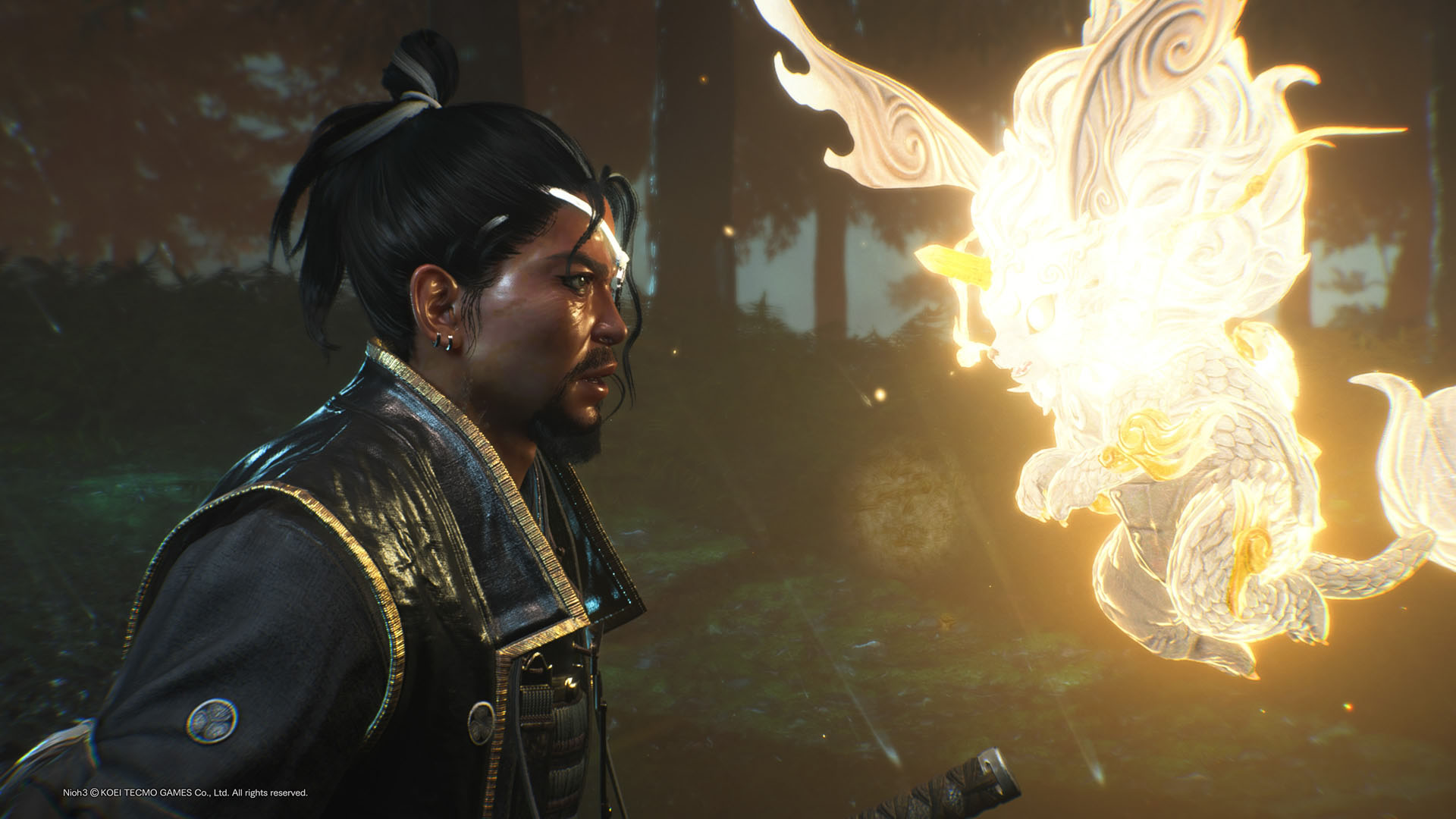
Guardian Spirits return, but this time, with a gauge to charge. This gives you infinite health, infinite Ki, and unique attacks while it lasts. Another tool rather than a game-breaking powerhouse, it’s a great addition.
Unsurprisingly, boss fights are tough – more than once, it took me hours to finally emerge victorious – and therefore oh so very, very satisfying to overcome. A few of these bosses, it must be said, feel overtuned compared to the difficulty of the area that they’re found in. It’s slightly annoying to carve through an area relatively easily, only to suddenly feel like an optimistically aggressive banana fighting a gorilla. I would often get frustrated and say naughty words, but I never felt inclined to give up on the game.
The issue is that bosses appear to be primarily designed with co-op in mind, and scaling (if there is any) seems a bit iffy. So long as you have a sufficient number of items, you can summon up to two human players to your game. You also have the option of summoning a player ghost to help you to make up the numbers – again, dependent on you having enough relevant currency – by interacting with a Benevolent Grave intentionally left by another player. You can only ever have one ghost, oddly, and their efficacy is ‘OK, but not great’. Due to the small number of pre-release players, I was never able to summon help, but I did dive into two games myself to help out with bosses. As those players were over a dozen hours behind me, I pretty much steamrolled the big bads. Examples like this are likely to become more and more common after release.
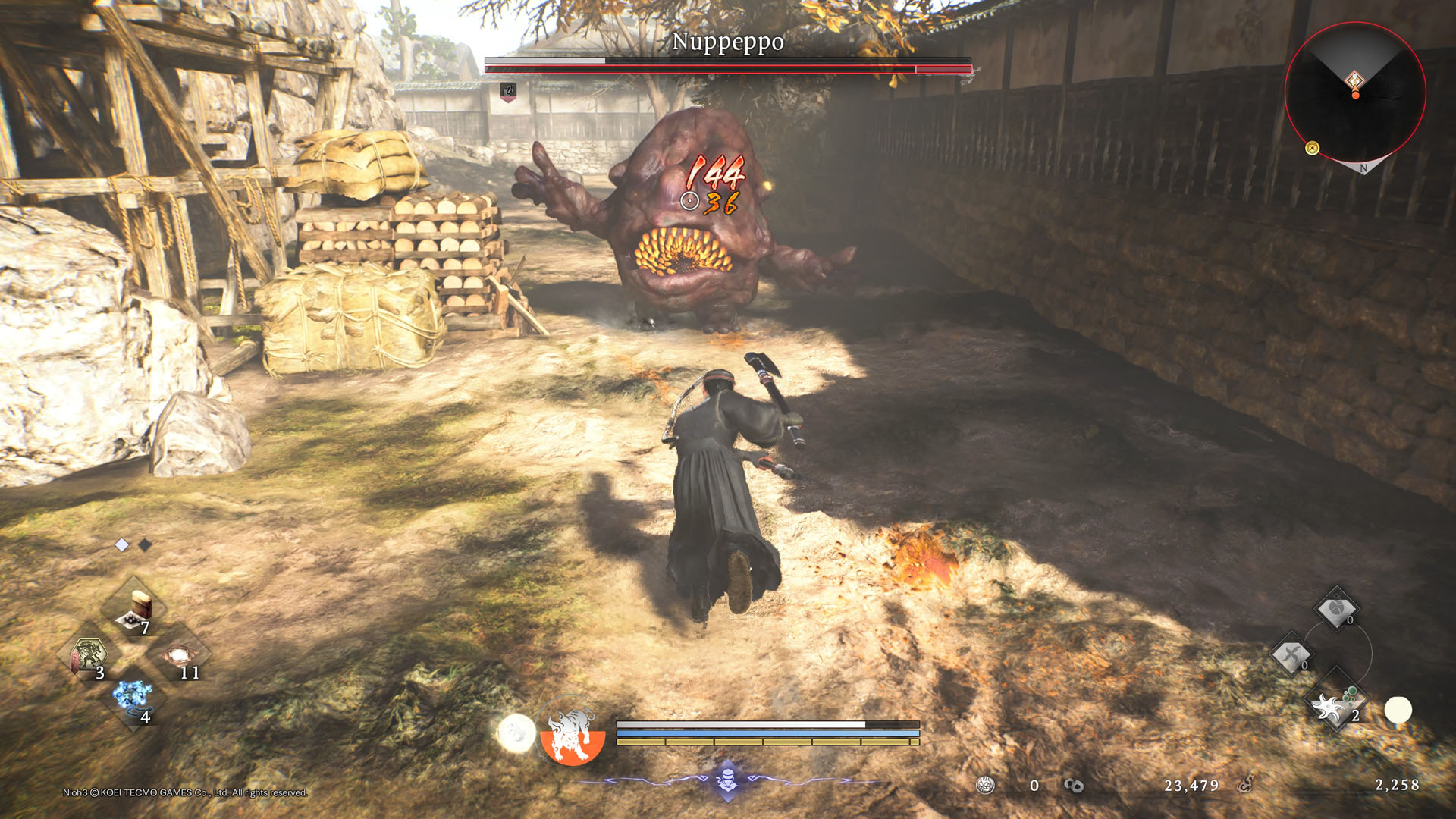
You’ll be spending a lot of time in menus levelling up, sorting through the endless parade of new loot, equipping and upgrading items and abilities, and (initially) quite possibly learning what all the corners of the menu are actually for. Despite this, Nioh 3 doesn’t feel like a badly paced game, as everything you do in the menu has an important effect. You can even reset and remix your earned stats as often as you like – which is great – but there’s no option to save set-ups. Best get your notepad out if you think you might want to go back to the precise character build you were using.
Nioh 3 is tough – brutally tough – but it has a unique sense of accessibility.
Personally, I ended up playing almost exclusively in ninja style once I was three quarters or so of the way through the game (with samurai for a few bosses), but that says more about the versatility of Nioh 3’s systems than anything else. I’d got my Ki and ninja damage to a point where that was viable, and it suited my personal preference. But you might end up mostly ignoring ninja by then, and it’s equally likely that you could pull a build together that sees you switching between the two regularly mid-fight, exploiting the strengths and minimizing the weaknesses of both. Nioh 3 is tough – brutally tough – but it has a unique sense of accessibility in terms of very powerful options to customize your build and playstyle.
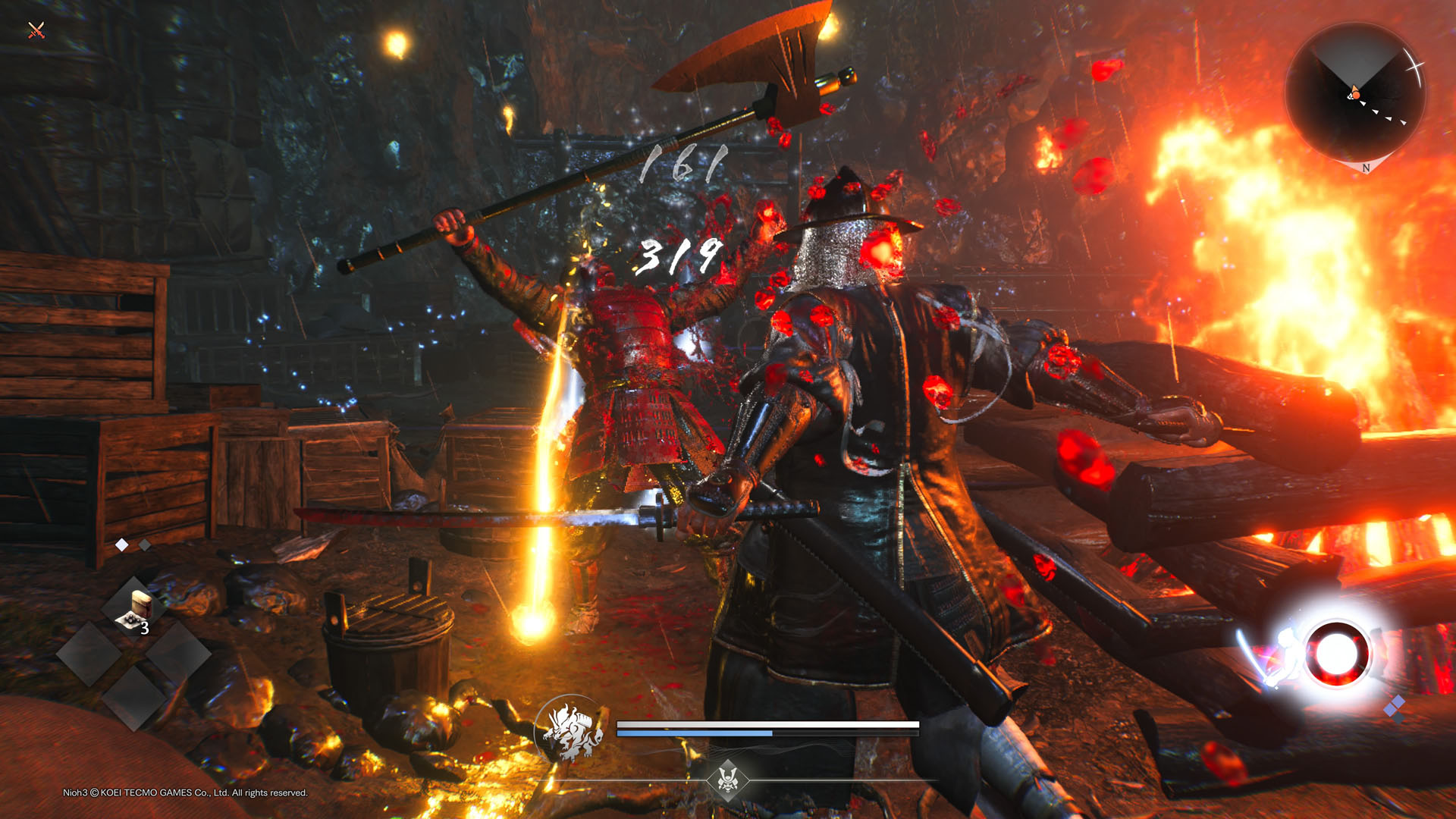
The all-important sense of progression is there, too, despite the fact that carelessness will always be your downfall. I remember the first time I encountered an enemy at least four times my height, and the uphill struggle of defeating it. Then I realized that wasn’t even a boss, and a single tear fell from my poor little eye. A dozen or two hours later however, when I’d faced several such towering beasts, I’d grown to see them as enjoyable challenges rather than encounters to be dreaded.
A few bosses feel like they’ve been placed a little too early in the game, not all of the mechanics are brilliantly explained (especially for new players), and acting ranges from ‘OK’ to ‘Garth Marenghi’s Darkplace’. There’s also something of a cheap shot from the developers at the end, which I won’t go into as it’s slightly spoilery. This can all be overlooked however, as none of it changes the fact that Nioh 3 has instantly earned its place as one of the best games of the year.
Nioh 3 was reviewed on PS5, with a code provided by the publisher.
Our Code Vein 2 review wrangles with another Soulslike switch to open world, which ends up less successful. Want more? Our games like Elden Ring list has you covered.
First Appeared on
Source link






