


Sun unleashes colossal X4.2 solar flare, knocking out radio signals across Africa and Europe (video)
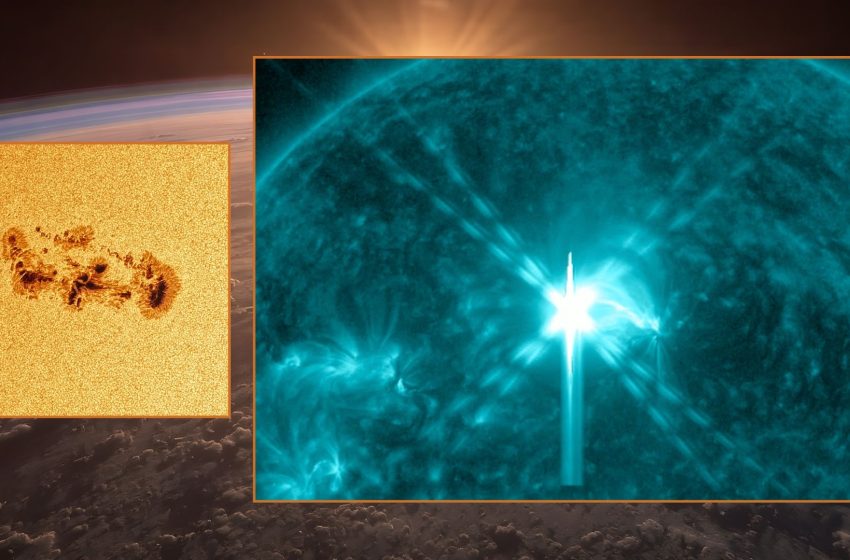
The sun is certainly putting on quite the show this week. Earlier today (Feb. 4), it fired off another powerful solar flare, this time an X4.2, briefly disrupting radio communications across parts of western Africa and southern Europe as intense radiation flooded Earth’s upper atmosphere.
The impulsive flare peaked at 7:13 a.m. EST (1213 GMT). It erupted from volatile sunspot group AR4366, a rapidly growing, magnetically complex region that has been unleashing a near-continuous barrage of potent solar flares since roaring into existence just days ago.
X-class solar flares are the most powerful type of solar flare and are capable of triggering widespread radio disturbances. They can also, at times, be accompanied by coronal mass ejections (CMEs) — vast plumes of solar plasma and magnetic field that can spark geomagnetic storms and impressive auroras if Earth-directed. However, no CME signatures have been detected in imagery following this latest X4.2 eruption, according to NOAA’s Space Weather Prediction Center.
Yet for all its fireworks, sunspot region 4366 is beginning to look like it has plenty of bark but very little bite. While the region has fired off multiple powerful solar flares in rapid succession, most have failed to hurl significant amounts of solar material into space. So far, only an earlier X8.4 flare was accompanied by a slow-moving CME, and that just landed at Earth with a glancing blow.
This fleeting encounter could still have mild effects, as NOAA forecasters say minor (G1) geomagnetic storm conditions are possible later today or tomorrow.
You can see it for yourself!
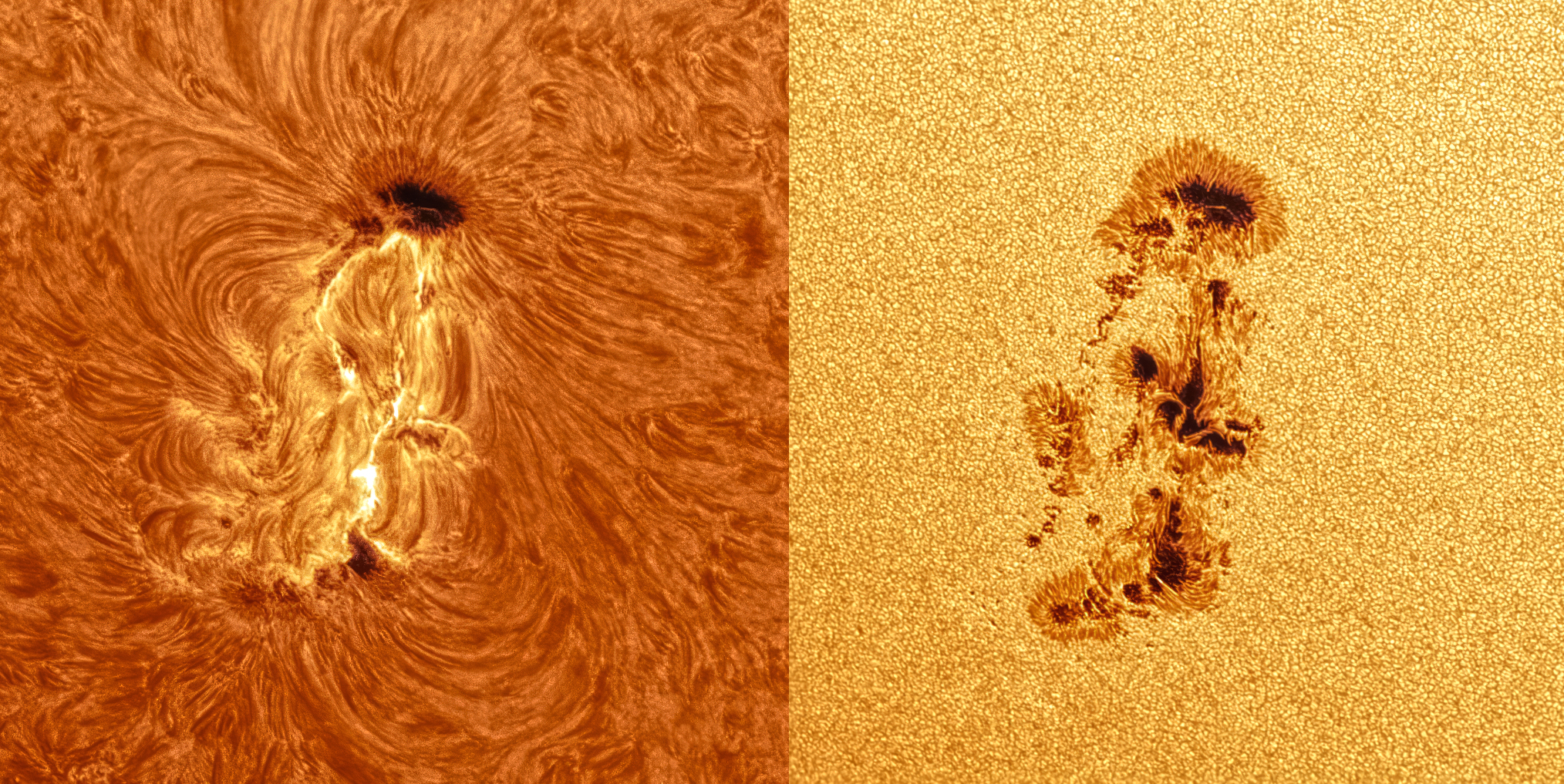
Sunspot region 4633 is huge! At roughly 15 Earths wide in its current configuration, the behemoth is large enough to see from Earth using solar eclipse glasses!
The dramatic close-up image below captures the immense sunspot region responsible for this week’s outbursts. Astrophotographer Mark Johnston captured the scene from Arizona, U.S on Feb. 1.
“I had excellent seeing that morning. My telescope was set up looking across an alpine lake at the sun, which smooths air currents and makes the view very steady,” Johnston told Space.com in an email.
With the region still facing us and showing no signs of calming down, space weather forecasters will be keeping a close eye on whether this noisy sunspot will eventually pack a more powerful punch.
First Appeared on
Source link






