


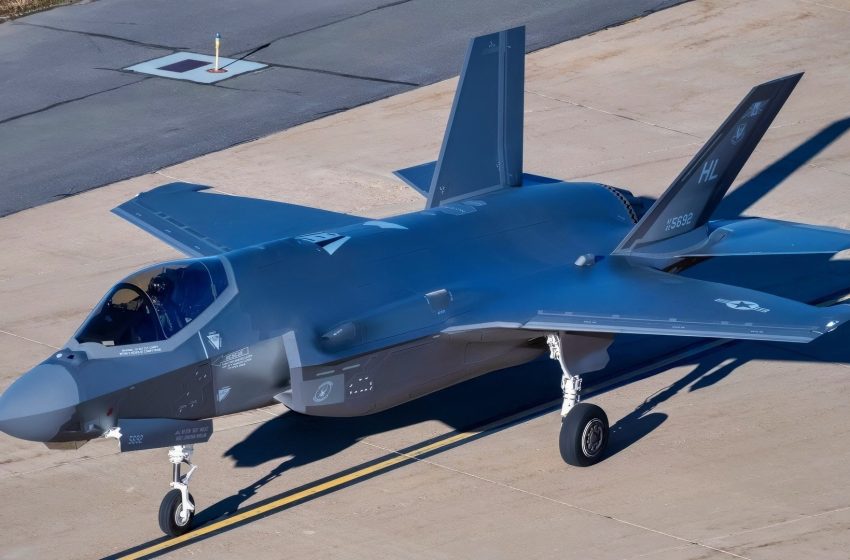
Canada Looks Set to Cut Big F-35 Stealth Fighter Order By More Than 50 Percent
Summary and Key Points: A January 28 op-ed says Canadian defense planners are considering a mixed fighter fleet: no more than 40 F-35A stealth jets paired with up to 80 Gripen E fighters.
-Under the idea described, the government would keep a small tranche of U.S.-built aircraft while shifting much of the spending toward a non-U.S. platform to hedge political risk and diversify defense partnerships.
Canada F-35. Image Credit: Creative Commons.
-The Swedish offer is framed as stronger on industrial benefits, built around deeper domestic workshare and a broader aerospace package modeled on prior Nordic procurements—potentially including airborne early-warning capability and an estimated 12,600 jobs.
Canada’s Fighter Rethink: Fewer F-35s, More Gripens, and a Big Pivot on Sovereignty
According to a January 28 op-ed in the National Post, Canadian defense planners are considering procuring a mixed fleet of fighter aircraft. Instead of the 88 F-35s Ottawa once planned to purchase for the Royal Canadian Air Force, it would procure no more than 40.
Under the terms of the F-35 program partnering arrangement, Canada is only obligated to acquire 16 F-35A aircraft—the remaining 72 await the decision of Canadian Prime Minister Mark Carney. The prime minister ordered a review of Canada’s F-35 purchase in mid-March 2025 in response to threats against Canadian sovereignty made by U.S. President Donald Trump.
According to the National Post’s John Ivison, Canada might instead purchase up to 80 of Saab’s JAS-39E Gripen fighter. The “Gripen E” is the third-generation iteration of the venerable Swedish fighter. It includes several major improvements over the previous C/D version of the aircraft.
Unnamed sources in the Canadian Defense Forces (CDF) told the National Post that under the plan being proposed, half of the sum spent to procure Canada’s future jet-fighter fleet would go toward Swedish aircraft. For now, Canadian Minister of Defense David McGuinty told the paper, “no decision has been reached.”
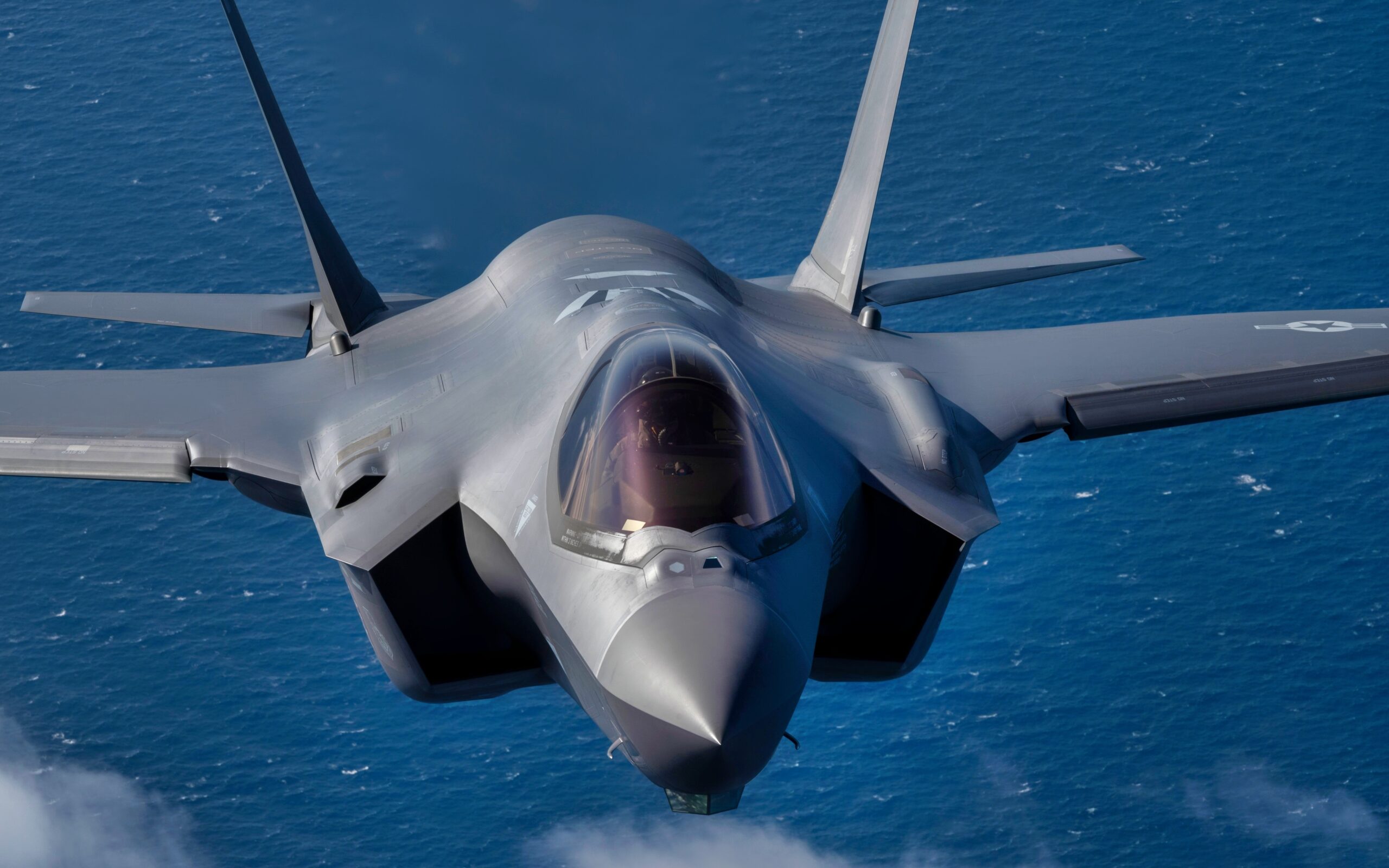
A U.S. Air Force F-35A Lightning II participating in NATO exercise Ramstein Flag 24 flies over the west coast of Greece, Oct. 4, 2024. Over 130 fighter and enabler aircraft from Greece, Canada, France, Hungary, Italy, Poland, Portugal, Romania, Spain, Sweden, United Kingdom and United States are training side by side to improve tactics and foster more robust integration, demonstrating NATO’s resolve, commitment and ability to deter potential adversaries and defend the Alliance. (U.S. Air Force photo by Tech. Sgt. Emili Koonce)
The Davos Line
All signs point to Ottawa buying fewer than half the F-35s it originally planned.
Ivison’s column says the momentum against purchasing U.S. F-35As can be understood by looking at Carney’s speech at the World Economic Forum in Davos, Switzerland.
During his address, Carney stated that “if great powers abandon even the pretense of rules and values for the unhindered pursuit of their power and interests, the gains from ‘transactionalism’ will become harder to replicate. Hegemons cannot continually monetize their relationships.
“Allies will diversify to hedge against uncertainty,” he continued. “They’ll buy insurance, increase options in order to rebuild sovereignty—sovereignty that was once grounded in rules, but will be increasingly anchored in the ability to withstand pressure.”
Ivison’s column purports to represent the thinking within the CDF. As he writes, that thinking goes, “it would be folly to continue to sub-contract Canada’s defense to Lockheed Martin, which also supplies the combat systems on this country’s new warships.
“Buying 88 planes from the Americans does not satisfy the twin goals of building up domestic capabilities or diversifying defense partnerships.”
Industrial Benefits
Beyond the strategic autonomy a Gripen acquisition would bring to Canada, Canadian officials say the Saab proposal offers far superior economic benefits.
It would expand the already profitable relationship between the Swedish defense conglomerate and Canada’s major aerospace corporation, Bombardier.
The Saab GlobalEye Airborne Early Warning and Control aircraft is already produced in partnership with the Canadian company.
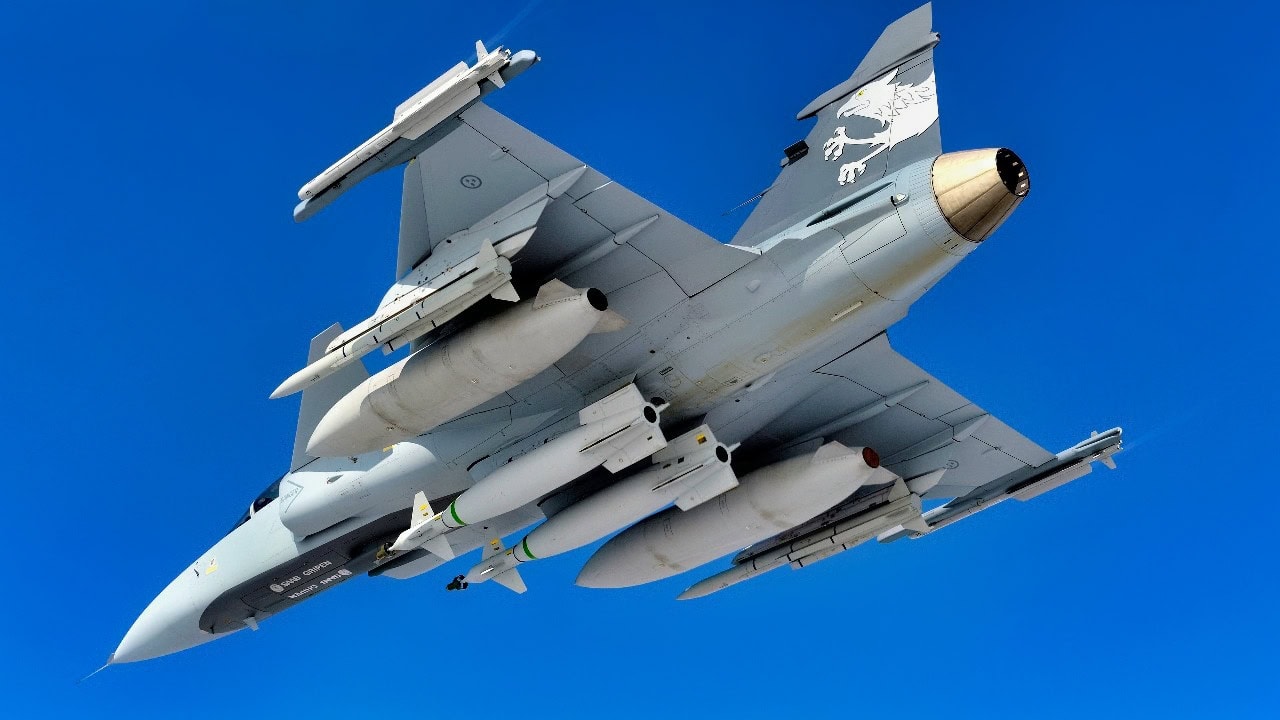
JAS 39 Gripen. Image Credit: Creative Commons.
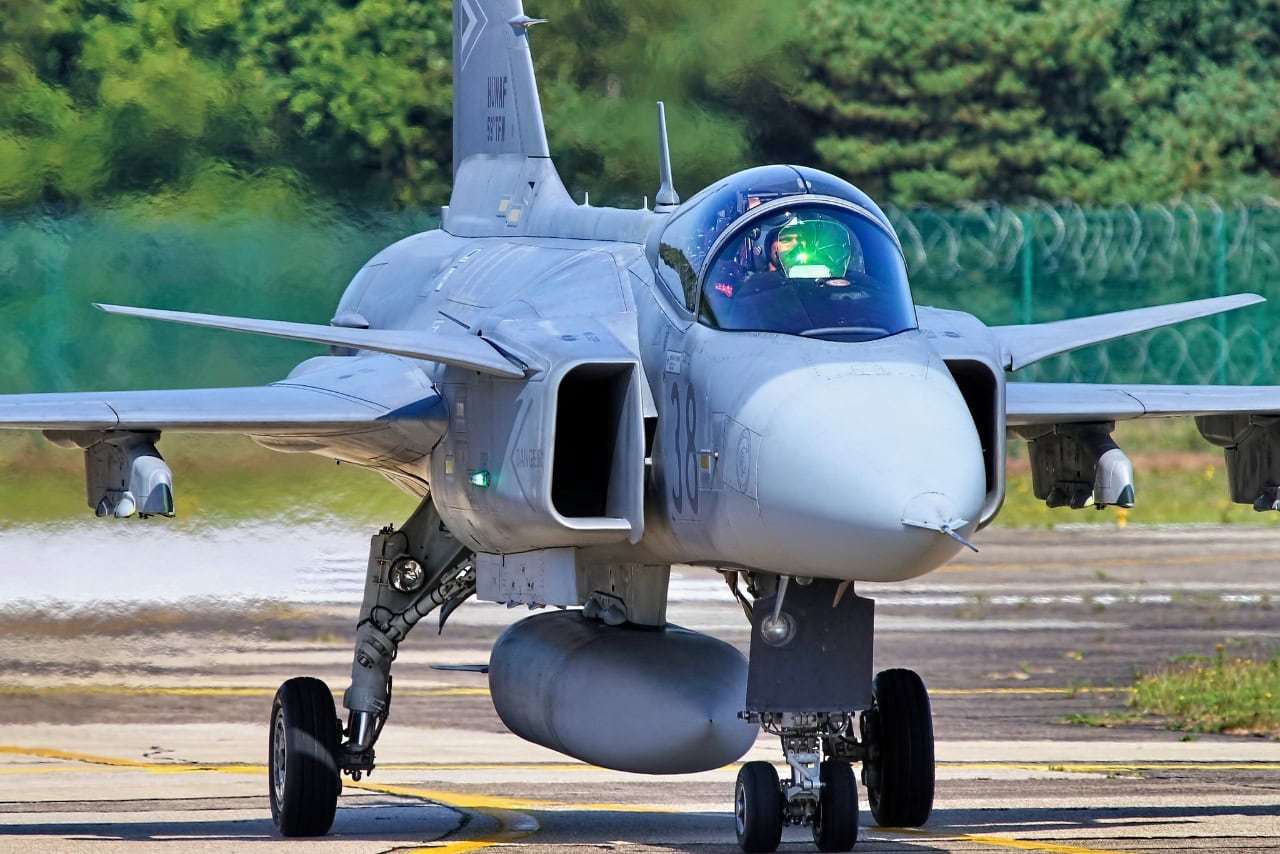
JAS 39 Gripen. Image Credit: Creative Commons.
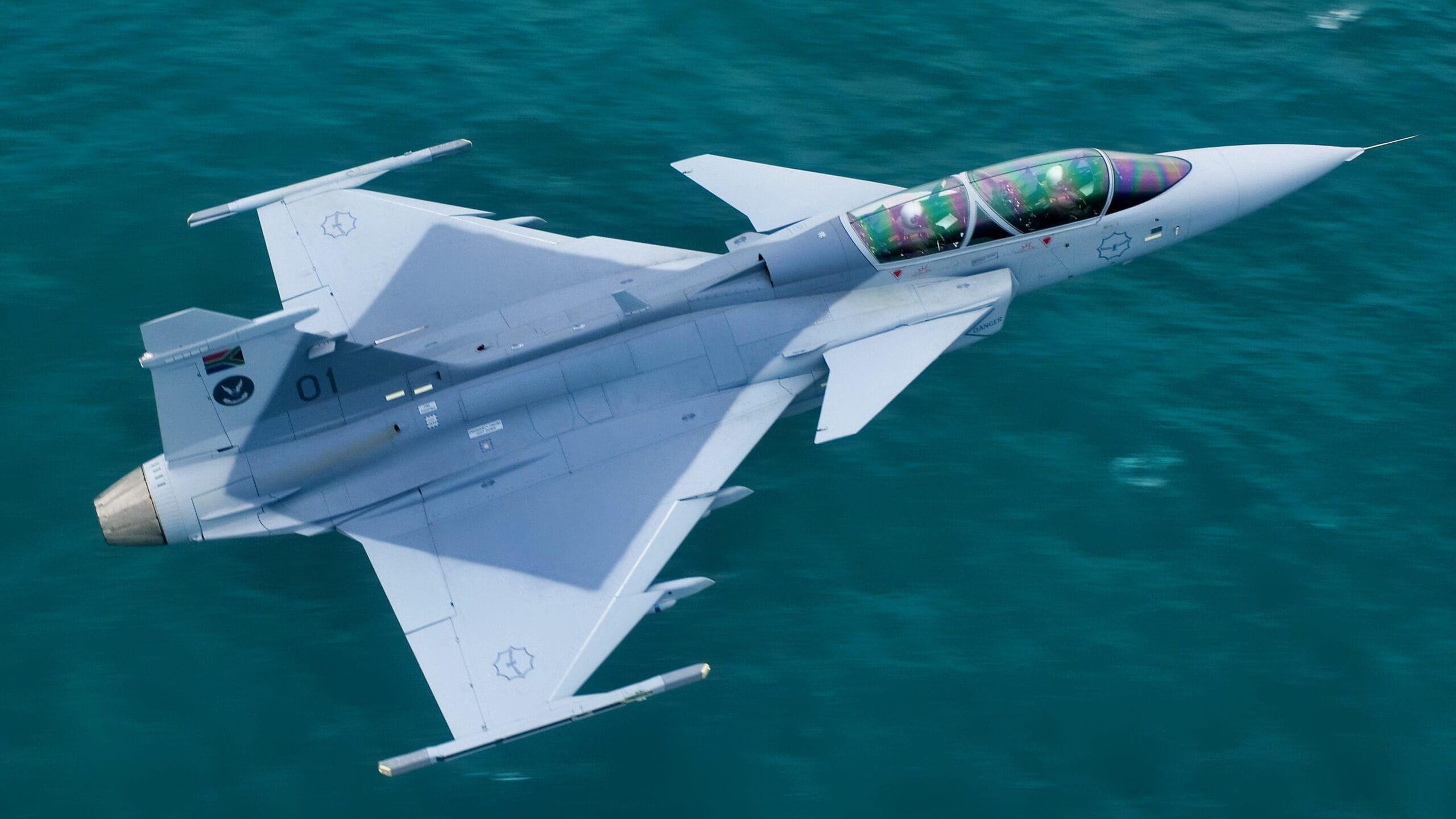
JAS 39 Gripen Fighter. Image Credit: Creative Commons.
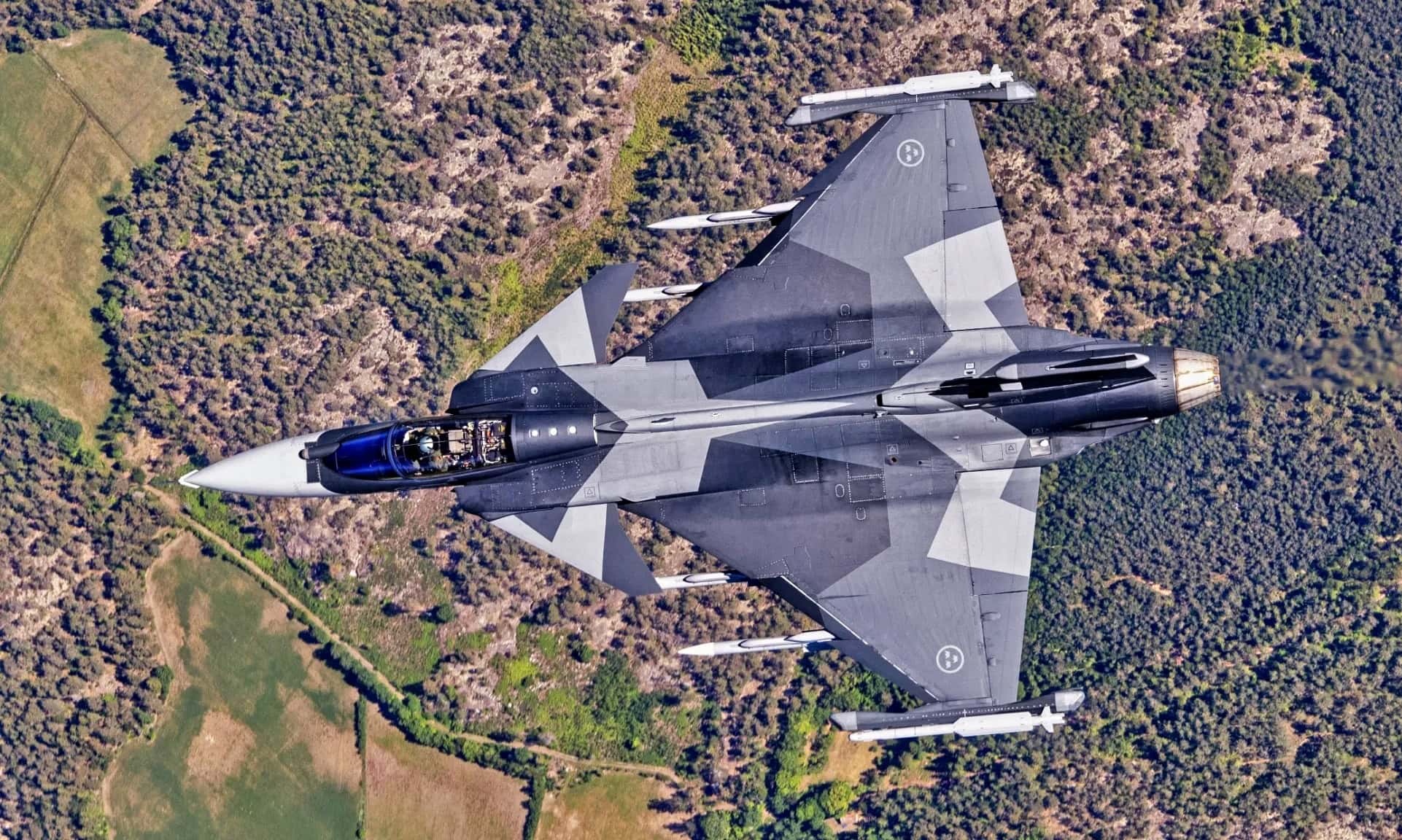
Saab JAS 39 Gripen E. Image from Saab.
The surveillance radar and all of the operator hardware on board are integrated into a Bombardier Global 6000/6500.
The package proposed to Canada is very similar to the offer made in 2021 to Finland, a joint procurement of 72 Gripen E/F models and 6 GlobalEyes. The program is estimated to have the potential to create 12,600 jobs in Canada.
“The government is interested in all major projects that can not only protect Canada’s security and sovereignty, but also create jobs across the country,” Industry Minister Mélanie Joly told Canada’s CBC News. “We certainly can’t control President Trump, but … we can control our defense investments, who we award contracts to and how we are ultimately able to create jobs in Canada. So, we’re going to focus on that.”
About the Author: Reuben F. Johnson
Reuben F. Johnson has thirty-six years of experience analyzing and reporting on foreign weapons systems, defense technologies, and international arms export policy. Johnson is the Director of Research at the Casimir Pulaski Foundation. He is also a survivor of the Russian invasion of Ukraine in February 2022. He worked for years in the American defense industry as a foreign technology analyst and later as a consultant for the U.S. Department of Defense, the Departments of the Navy and Air Force, and the governments of the United Kingdom and Australia. In 2022-2023, he won two awards in a row for his defense reporting. He holds a bachelor’s degree from DePauw University and a master’s degree from Miami University in Ohio, specializing in Soviet and Russian studies. He lives in Warsaw.
First Appeared on
Source link






