


Company that ‘resurrected’ dire wolf announces frozen biovault for endangered species
EDITOR’S NOTE: Call to Earth is a CNN editorial series committed to reporting on the environmental challenges facing our planet, together with the solutions. Rolex’s Perpetual Planet Initiative has partnered with CNN to drive awareness and education around key sustainability issues and to inspire positive action.
Colossal Biosciences, the biotech company attempting to revive species including the dodo, mammoth and Tasmanian tiger, has announced it is creating a biovault for endangered species in the United Arab Emirates (UAE).
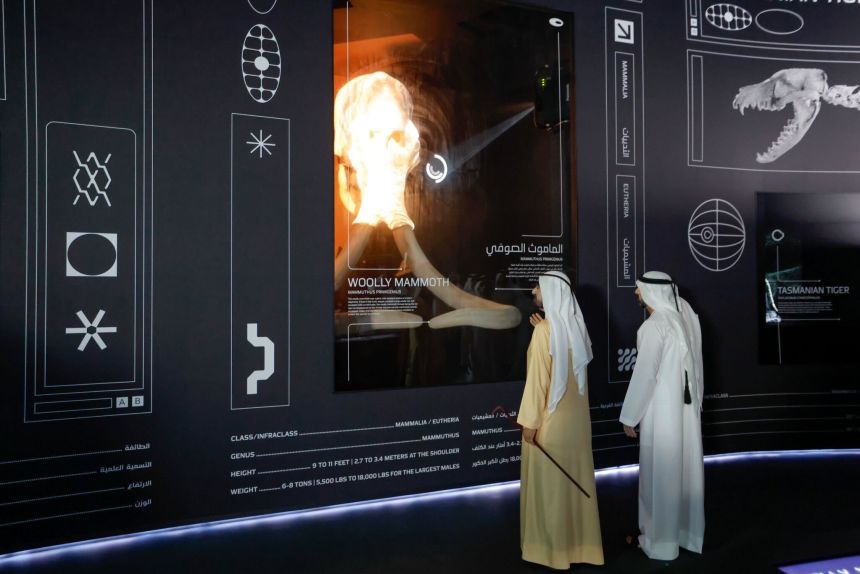
Situated inside Dubai’s Museum of the Future, the Colossal Biovault and World Preservation Lab will store millions of frozen tissue and other samples from 10,000 species, including the 100 most endangered globally and in the UAE, says the company.
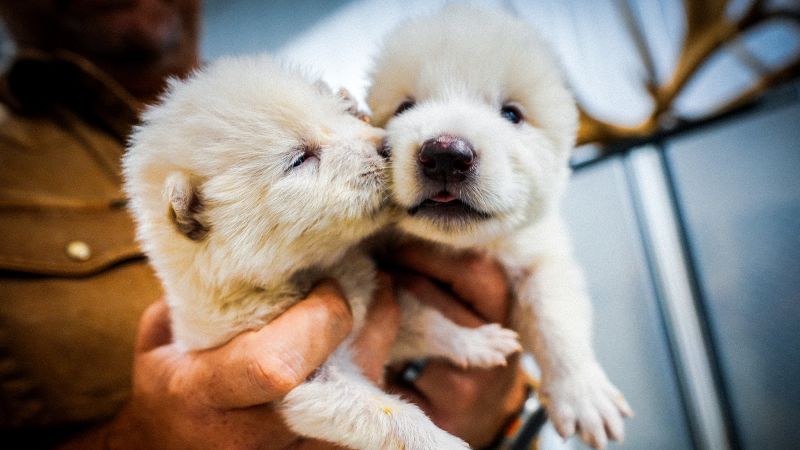
Last April, Colossal announced it had “resurrected” the extinct dire wolf, creating three wolves — two males and a female — using ancient DNA, cloning and gene-editing technology to alter the genes of a gray wolf. Experts have pointed out that it’s not possible to resurrect a carbon copy of an extinct animal, and that the wolves are essentially hybrids of a dire wolf and gray wolf, similar in appearance to their extinct forerunner.
Dallas-based Colossal says it will take a dual approach to samples in its UAE vault, drawing on them for researching endangered species, but also as a means to bring species back, should they become extinct.
In an interview with CNN’s Richard Quest, co-founder and CEO Ben Lamm compared the new biovault to the Svalbard Global Seed Vault in the Arctic Circle — a facility preserving nearly 1.4 million seed samples — and said that animals needed similar preservation.
“We need to start backing up all life on Earth, because while conservation works, it’s not working at the speed (at) which we’re eradicating species,” he said.
The International Union for Conservation of Nature (IUCN) Red List contains over 48,000 species threatened with extinction among 172,600 species assessed. Estimates of how many species become extinct per year vary, in part because there are so many species still undiscovered or formally identified.
Lamm said it aims to hold multiple samples of each species, to preserve genetic diversity — a key factor in long-term population viability.
He argued there were multiple reasons behind the drive to save endangered animals, describing many as keystone species in their environment. The loss of one species can tilt an environment, causing the overabundance or eradication of another, with effects rippling down the food chain.
“There’s also massive amounts of data that we sometimes lose (when a species becomes extinct),” he said. “Birds have significantly better immune systems than us. So we should study that, to see how it could also be applied to humans.”
“If you don’t care about animals, you should care about animals because they help humans,” he added.
Despite the envisaged scale of the enterprise, it is not the only such facility in the world.
San Diego Zoo Wildlife Alliance’s “Frozen Zoo” contains samples from over 1,300 species and subspecies. Since its founding in 1975, genetics has progressed significantly. Clones of four endangered species, Przewalski’s horse, a native of Central Asia, ox species the Indian gaur, banteng cattle from Southeast Asia and the black-footed ferret from North America, have all been created from genetic material kept at the facility.
Other projects contain thousands of animal DNA samples, with different scientific applications to live cells. The Frozen Ark, a charity, has amassed 48,000 samples, the majority DNA, including the snow leopard and the Scimitar Horned Oryx (a species extinct in the wild), between multiple sites in the UK.
Asked about Colossal’s biovault, San Diego Zoo Wildlife Alliance told CNN in a statement that accelerating “cryopreservation of living cells” was “an unprecedented opportunity and urgent necessity for ensuring the future of Earth’s biological diversity,” noting “no one organization can do it alone.”
The Alliance cautioned that “such efforts will need to address regulatory frameworks, long-term governance, and coordination across political boundaries” and require “careful attention to compliance with international policies and agreements.”
“A sustainable strategy for biobanking is a distributed model that favors the development of in-country biobanking capacity in biodiverse countries in partnership with institutions with long-term collections knowledge and expertise,” it added.
Dusko Ilic, a professor of stem cell science at King’s College London, said via email that there were currently insufficient public details to assess Colossal’s biovault, noting he would like to see more details on the “scope (species, sample types), governance, access, long-term funding, and integration with conservation frameworks.”
“Cryobanking alone does not equate to conservation impact,” he said.
“For the public, frozen zoos are a compelling concept and help raise awareness of biodiversity loss,” he added. “In practice, they are best seen as complementary tools, not substitutes for in situ conservation, habitat protection, or population management.”
The new biobank venture is part of a nine-figure initiative in the UAE, a nation that recently invested $60 million in Colossal, which has raised $615 million since its founding in 2021.
The biovault, situated inside a museum in the heart of Dubai, is intended to put the public in close proximity to ongoing scientific work.
“We’re working with the Museum of the Future because we want to have it on display,” argued Lamm. “We want to create living labs on display and bring kids and people excited into science.”
The 100 most imperiled species to have samples interred has not been finalized, said a company representative, and is being collated in a joint research project with UAE.
Colossal says the biovault is the first of a planned global network of sites.
Correction:
A previous version of this story incorrectly named San Diego Zoo Wildlife Alliance’s Frozen Zoo.
First Appeared on
Source link






