


How an expert on hormone health shops for an anti-inflammatory diet
Illustration by Kat Frick Miller
Trista Chan credits her passion for women’s health to her upbringing. From Chinese medicine–rooted remedies for menstrual cramps to open discussions about nutrition’s role in hormonal health, conversations in her family were always open – and encouraged.
That acceptance now informs her practice as a registered dietitian. At Nest & Nurture, a hormone and reproductive health clinic, she leads a team of dietitians and nurses that specialize in women’s reproductive health, disordered eating and polycystic ovary syndrome (PCOS), a hormonal disorder that affects ovaries and fertility in about one-in-10 Canadian women.
The motivation was personal: While completing her undergraduate degree in nutritional science at the University of Guelph, she was hospitalized twice with ruptured ovarian cysts.
“It was very scary… I was studying in the medical field, but I still didn’t understand what was happening with my body,” she says.
Eating more polyphenols can help you live a longer, healthier life – here’s why and what to eat
The experience inspired her to dive deeper into women’s health, and she learned the best way to support hormone health and PCOS was to adopt an anti-inflammatory diet.
For women with PCOS, she recommends structured meals that balance protein, carbohydrates, healthy fats, and fibre-rich vegetables – an approach she says ensures sufficient micronutrient intake. Vitamin C from oranges, bell peppers and strawberries are particularly important for women with PCOS since it can help manage symptoms such as high testosterone levels, she says, adding that vitamin D supplements can also help manage insulin resistance in women with PCOS.
Chan’s meals include canned beans and lentils for protein and fibre, overnight oats with flax or chia seeds for omega-3, frozen berries for antioxidants and nuts and pumpkin seeds for minerals such as magnesium, which she says helps with insulin resistance.
She structures her grocery shopping list into three sections: three proteins (such as salmon, chicken and tofu), three carbohydrates (such as rice, red beans, sweet potatoes and noodles) and six vegetables.
How I save money on groceries: I try to buy all of my produce in-season. I find it’s cheaper and by nourishing yourself with different fruits and vegetables, you get more micronutrient diversity. I also consume a lot of legumes and whole grains, which are usually inexpensive.
How I splurge on groceries: Nuts and seeds are pricey but are worth the splurge for the plant-based source of omega-3s. I always stock up on walnuts, flaxseeds, chia seeds, cashews and pumpkin seeds.
The hardest shopping habit to keep up: Protecting the weekly grocery shop. Life gets busy and it’s easy to skip it, and I end up ordering out when I get busy. By doing one solid shop every few days and being flexible on the timing, I’m able to prioritize it throughout the week.
How I’ve changed my eating habits recently: At this stage of my life, I have learned to keep my meals quick by maintaining a simple structure: All my meals have one protein, one carb and two veggies. I use this formula so I can still get sufficient nutrients in my meals without overwhelming myself.
Five items always in my cart:
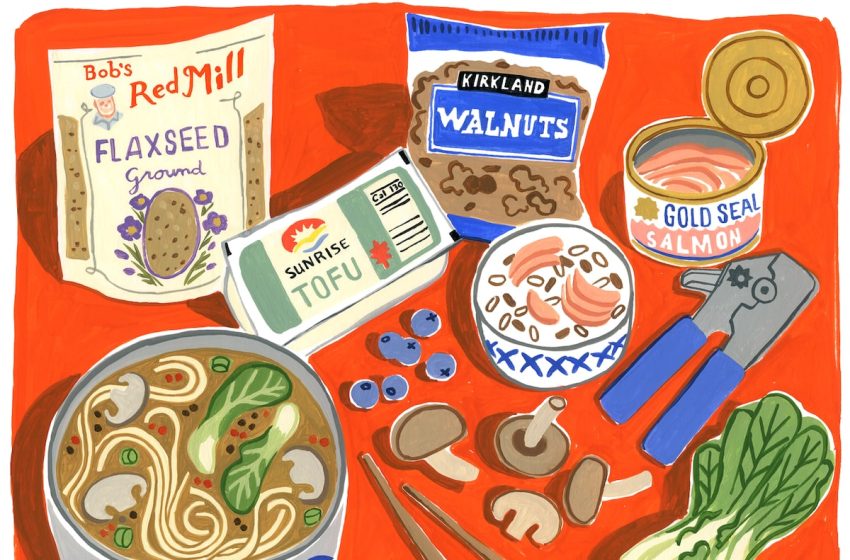
- Walnuts 1.36 kg bag – Kirkland – $25: Walnuts pair well in both savoury and sweet foods, like with cheese or in overnight oats.
- Extra-firm tofu – Sunrise – $4: I enjoy cooking with tofu because it’s versatile. I stir fry it, but I also add it to a smoothie for a protein source. It has a mild taste so it absorbs any flavour you put on it. In smoothies, I mix it with frozen berries and mango, and a tablespoon of seeds such as hemp or flax, and milk for calcium and vitamin B12.
- Frozen blueberries – Kirkland – $17 for 2 kg: They are great in a smoothie or overnight oats.
- Canned salmon with bones – Gold Seal – $4: I enjoy fresh salmon, but for function and cost, canned is just as good. Bones in canned salmon are edible and are a good source of calcium. I have it on a bed of rice with some Kewpie mayo and veggies such as spinach or eggplant and kimchi.
- Ground flaxseeds – Bob’s Red Mill – $8: Flaxseeds are great because they are a good source of soluble fibre, which firms up your stool and lowers cholesterol. You can add it to oats, smoothies or yogurt for a nutty flavour.
First Appeared on
Source link







