


Washington Post layoffs culminate decades of thinning coverage in Northern Virginia
Mass layoffs at The Washington Post yesterday (Wednesday) dealt a punishing blow to the newspaper’s storied history of local journalism after decades of declining emphasis on Arlington and Northern Virginia.
Reminiscent of the demises of the Washington Star in the early 1980s, Journal Newspapers in the early 2000s and Sun Gazettes in 2023, the job cuts entail a dramatic downscaling of reporting on the D.C. area.
They’re just the latest upset for the news landscape in Northern Virginia, a region littered with the tombstones of now-defunct publications.
The Post’s ups and downs in N. Va.
In the 1970s-90s, the Post — flush with cash — was able to maintain robust local news bureaus across the D.C. region even as it expanded its national and international footprint to compete with the New York Times. Its metro section held its own against a slew of competitors, some publishing daily, some less frequently.
“The paper blanketed Washington and its suburbs with reporters, and reaped advertising dollars from the car dealerships, department stores and cultural venues across Greater Washington,” the New York Times noted in post-mortem coverage of yesterday’s layoffs.
By the late 1990s, though, local coverage began to thin. Arlington officials and civic leaders would often complain that the reporters — usually just one at any given time — assigned to cover government and civic life in Arlington and Alexandria spent a preponderance of the time on the latter at the expense of the former.
Reporters on the Arlington/Alexandria beat reportedly told Arlington officials that their editors simply were more interested in Alexandria coverage.
As a result, what 20-plus years ago was fairly consistent coverage of county governance was typically replaced with one-off articles on hot-button topics.
By the early 2000s, the paper’s metro department had around 200 journalists, the Times reported. That was down to an estimated 40 before the layoffs, with a dozen or so remaining now.
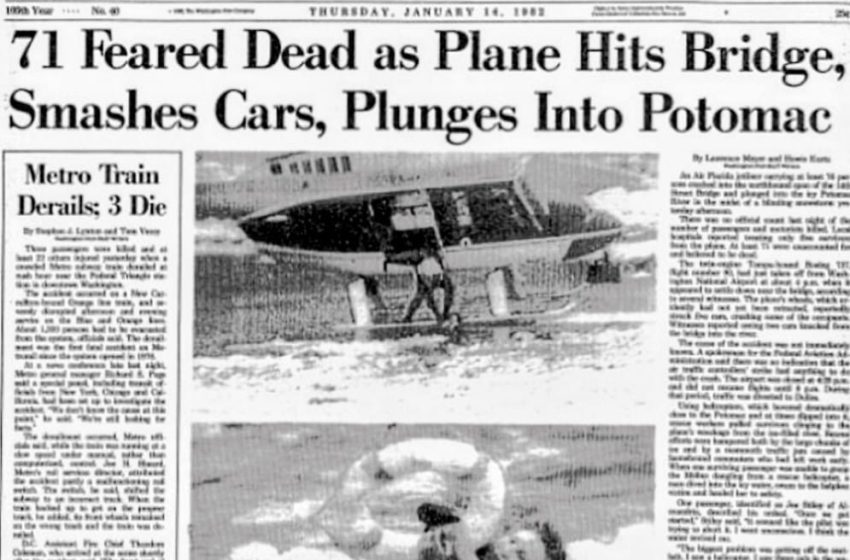
Arlington’s place in the Post’s priorities seemed confirmed in January 2003, when — in an event that shocked the county — County Board Chair Charles Monroe collapsed and died while presiding over his first regular Board meeting. The Post’s initial coverage of the extraordinary incident ran not on the paper’s front page, not even on the front of the Metro section, but on Page C12, at the bottom of the page below the weather report.
At one time in its long history, the Post had an Arlington-specific bureau, but in more recent years Arlington/Alexandria coverage was overseen and conducted out of the paper’s main offices in D.C., in a King Street satellite office or from reporters’ homes.
The most recent Arlington/Alexandria reporter, Teo Armus, also ended up tasked with covering regional immigration issues on top of government in the two jurisdictions.
Past competitors in the region
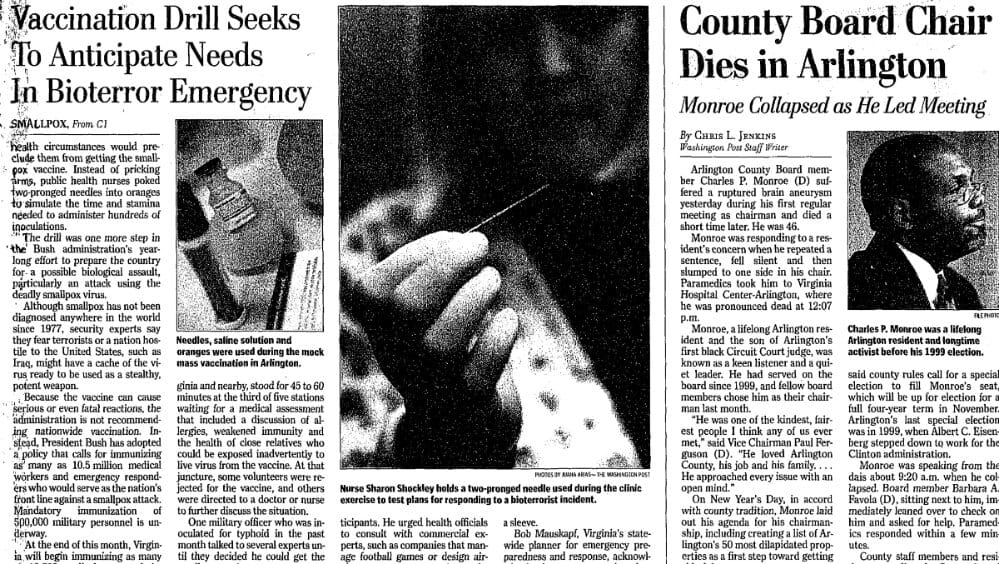
For much of the 20th century the Post competed fiercely with the Washington Evening Star. Each offered robust coverage of local news as part of their broader purview, and each had a claim to being the region’s leading paper.
The Star died in 1981 when its last owner, Time Inc., grew tired of subsidizing the money-losing venture. Despite what the ownership said were 60 inquiries about purchasing the newspaper, no deal could be made at the last minute.
Among those mourning its demise, via a front-page letter to the editor in the final edition, was then-President Ronald Reagan.
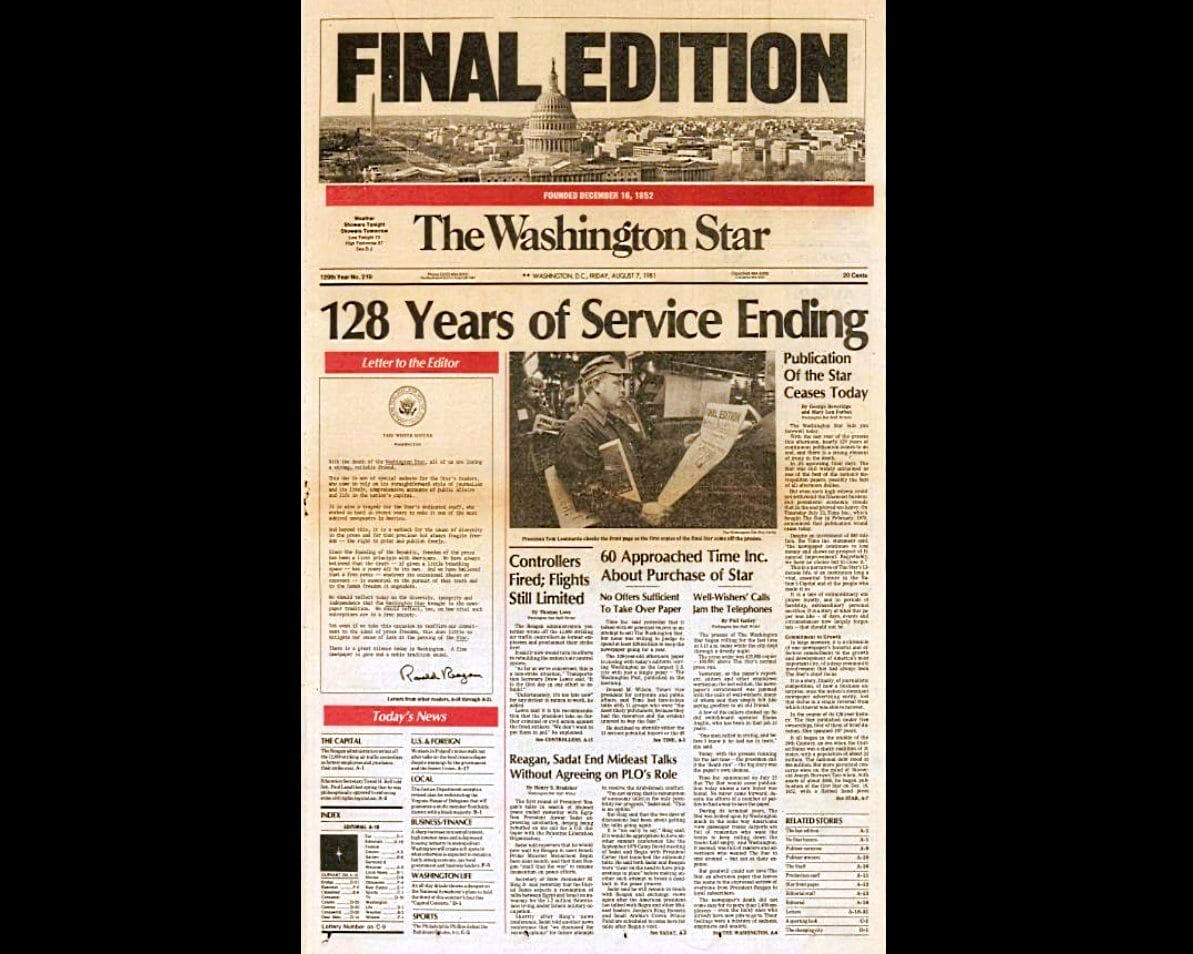
From the demise of the Star grew one local newspaper chain that, for a while, dominated Northern Virginia’s weekly news coverage.
Paul Clancy, a journalist who found himself looking for work after the Star’s closure, co-founded the Connection chain in the early 1980s with Tom Grubisich, a former Washington Post local news reporter and editor.
Starting with a single edition in Reston, the Connection rode the Northern Virginia economic boom of the 1980s, establishing as many as a dozen locality-specific weekly newspapers. It entered the Arlington market in the early 1990s with its acquisition of the Arlington Courier, which became the Arlington Connection.
While it — unlike others — has survived, Connection Newspapers is among many across the region and nation that have downsized in circulation, page count, content and staffing over the past two decades.
The Arlington Connection currently publishes twice per month, focusing mostly on feature articles. Connection-branded newspapers in Fairfax County continue to cover some hard news alongside feature coverage.
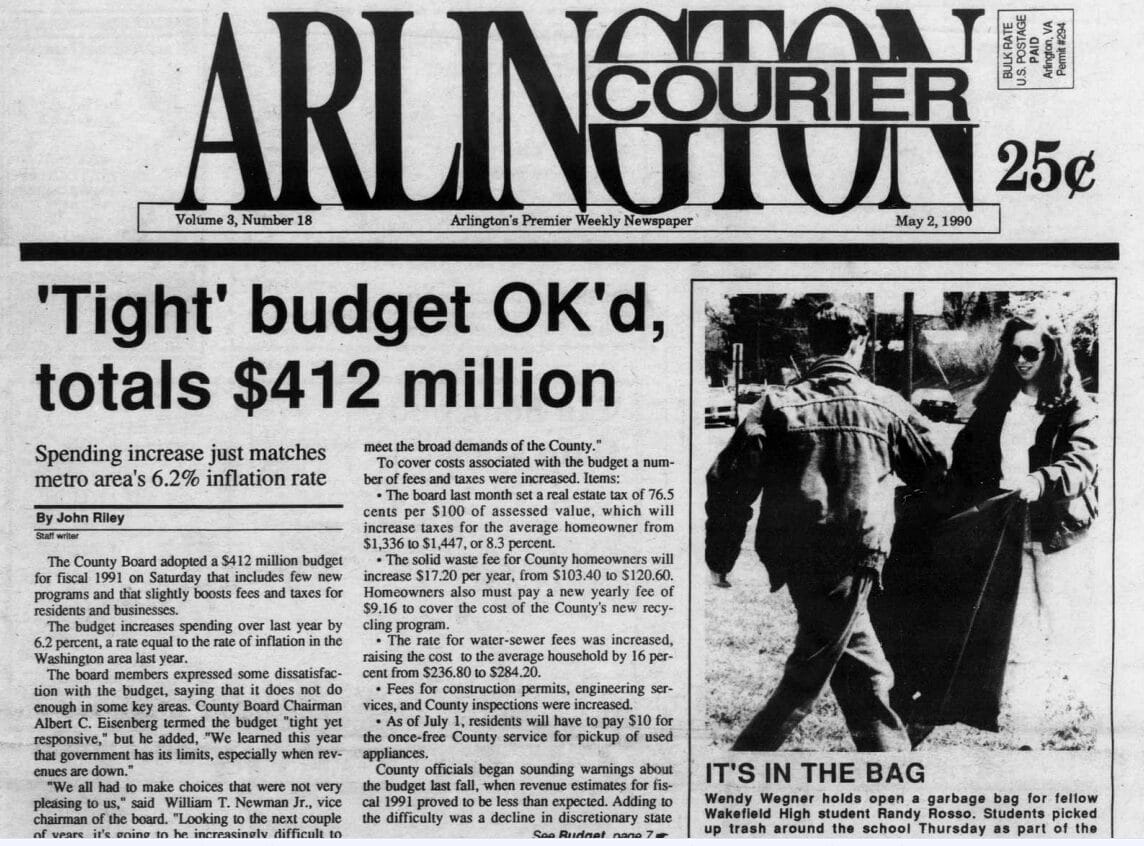
A 2024 ARLnow retrospective of print news publications over the past century in Arlington turned up some that lasted for decades, others only for a brief time:
- Arlington Citizen, published in the 1950s and edited by Anne Crutcher
- Arlington Connection, part of a regional weekly chain that began in the early 1980s and continues publishing twice-monthly today
- Arlington County Record, published 1932-33 in Clarendon
- Arlington County Record, published 1932-33 in Clarendon
- Arlington Courier (I), published in the 1930s before being absorbed by what would become the Northern Virginia Sun
- Arlington Courier (II), published in the 1980s-90s by David Dear Jr., who also published the Great Falls Current, before being absorbed by Connection Newspapers.
- Arlington Daily, published from 1939-51 by C.C. Carlin before merging with the Sun to form the Daily Sun
- Arlington Journal, a daily published beginning in the early 1970s that, by the early 2000s, had combined with other local editions in the Northern Virginia Daily, ultimately becoming the Examiner
- Arlington News-Gazette, published in the 1930s in Rosslyn
- Arlington Chronicle, published from 1920-51 in Clarendon, ultimately converting to a magazine format
- Columbia News, published 1941-45 by Eugene Bears
- GazetteLeader, a weekly publication operated from February 2023 to September 2024 until acquired by Local News Now, parent of ARLnow
- Northern Virginia Sun, a daily that operated under various names from the 1930s to the 1990s, ultimately morphing into the weekly Sun Gazette
- Rosslyn Rooster, published in 1938
- Washington (Evening) Star, published from 1851-1951 and, for most of its history, the dominant newsgathering force in the region
- Virginia News, published in the 1940s by E.N. Beard — which, despite the name, had an Arlington focus
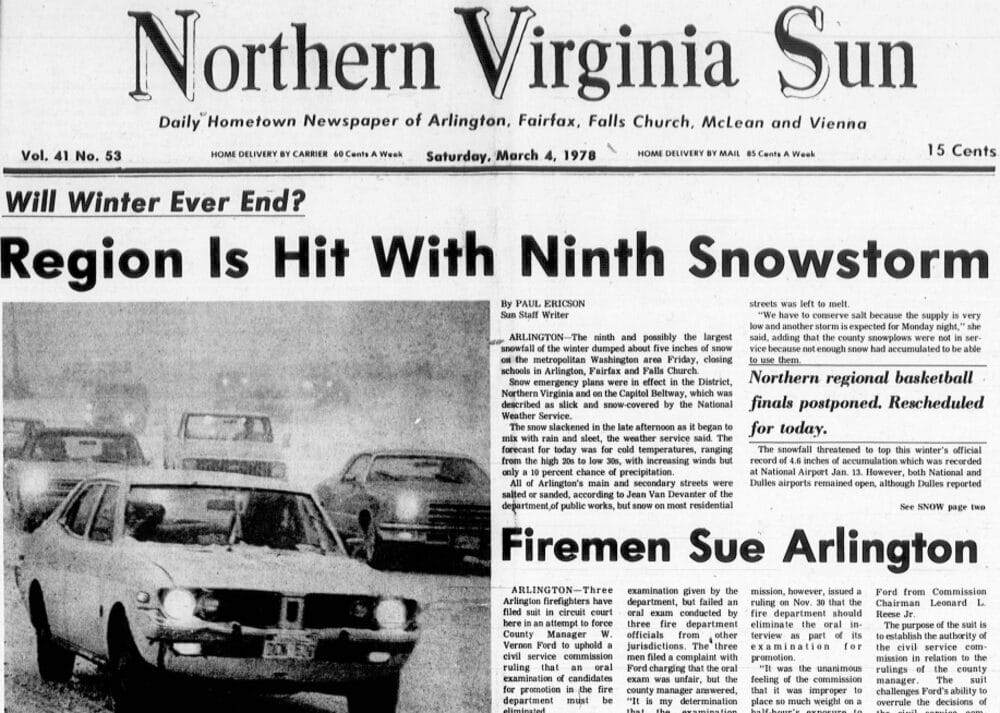
Some of those publications exist on microfilm in libraries across Northern Virginia. Others are found online at Virginia Chronicle, an outreach effort of the Library of Virginia.
But others are difficult, and perhaps impossible, to track down.
Historical archives of The Washington Post from 1877-2010 are available online to those with an Arlington Public Library card. Washington Evening Star archives from 1854-1972 are available via the Library of Congress.
First Appeared on
Source link






