


Wizards, Bucks, Jazz Make Right Moves
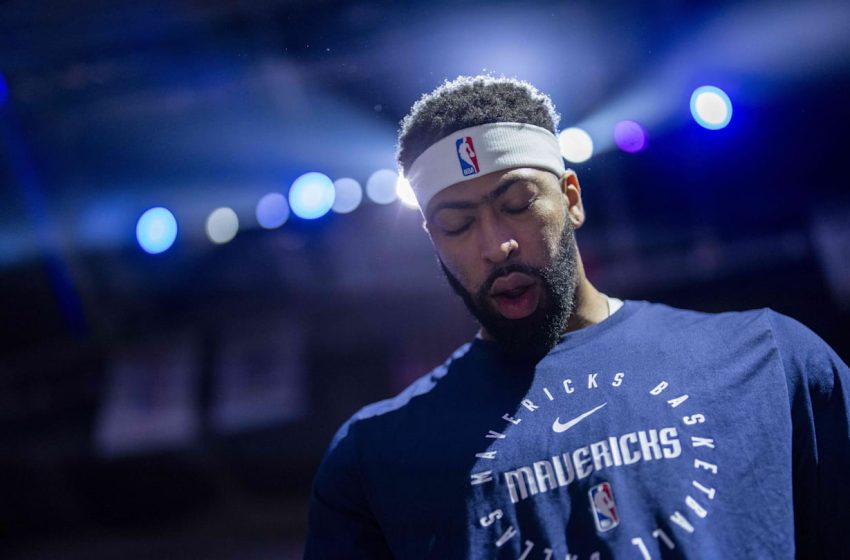
Earlier this week, as the Washington Wizards engaged teams on various trades, a conversation with the Dallas Mavericks took an unexpected turn. Dallas, aware that Washington was talking to Sacramento about Domantas Sabonis, wanted to know how serious those talks were. And if the Wizards had interest in Anthony Davis.
Wizards officials were surprised by the approach, sources tell Sports Illustrated. But they were interested. Among the reasons Washington swung the deal for Trae Young last month was a desire to be competitive next season. In recent years, the Wizards’ win totals have looked like locker combinations: 35, 18, 13, with this season unlikely to top 20. That’s positioned Washington for some high draft picks, picks that have yielded Alex Sarr, Bilal Coulibaly and Bub Carrington.
The next step, the team reasoned, was to put them in position to win.
But Washington had a limit. None of its top young players was on the table. Neither were its most valuable draft picks. What the Wizards would do is take back some of the Mavericks’ bad contracts, fork over a couple of good-but-not-great first-round picks and sweeten it with three second-rounders. After a short negotiation, Dallas agreed.
In the span of a few weeks, Washington has landed two of the NBA’s most notable distressed assets. The Wizards jumped on Young when the asking price was CJ McCollum and Corey Kispert. And they leaped at the chance to grab Davis when the principal cost was two picks (Oklahoma City’s in 2026, a top-20 protected first from Golden State in 2030) they were willing to part with.
Davis likely isn’t enthusiastic about joining the Wizards. Washington has no immediate plans to extend Davis, who has two guaranteed years left on his contract. And while being competitive is good for the Wizards, it’s probably not all that Davis, who will turn 33 next month, is looking for in the final phase of his career.
But the Wizards have a plan. Be competitive over the next two seasons and hope that by 2028 its young core is ready to turn a corner. Young and Davis can help them get there. And that makes Washington a big deadline winner.
Some other notable winners and losers from this week …
Winner: Milwaukee
I think the Bucks entered trade talks for Giannis Antetokounmpo in good faith. They wanted a package of young players and draft picks, sources tell SI. If a team came up with one they liked, the Bucks would have pulled the trigger.
But they didn’t, and at the end, no team came close. Milwaukee wasn’t enthralled by Golden State’s pick-heavy package. The Bucks liked Jaden McDaniels but needed Minnesota to come up with more picks. Miami was the last of the finalists, a source tells SI, with the Heat spending the hours before the deadline attempting to manufacture another first-rounder.
The Bucks wouldn’t budge. They recognize that they have a generational talent that should yield a return commensurate with it. Keeping Antetokounmpo could make things uncomfortable—especially if Giannis pushes to play again this season—but not enough for Milwaukee to just take the best offer on the table.
My two cents: They were right. The teams that wanted Antetokounmpo now will still want him in June, along with other teams (Knicks, Lakers) that didn’t have the assets to get into the race. Moreover, Milwaukee will have as many as three first-round picks to deal entering this draft. It’s not impossible for them to be able to swing a trade that entices Antetokounmpo to want to stay. Either way, without an overwhelming offer, the Bucks were right to stand pat.
Loser: Dallas
Financial flexibility is good. Ripping the Band-Aid off the Davis error, er, era, is, too. And the reality is there was no market right now—literally none—for the former All-NBA big man. But there’s no way to call a couple of low first-round draft picks a win. And it’s a little puzzling that Dallas wouldn’t wait until the offseason, when teams might be more open to Davis. Or, failing that, giving a Davis/Cooper Flagg/Kyrie Irving trio a try in the fall.
It just feels like the Mavericks were desperate to end this saga and move on. They have Flagg, a true franchise player to build around and some financial room to operate. But the final tally for Luka Dončić is Max Christie and three (likely) high first-round picks. That’s a disaster.
Winner: Boston
Trading a defensively challenged guard (Anfernee Simons) for a defensively challenged center (Nikola Vučević) is a win for the Celtics, who were starved for frontcourt depth. Neemias Queta has been one of the NBA’s most improved players this season and Luka Garza has emerged as a solid floor-spacing big. But with the postseason looming, Boston knew it needed another big to compete.
Enter Vučević. Vučević, 35, is a terrific scorer, a 16.9 ppg player this season who is connecting on 37.6% of his threes. He isn’t a defender, particularly in the pick-and-roll. But Boston needed another usable body in that frontcourt and Vučević is it. Simons was better than expected for the Celtics this season, but he is replaceable on the buyout market. Or if a certain All-NBA forward can come back.
Loser: Miami
The Heat tried, give them that. But Thursday’s deadline came and went with Miami doing nothing to upgrade a stale roster. The Heat failed in the pursuit of Antetokounmpo, passed on making a real offer for Ja Morant and did nothing with Terry Rozier’s $26.6 million expiring contract. Not a great week for the Heat.
Winner: Utah
Here’s what I like about the Jazz’s trade for Jaren Jackson Jr.: Utah gets a prime, All-Star forward who doubles as one of the NBA’s top defenders. In no world were the Jazz landing a player like Jackson in free agency. By trading for him before his contract extension kicks in, they have him locked in until 2029.
Here’s what I don’t like: The fit is kind of … eh. Along with Lauri Markkanen, Utah has a pair of dynamic power forwards. But Jackson isn’t a center, which means the Jazz will probably look to go with a jumbo lineup next season with Walker Kessler in the middle, bumping Markkanen to small forward. Markkanen played that position in Cleveland but blossomed into an All-Star in Utah as a power forward.
Then there is the cost. Jackson and Markkanen will make a combined $95 million next season. Kessler is a restricted free agent. He’s missed most of this season with a shoulder injury but was a double-double machine last season who led the NBA in offensive rebounds. There will be significant interest in Kessler, which could force the Jazz to pay $20 million to $25 million a year. That’s a more than $100 million frontcourt.
Then there are the ages. Markkanen is 28. Jackson is 26. Prime years. On the other end, Keyonte George, who is in line for a sizable extension this summer, is 22. Ace Bailey is 19. Whoever the Jazz draft this June will be around the same age. It’s not exactly a two-timeline situation, but Utah’s collection of stars (or would-be stars) are at different phases of their careers. Will those timelines intersect? The Jazz’s success with this group depends on it.

Loser: Chicago
After seven trades in six days the Bulls have a roster that looks … jumbled. They have seven guards in the rotation. Nick Richards is the only healthy center on a standard NBA contract. “I’m definitely worried about so many new players on the team and how little time we have for cohesion,” said Artūras Karnišovas, Chicago’s executive vice president of basketball operations. He should be. This Bulls team isn’t built—or rebuilt—to win. It’s to free fall into the lottery.
And maybe that’s the point? Six of the players picked up are on expiring deals, positioning the Bulls to have cap flexibility. Chicago collected nine second-round picks, which Karnišovas plans to use to retool the roster, via trade or the draft. But they sold pretty low on Coby White and Ayo Dosunmu and basically gave Vučević away for virtually nothing. That’s a hard sell to a fan base that hasn’t seen a playoff series win in more than a decade.
Winner: Oklahoma City
Jared McCain for … what? Several executives were surprised the Thunder could pick off the second-year guard for a package of picks that included just one first-rounder, a 2026 Houston pick that will likely wind up in the 20s.
McCain has had a reduced role this season, but he looked like a Rookie of the Year favorite last season before an injury ended his season after 23 games. He’s a 6′ 3″ combo guard who has connected on 38.1% of his threes over parts of two seasons. He joins a crowded Oklahoma City backcourt, but that kind of depth is valuable—certainly more valuable than one late first-round pick.
Winner: Indiana
Make no mistake: Indiana is taking a big risk here. By protecting its 2026 pick between Nos. 1–4 and Nos. 10–30, the Pacers are betting the lottery gods will be looking out for them. If not, there will be plenty of cringing over having forked over a high lottery pick in a terrific draft.
Still, Ivica Zubac, 28, is an elite defensive center, one that should complement the returning Tyrese Haliburton and All-Star forward Pascal Siakam next season. It’s a roll of the dice, but if Indy comes away with a top-four pick it will be formidable, both next season and in the years to come.
Loser: Golden State
O.K. it wasn’t that bad but the Warriors believed they had a real shot at Antetokounmpo, so much so that they had prepared Draymond Green for the possibility he could be traded, and they certainly hoped at the start of the season that Jonathan Kuminga could bring back a significant asset. Waiting on Antetokounmpo may have even cost them a shot at Jackson.
Instead, they get Kristaps Porziņģis, an ex-All-Star who has battled a variety of injuries and illnesses the last two seasons. If healthy, Porziņģis is still a force, a rim-protecting big and three-point threat who should thrive in Golden State’s offense. But Porziņģis has been limited to 17 games this season, averaging a career-low 24.3 minutes. Will a return to a contender and the motivation to earn a new contract inspire Porziņģis? We’ll see.
Winner: L.A. Clippers
Is Darius Garland a franchise guard? No, but getting a 26-year-old, two-time All-Star for a disgruntled James Harden is a solid save. The Clippers’ front office will cross its fingers on draft lottery night—a Pacers pick that lands between five and nine will give L.A. a desperately needed chance to add another potential cornerstone player—but getting a couple of first-round picks along with Bennedict Mathurin is a good return for Zubac.
A rebuild was always coming in Los Angeles. Harden may have forced the Clippers’ hand, but Lawrence Frank & Co. did a nice job getting top value for the team’s veteran talent.

Loser: Ja Morant
Clearly, there was no market for Morant. Injuries and bouts of immaturity have cratered his value. “You just can’t count on him to be available,” texted one team exec. The landscape could change this summer, but with two years and $87 million remaining on his contract, it seems unlikely that the Grizzlies will get anything more than matching salaries for their fallen star.
More NBA from Sports Illustrated
Listen to SI’s NBA podcast, Open Floor, below or on Apple and Spotify. Watch the show on SI’s YouTube channel.
First Appeared on
Source link






