


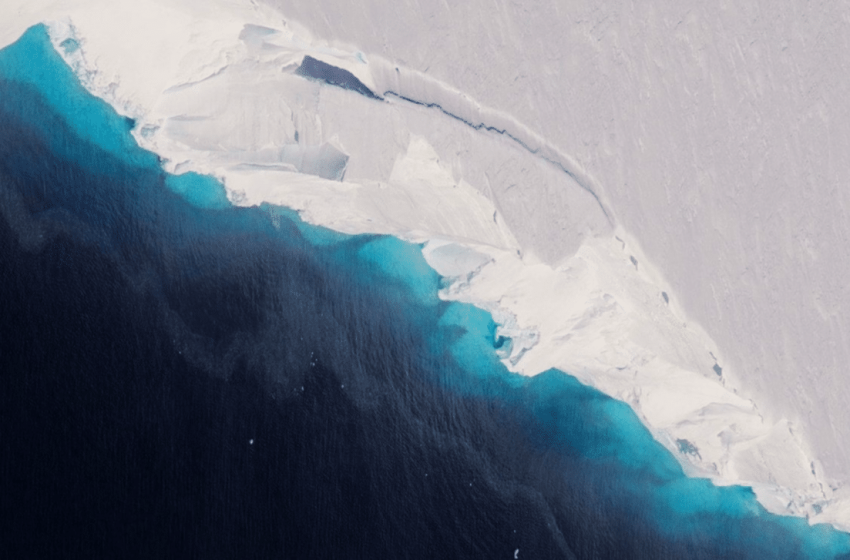
The Doomsday Glacier Foiled Scientists’ Bold Plan
The Thwaites Glacier, often called the “Doomsday Glacier” for its potential to drastically raise sea levels, has been the focus of an ambitious study led by researchers from the British Antarctic Survey (BAS) and the Korea Polar Research Institute (KOPRI). In an effort to understand the glacier’s melting process, a team of scientists drilled into the glacier’s massive ice sheet, only to face an unexpected setback. Their mission, which began with high hopes, ended with their instruments trapped deep in the ice. While the results were less than they expected, the research still provided critical insights into how the glacier’s melt might affect global sea levels.
The Significance of Thwaites Glacier and the Research Mission
Thwaites Glacier in Antarctica holds massive implications for global sea levels. If it were to collapse completely, it could contribute an alarming 25 inches (65 cm) to global sea level rise, a change that would threaten low-lying cities worldwide. Due to its unstable nature, scientists have been closely monitoring the glacier, particularly the warming waters beneath it that are responsible for melting the glacier from below. This makes it a critical site for research, as understanding the conditions beneath Thwaites could help predict future changes and better prepare for potential global impacts.
In a project spearheaded by BAS and KOPRI, researchers attempted to gather data from beneath the glacier to better understand how these warming waters contribute to ice loss. The team used a specialized hot water drilling system to create a borehole that was about 3,300 feet deep, with a width of around 11 inches. The goal was to lower a set of instruments into the hole that could collect data on ocean conditions beneath the glacier.
However, things didn’t go as planned. As the instruments were lowered through the ice, they got stuck about three-quarters of the way down. Despite the team’s best efforts, they could not retrieve the instruments, and the mission had to be abandoned.
“Fieldwork in Antarctica always comes with risk,” Keith Makinson, BAS oceanographer and drilling engineer, explained. “You have a very small window in which everything has to come together. While this outcome is deeply disappointing, the data we did recover are scientifically valuable and will help shape future efforts.”
Challenges Faced by the Research Team
The research team faced several challenges during this mission. The harsh environment of Antarctica, with its extreme temperatures and unpredictable weather, made the task much harder than anticipated. The window of time available for the mission was limited, and it quickly became clear that completing the full deployment of instruments would not be possible. The instruments, meant to stay in place for one to two years and transmit data via satellite, became lodged in the ice, likely due to refreezing or the glacier’s fast-moving nature. Despite their disappointment, the scientists recognized the value in the data they had already collected.
“Failure is always an option when you are pushing at the limits of scientific exploration,” Peter Davis, BAS oceanographer and drilling team member, remarked. “We know heat beneath Thwaites Glacier is driving ice loss. These observations are an important step forward, even though we are disappointed the full deployment could not be achieved.”
This admission of failure underscored the team’s commitment to exploring the unknown, despite the inherent risks involved.
The Data Collected: A Step Forward in Understanding
Despite the setback, the data recovered from the borehole provided valuable information about the conditions beneath the glacier. The measurements revealed turbulent ocean currents and relatively warm waters, which are responsible for melting the glacier from below. This critical data helped paint a clearer picture of the environmental factors influencing the glacier’s instability.
“This is not the end,” said Won Sang Lee, chief scientist and professor from South Korea. “The data show that this is exactly the right place to study, despite the challenges. What we have learned here strengthens the case for returning.”
The successful drilling of the borehole and the data it produced are not just setbacks—they represent a breakthrough in understanding the forces at play under one of the most important glaciers in the world. The team plans to return for further studies, aiming to overcome the challenges faced during this mission and continue their crucial work.
First Appeared on
Source link






