


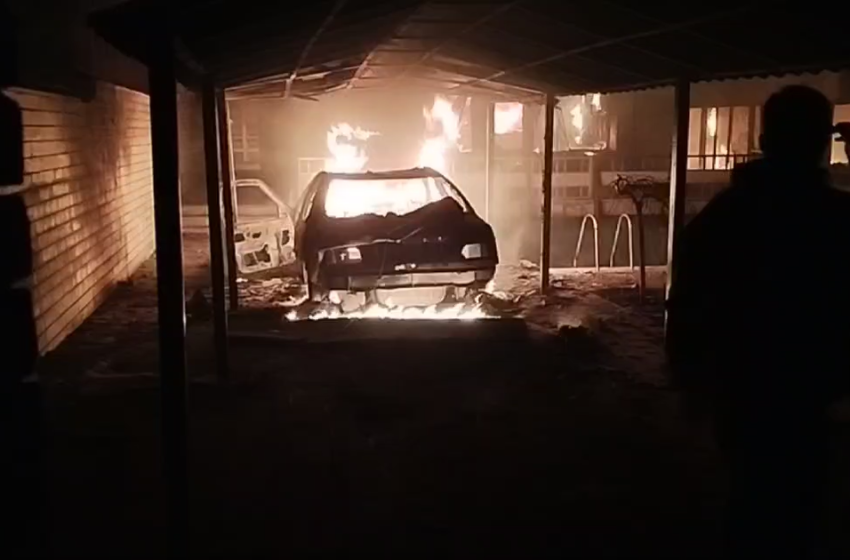
Reformist says Iranian security forces staged violence to justify crackdown
The effort to compile a database of detained healthcare workers is led by the AIDA Health Alliance (AHA), named after Aida Rostami, a 36-year-old Tehran physician who treated protesters in secret during the 2022 protests, went missing after a hospital shift, and was later found dead bearing signs of torture.
Doctors involved with AHA say they have so far identified at least 40 detained healthcare workers across multiple provinces, including doctors, nurses, medical students, technicians and volunteer first responders. They say the figure is likely incomplete.
“Hospitals are no longer safe places,” said Homa Fathi, one of the doctors involved in documenting the cases. “If a doctor treats a protester, questions security forces or refuses to discharge a patient prematurely, that doctor becomes a target.”
Doctors working on the documentation say the crackdown has pushed medical care underground, forcing physicians to choose between their professional oath and their personal safety.
Some have established makeshift home clinics to treat gunshot and pellet wounds. Others report being followed, threatened or warned to stop providing care altogether.
The Norway-based rights group Hengaw reported this week that an Iranian surgeon, Alireza Golchini, had been charged with moharebeh, or waging war against God—a charge that carries the death penalty.
Golchini was later released on bail following international pressure, including a statement by the U.S. State Departmentcalling for his release alongside what it described as “all the brave doctors who have helped their fellow countrymen.”
Doctors following his case say it has not been closed and is not an outlier, but part of a broader effort to dismantle medical networks that support protesters.
Fathi described a hospital in southwest Iran where an elderly woman suffering from hundreds of pellet wounds to her face, back and legs was forced out of care to free beds for members of the Islamic Revolutionary Guard Corps.
In other cases, she said, security forces fired tear gas inside emergency departments to clear wards, while doctors who confronted plainclothes agents photographing injured patients were later arrested.
She also cited an incident in which a medical intern was shot inside a hospital after protesting the presence of security forces. In one of the most disturbing accounts, she described unconscious patients being placed among the dead.
Another physician, Panteha Rezaeian, described cases in which doctors were followed to prevent home treatment, homes were raided, and physicians were warned to stop speaking publicly or face detention.
“We are seeing people attempt to remove bullets themselves or treat serious injuries at home,” Rezaeian said. “Some of them die days later, not because their injuries were unsurvivable, but because they were too afraid to seek help.”
Rezaeian warned that the denial of medical care had become “a secondary killing mechanism,” as injured demonstrators avoid hospitals out of fear of arrest or execution, risking death from untreated wounds, infections and internal injuries.
Doctors involved in the documentation effort say the pattern has intensified since January, with arrests accelerating after the latest wave of nationwide protests.
They warn that the systematic targeting of healthcare workers is intended not only to punish doctors, but to deter the injured from seeking care at all.
“This is not just about arresting doctors,” Rezaeian said. “It is about making people afraid to survive.”
You can watch the full interview of Eye for Iran on YouTube or listen on any podcast platform of your choosing.
First Appeared on
Source link






