


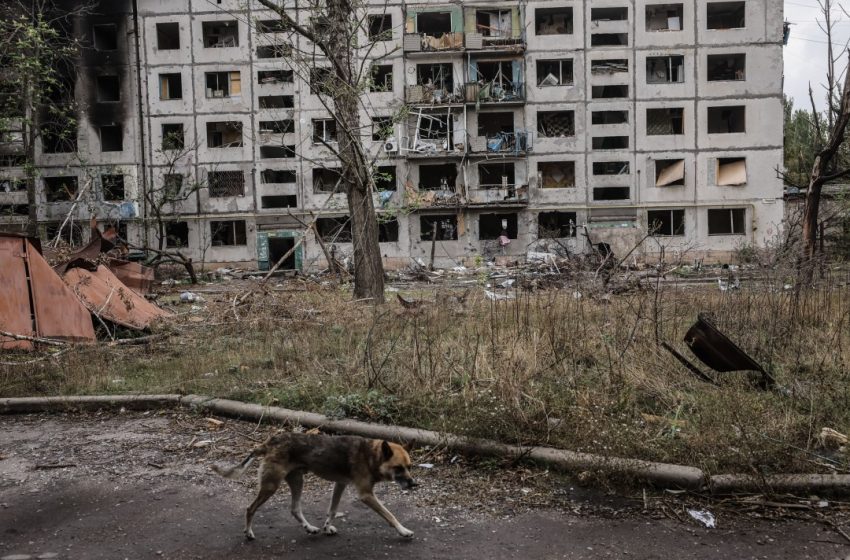
War in Ukraine Exposes Natural Selection in Dogs
War hasn’t only affected Ukraine’s people, but also their pets. A recent study in the Evolutionary Applications finds that since Russia’s invasion, many former pet dogs near the frontline, surrendered or left behind, have started to resemble wild canids like wolves or coyotes. Researchers collected data on 763 dogs in nine regions, working with shelters, veterinarians, volunteers, and, in active combat zones, Ukrainian soldiers themselves, per the New York Times. Zoologist Ihor Dykyy, who served near Lyman and Kharkiv, described terrified strays suffering from blast injuries and “shell shock” that troops tried to feed and treat when they could.
On the front, the dogs looked different from typical house pets. Short-snouted breeds like French bulldogs and long-snouted ones like dachshunds were rare. Many animals were leaner, with more pointed ears and straighter tails—traits linked to survival in harsh conditions. Frontline populations also had fewer old, sick, or injured animals and were more often found in packs. “War acts as a powerful filter, favoring traits that improve survival under extreme conditions,” study co-author Malgorzata Witek of the University of Gdansk tells the Times, adding that the speed of the shift was what “surprised us most.”
The researchers stress this is not rapid genetic evolution but a brutal sorting process: dogs with certain bodies and behaviors are more likely to make it. Smaller, lighter dogs are less likely to set off mines, easier to conceal, and present smaller targets. Many still rely heavily on people—soldiers, volunteers, and civilians—for food, supplementing with plants, scavenging, or occasional hunting. Some have been taken in by Ukrainian troops; others have survived by feeding on the dead. A subset, though, now appears to live independently of humans, a process lead researcher Malgorzata Pilot describes as “feralization.”
First Appeared on
Source link






