


Boston’s Street Psychiatry for the Homeless
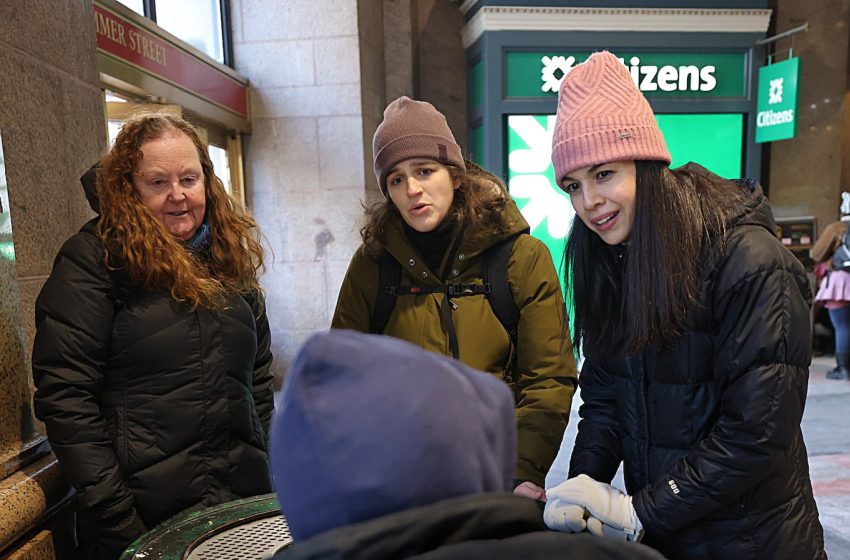
“Street psychiatry flips the usual model,” Koh said. “Instead of asking people to come to us, we go to them.”
Koh is part of an emerging trend in homeless care in Boston focused on delivering mental health care directly to people, wherever they may be sleeping: on sidewalks, under bridges, or in parks. The effort has seen medical professionals join forces with the Boston Healthcare for the Homeless Program, the city’s largest homeless services provider, to aid those living with mental illness on the street.
Proponents argue street encounters aren’t an act of charity, but a clinical necessity.
The drive for more street-based care comes as the Trump administration pushes for an opposite approach, encouraging local governments to step up civil commitment of mentally ill and homeless individuals who pose a danger to others or are unable to care for themselves.
Several states, including California and New York, have expanded laws that make it easier to mandate psychiatric care, while cities including Portland, Ore., and Denver have increased police-led encampment clearings in the name of public safety.
Koh, who also teaches at Harvard Medical School, and Dr. Eileen Reilly, a psychiatrist at Cambridge-based nonprofit Vinfen Corp., documented what they see as the benefits of their work in a research paper they published in December. They argue that with homelessness near record highs nationwide, the field must be recognized, trained, and funded as a legitimate subspecialty of medicine.
The need is immense, the street doctors said. They estimate more than three-quarters of people experiencing homelessness have a mental illness, with rates even higher among those living outdoors. But many never set foot in a traditional clinic. Trauma, addiction, paranoia, and daily survival needs often make scheduled appointments impossible.
The approach is built on familiar psychiatric principles — observation, diagnosis, and treatment — but adapted for unpredictable, high-risk settings. Clinicians must assess medical stability on the spot, build trust over months, and often prescribe medications without the benefit of full medical histories or lab work. A simple offering of clothing or food may be the first step toward care.
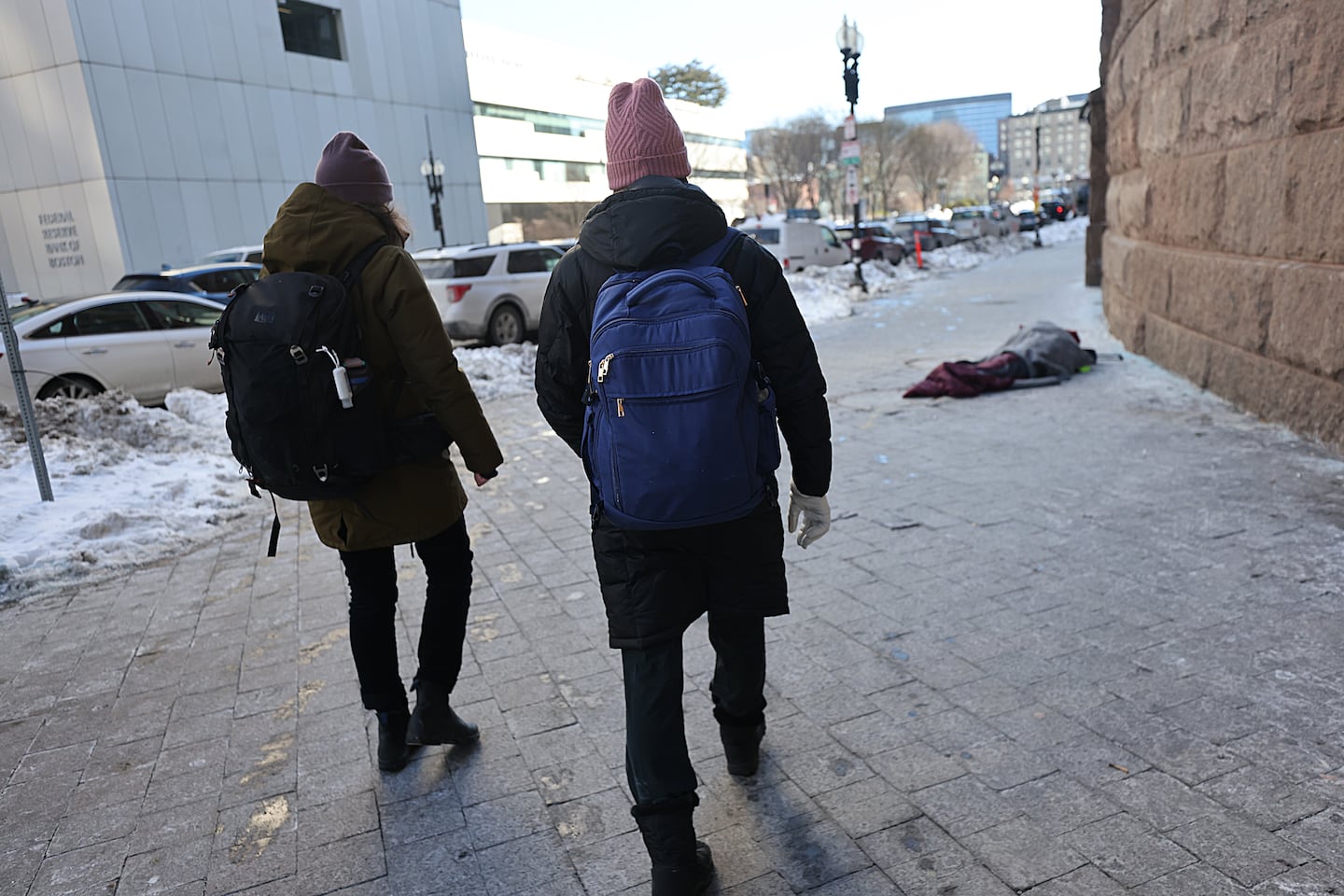
Koh heads out every Thursday morning as part of a team from Boston Health Care for the Homeless to scan sidewalks and transit stations, watching for signs that someone might need help — a person talking to themselves, someone sitting alone for hours, anyone who looks unwell. Walking with them is therapist Amy Summer. On a recent Thursday, they crossed paths with a Pine Street Inn team handing out granola bars in South Station, one of many homeless services groups working the same streets.
They described how consistency, showing up week after week, can eventually engage people who initially refuse help, a process they call the “long walk.”
Because prescriptions are easily lost or stolen, psychiatrists favor daily dosing, short refills, and long-acting injectable medications for conditions such as schizophrenia or opioid use disorder. The goal is harm reduction and stabilization, not perfection.
They don’t want to replace the health care system but instead create a bridge to get people into it. In 2024, Mass. General opened a dedicated clinic for homeless patients on its main campus, staffed in part by the same clinicians who do street outreach, hoping patients will eventually seek care indoors.
Not everyone sees street psychiatry as a simple solution. Critics argue it risks normalizing homelessness.
Rachel Sheffield, a research fellow at the conservative Heritage Foundation, said the Trump administration is intentionally steering federal policy toward short-term housing that requires detox.
“Shelter is important, but you want to actually help people move on,” she said. “Temporary shelter paired with requirements for drug treatment or job training — a whole-person approach — is what needs to happen.”
Stephen Fox, who chairs the South End Forum’s working group on addiction and homelessness, said he supports training young doctors to work in street medicine but worries they’ll quickly hit the same systemic barriers that neighborhood groups and service providers have struggled with for years.
“Everyone comes right up against the same silos — clinical, housing, policy — all separated from each other,” he said. His working group, which partners with business owners and includes city officials such as Representative John Moran, City Councilor John FitzGerald, and Kellie Young, a former member of the Boston Emergency Services Team, has spent the past year drafting recommendations aimed at untangling those divides. “We’re all trying to fix this,” he said, “but the system makes it harder than it should be.”
Fox and the team recommend an approach that offers people a choice between being forced to move and treatment. “We’re not leaving them alone. We offer to go to a center, detox, and stick with a case manager, or alternatively, go with the cops.”
Koh and Reilly counter that mental health treatment and housing are not competing goals, and untreated illness often stands in the way of permanent housing.
“Street psychiatry is about refusing to accept that some lives are too hard to reach,” Koh said.
Koh grew up with what she calls “the opposite of homelessness” — a stable, loving home. It wasn’t until she was an undergraduate at Harvard that she encountered people sleeping outside, often just blocks from one of the world’s wealthiest universities. Her first real conversation with someone who was homeless took place in Harvard Square, in front of a bookstore. She remembers expecting awkwardness, maybe distance. Instead, they talked about the Red Sox, the weather, and shared some strawberries.
“I realized how wrong my assumptions were,” Koh said. “These were just normal conversations. And it made me think — had I been born into a different family, with different circumstances, I could easily be in their shoes.”
That moment stayed with her. By the time she was enrolled in medical school, she knew she wanted to work with people experiencing homelessness. Psychiatry, she found, offered a way to understand the deeper forces shaping their lives.
“So much of why people are on the street goes back to early trauma,” she said. “People hear these stories and think someone didn’t work hard enough. But the reality is unimaginable adversity.”
She notes patients whose parents set them on fire or locked them in closets for days without food or water. Trauma, she said, affects the ability to trust, regulate emotions, and form healthy attachments, sometimes for decades.
“It’s a different mindset from how we are often taught in our medical training, where you’re expected to diagnose and treat in 30 minutes,” Koh said.
Dr. Margot Kushel, a professor of medicine at the University of California San Francisco, said street psychiatry is expanding in cities across the nation partly because of the shortage of housing and of new opportunities to bill Medicaid for street-based care. Street psychiatry raises ethical questions around obtaining consent for long-acting injectable medications.
“The people who can’t access shelters often can’t because of behavioral health challenges,” Kushel said. “Going to them is sometimes the only way they’ll receive any help — otherwise they suffer silently.”
Sometimes, the results are striking.
Koh recalls a woman she met who had been living under a bridge for eight years. Within a week, she came to the clinic. Within six months, she was housed. Two years later, she remains sober, engaged to be married, and connected to care.
“That doesn’t happen for everyone,” Koh said. “But if it can happen for one person, it means we can never give up. You never know when someone is ready.”
Sarah Rahal can be reached at [email protected]. Follow her on X @SarahRahal_ or Instagram @sarah.rahal.
First Appeared on
Source link






