



Dutch Navy Warship Shoots Down Attack Drones off the UK Coast
In December 2025, a Dutch Navy frigate faced off against a drone swarm off the coast of the United Kingdom. This was no combat mission, but it wasn’t a routine drill either. The three-day operation brought together live firepower, virtual threats, and multinational coordination in one of NATO’s most complex maritime training simulations to date.
Developed by the UK defense technology group QinetiQ, Exercise Sharpshooter is part of a growing shift toward hybrid warfare readiness. It marked the first time a NATO partner joined this format, as military planners face mounting pressure to defend fleets against autonomous systems, multi-domain strikes, and saturation attacks.
Crews were tasked with detecting, tracking, and intercepting simultaneous threats, some real, some simulated, under high-tempo conditions that mirror those seen in recent conflicts. The goal was to evaluate not just firepower, but the crew’s performance under layered, multi-vector pressure.
Dutch Frigate Engages Seven Live Targets During UK-Hosted Trial
During the December operation, the Royal Netherlands Navy deployed its air defense and command frigate, HNLMS Evertsen, roughly 20 miles off the Welsh coast. The scenario included five Banshee Whirlwind aerial drones and two Hammerhead uncrewed surface vessels, both launched to simulate real-world drone strike behavior.
As confirmed by UK Defence Journal and Indian Defence Review, Evertsen successfully intercepted all seven live targets using its onboard combat systems. The threat environment also incorporated simulated cruise missiles, ballistic projectiles, and hostile aircraft, introduced via QinetiQ’s synthetic training platform. These digital threats were processed through the ship’s real combat systems to evaluate response coordination in real time.
The entire operation was staged from the UK Ministry of Defence’s Aberporth Weapons Range, where tactical planning and systems integration were led by Inzpire, a QinetiQ-owned company that specializes in synthetic warfare training.
Commander and QinetiQ Leadership Confirm Exercise Value
Commander Marcel Keveling of the Royal Netherlands Navy emphasized the realism and operational value of the event. In verified remarks published by QinetiQ, he stated:
“To be able to fire at live targets and keep our crew in a higher state of readiness for multiple days has taught us many lessons we aim to take with us when sailing on an operational level.”
Will Blamey, Chief Executive for UK Defence at QinetiQ, added that the exercise gave the UK and its allies a chance to “train alongside each other, sharing tactics and learnings to improve readiness.” The event marked the first time synthetic and live naval threats were tested in tandem by a non-UK NATO member.
Simulated Complexity Pushes Combat Systems to the Edge
Sharpshooter’s design goes beyond conventional war games. By blending real drones and virtual missile threats, the exercise mimics the kind of multi-domain operations that are increasingly shaping naval conflict.
Crews must process inputs from live, synthetic, and surface threats simultaneously, forcing accelerated decisions and exposing any delays or system frictions in the ship’s architecture.
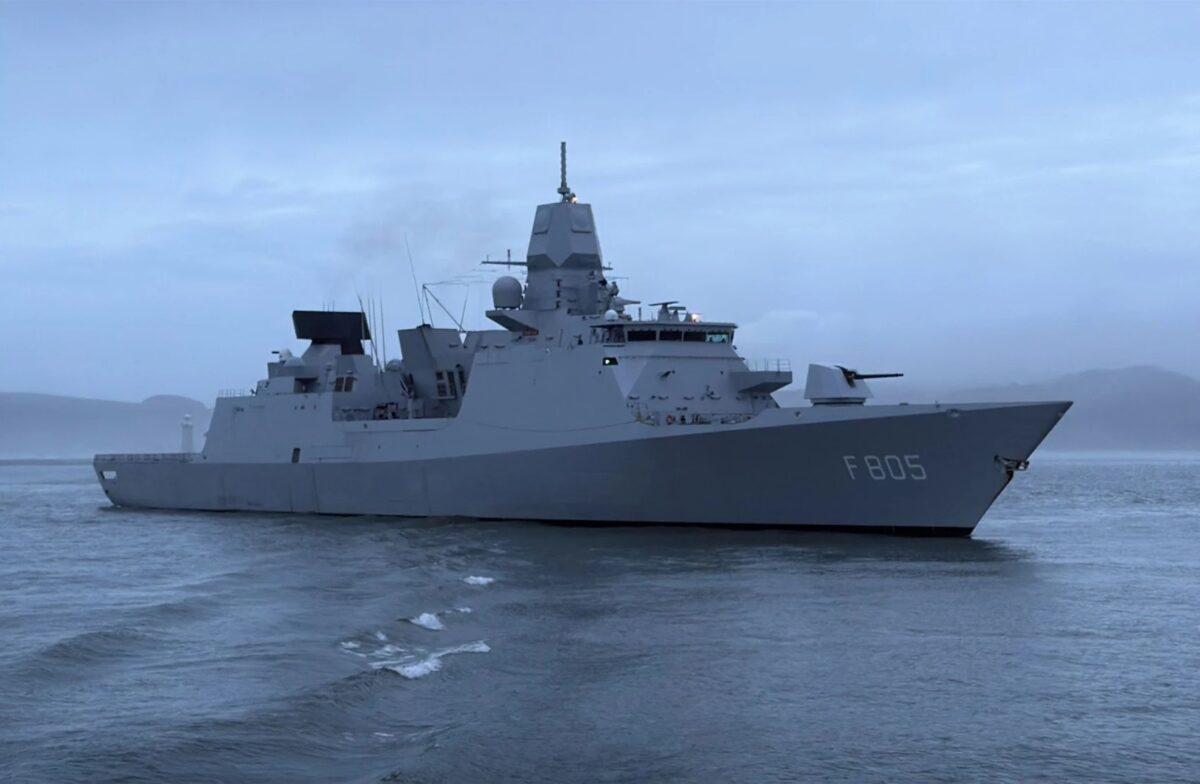
Specialists from Inzpire were embedded both onboard Evertsen and at the control range to manage real-time coordination and ensure scenario fidelity. No system failures were reported, and all live targets were neutralized during the exercise window.
No public technical assessment has been released by the Royal Netherlands Navy, though internal reviews are expected in early 2026. Key system metrics, including sensor tracking, latency, and fire control sequence, remain classified.
Wider NATO Rollout Faces Funding and Interoperability Hurdles
Despite its technical success, Exercise Sharpshooter has yet to be adopted across NATO. So far, only the United Kingdom and the Netherlands have participated in full-scale trials involving both physical and synthetic combat layers.
Cost remains a significant factor. Analysts cited by Indian Defence Review estimate that each exercise may cost several million pounds, depending on the assets involved. That figure includes synthetic threat development, ship deployment, and munitions.
Previous iterations included Royal Navy destroyers and joint operations like Exercise Med Strike and Formidable Shield, both involving missile intercepts and joint-force training. Further NATO participation has not yet been confirmed.
QinetiQ has stated that new trials are in planning, but no additional nations or dates have been publicly disclosed.
Maritime Drone Use in Global Flashpoints Prompts Urgent Adaptation
Naval planners across NATO have taken note of drone swarm tactics employed in conflict zones like the Red Sea and Eastern Mediterranean. These attacks, often launched by non-state actors, target merchant ships and military assets using low-cost, high-mobility drones that are difficult to detect and neutralize.
As the use of uncrewed systems expands, training formats like Sharpshooter offer a scalable way to rehearse complex defense strategies without exposing crews to real-world risk. The exercise allows armed forces to measure and improve crew readiness, interception timelines, and command system performance in high-pressure scenarios.
With HNLMS Evertsen completing its objectives and all live targets successfully intercepted, the Netherlands has become the first NATO partner to complete a full synthetic-live cycle within the UK’s Sharpshooter framework.
First Appeared on
Source link






