


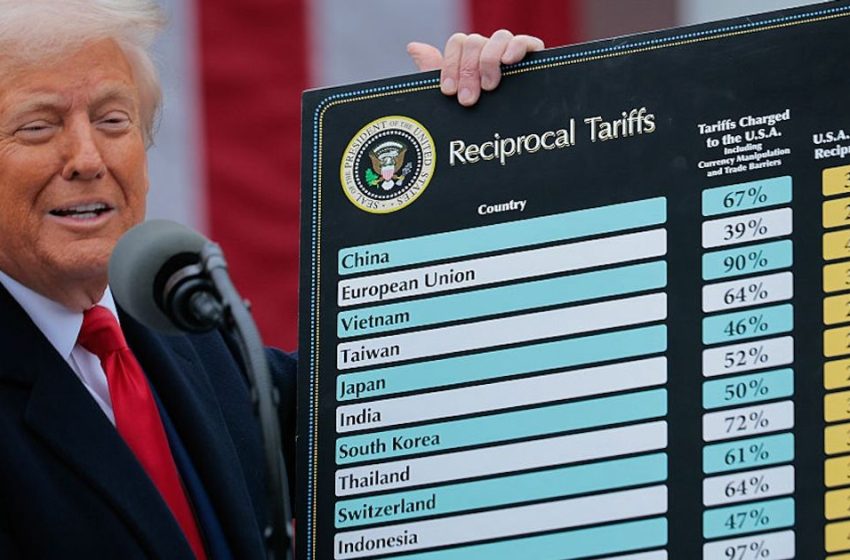
Trump’s tariffs cost the average American household $1,000 last year
New analysis shows Trump’s tariffs have pushed up US living costs, with consumers bearing most of the burden as the Supreme Court weighs the legality of the policy.
Fresh analysis from the Tax Foundation has outlined the economic impact of tariffs introduced under Donald Trump’s use of the International Emergency Economic Powers Act (IEEPA).
The measures, which target trading partners such as China, Canada, Mexico and the UK, have been linked to higher living costs for US households. Research from the Kiel Institute suggests the financial hit has largely landed on American consumers, who are estimated to have absorbed 96% of tariff-related price increases. The study examined more than 25 million shipment records covering over $4 trillion in US imports.
Julian Hinz, Research Director at the Kiel Institute and one of the authors of the study, said: “The tariffs are an own goal, The claim that foreign countries pay these tariffs is a myth. The data show the opposite: Americans are footing the bill,” he said.
It comes after Trump issued an update on when Americans will get $2,000 stimulus checks this year.
READ MORE: Trump walks back $2K stimulus check claims after warning he hasn’t ‘made the commitment’READ MORE: Trump’s payments of up to $155,000 payments will hit accounts soon – here’s when
The findings add to wider assessments that point to tariffs functioning as a domestic tax. One analysis states: “The Trump tariffs are the largest US tax increase as a percent of GDP (0.54 percent for 2026) since 1993.”
The White House has pushed back against criticism of the tariff program. In comments to ABC News, spokesman Kush Desai said: “America’s average tariff rate has increased by nearly tenfold in the past year — while inflation has actually cooled, real wages have risen, GDP growth has accelerated, and trillions in investments continue pouring in to make and hire in America,” White House spokesman Kush Desai said in a statement to ABC News.”
Despite this, estimates indicate the cost burden on households is expected to rise further this year, increasing from last year’s eye-watering $1,000 to $1,300 per household. Analysts say consumers are expected to shoulder almost all of the tariff-related costs through higher prices.
The effects are being seen across everyday spending, with higher prices reported for basic goods. Apparel and leather products have seen price increases of 34% and 36% respectively, while the average cost of a car has risen by about $5,700, according to the Eurasia Review.
The data also suggests the impact is uneven, with lower-income households facing an effective tax increase of 1.9%, compared with 1.4% for higher earners.
The legality of the IEEPA tariffs is now under review by the US Supreme Court. During oral arguments in November, several justices signaled doubts over whether the legislation provides authority to impose such tariffs. The Court is currently in its winter recess, with February 20, 2026 listed as the next scheduled session and a possible date for a ruling.
Reacting on Truth Social, President Donald Trump warned of major consequences if the court overturns his authority. He said the US would be “screwed,” due to the scale of repayments that could be owed to American companies.
“And that doesn’t include the amount of payback that Countries and Companies would require for the investments they are making… for the purpose of being able to avoid the payment of Tariffs,” he said.
“When these Investments are added, we are talking about Trillions of Dollars!” he said. “It would be a complete mess, and almost impossible for our Country to pay.”
“In other words, if the Supreme Court rules against the United States of America on this National Security bonanza, WE’RE SCREWED!” Trump said.
Click here to follow the Mirror US on Google News to stay up to date with all the latest news, sport and entertainment stories.
First Appeared on
Source link






