


The shingles vaccine may have a dementia upside
Unlock the Editor’s Digest for free
Roula Khalaf, Editor of the FT, selects her favourite stories in this weekly newsletter.
The writer is a science commentator
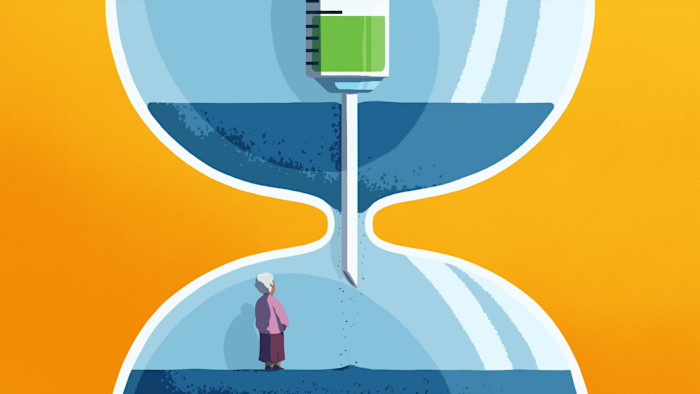
The shingles vaccine could, at a stretch, be labelled an accidental blockbuster. It does its intended job of fending off the varicella-zoster virus, which causes both chickenpox and shingles, but a growing body of evidence hints it also protects against dementia, particularly among women.
Over the past year, data from separate vaccine rollouts in Wales, Australia, Canada and the US suggests it can delay the onset of dementia, slow down its progress and cut the risk of death among those already diagnosed. Despite the vaccine being aimed at the over-50s, the 39-year-old researcher leading some of the analyses is so convinced by the data that he has had the jab himself.
Pascal Geldsetzer, assistant professor of medicine at Stanford University, is now trying to set up a clinical trial to prove it is cause and effect, not mere correlation. “It’s extremely exciting because this is an inexpensive one-off intervention, not a medication that has to be taken every day or an exercise and diet regimen you have to stick to for decades,” he told me.
The unexplained connection between shingles vaccination and lowered dementia risk matters for several reasons: it highlights the power of “natural studies”, which harness mass observational data; it shows how repurposing vaccines and therapies can offer hope where novel offerings are falling short; it implicates viruses in neurodegenerative diseases; and it reveals the potential wider gains of vaccination at a time when public confidence is wobbling.
The studies focus mostly on the Zostavax vaccine, a live attenuated form of the varicella-zoster virus (in many countries, Zostavax has now been superseded by the more effective Shingrix vaccine). The virus causes chickenpox in childhood and can reactivate later to cause shingles, a painful rash that can have long-term effects including hearing loss and blindness. Older people and those with weakened immune systems are most at risk.
In 2013, Wales rolled out Zostavax to those aged 70-79 on September 1. The cut-off meant that anyone turning 80 after that date could get jabbed but everyone older, even by one day, never became eligible.
As Geldsetzer puts it, that policy created “these beautiful comparison groups. If you take 1,000 people born one week, and compare them to 1,000 people born a week later, there shouldn’t be anything [systematically] different between them except for their probability of getting the shingles vaccine.”
The two groups in Wales, comprising over 280,000 people, did show a striking difference over the next seven years: the vaccine-eligible group were 20 per cent less likely to receive a dementia diagnosis. Eric Topol, a US researcher who writes the Ground Truths medical blog, surveyed the evidence and concluded recently: “If this vaccine was a drug and reduced Alzheimer’s by 20 per cent, it would be considered a major breakthrough.” One study published last month in The Journals of Gerontology even suggested a link with slower biological ageing.
It is unclear why women benefit more than men and unknown whether the dementia advantage comes from keeping the shingles virus battened down or from a more general vaccine-induced polishing of the immune system. It could be both. Research from 2024 showed that the newer Shingrix vaccine and RSV vaccine are both linked to an even greater reduction of dementia risk, attributed to an immune-boosting ingredient. One theory is that the vaccines somehow reduce inflammation, which might otherwise prime brain cells to go rogue or reactivate viruses. It is unclear, though, how these findings relate to people who have already had shingles, nor whether a jab would lower their dementia risk.
Geldsetzer is now looking to fund a clinical trial on Zostavax to answer those questions and as a step towards regulatory approval. In November, the Alzheimer’s Society, together with scientists at the University of Exeter, also identified Zostavax as a promising candidate.
The UK recently announced plans to lower the age of eligibility for Shingrix to 60; the UK Health Security Agency said vaccine advisers do weigh up off-target benefits and had noted the link. Topol thinks over-50s should consider it. Zostavax, meanwhile, is out of patent. You can’t help but hope that this (relatively) cheap shot — with potentially profound implications for patients, medicine and future dementia research — is on the money.
First Appeared on
Source link






