


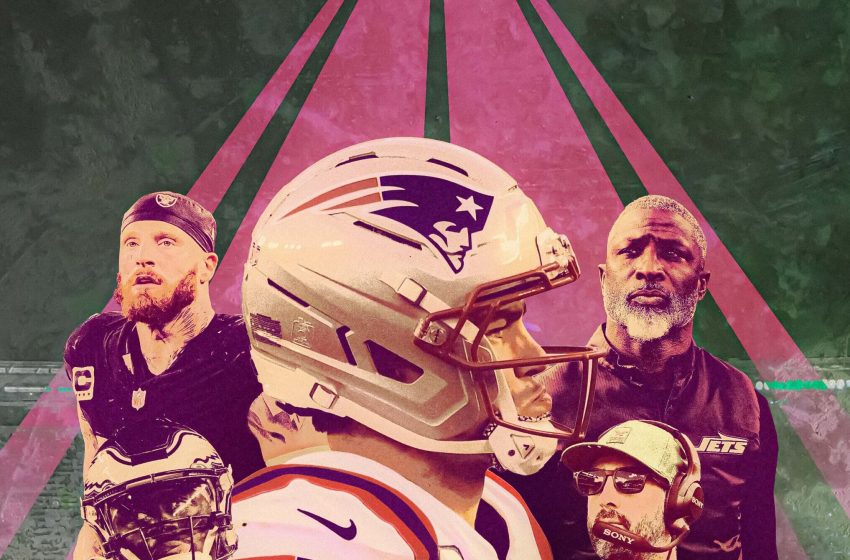
The Nine Story Lines That Will Define the 2026 NFL Offseason
The confetti, beer foam, and cigar ash are being cleaned out of Levi’s Stadium in the wake of Seattle’s Super Bowl LX win, but that doesn’t mean we’re done talking football just yet. Let’s take a moment to give the wild ride of the 2025 season its proper epilogue and look ahead to the biggest story lines of the 2026 offseason:
The Seahawks feel primed for long-term success. Do the Patriots?
Anytime there’s a Super Bowl beatdown, questions arise about whether the result is an indication of where the league is heading.
Seattle’s run to a title, built on a foundation of great defense and special teams, feels especially sustainable. Quarterback Sam Darnold has two years left on what now looks like a very team-friendly contract, so the team should have some decent cap flexibility going forward. The best defensive players on this roster are on rookie deals right now. And head coach Mike Macdonald is only 38 years old and has already proved he can beat the elite head coaches in his division: Sean McVay and Kyle Shanahan. Even if a major contributor like soon-to-be free agent running back Kenneth Walker III gets paid to play elsewhere or a few defensive contributors move on, this will still be one of the best rosters in football by opening weekend this fall.
The only thing that could throw a wrench in the process is the offense taking a step back after losing coordinator Klint Kubiak, who’ll be the Raiders’ next head coach. Seattle’s already signaled it would like to make an internal promotion to replace him, and my bet is on passing game coordinator Jake Peetz, who’s spent time coaching in multiple schemes, including McVay’s. And if Peetz—or whoever the next coordinator is—runs the same system Kubiak just did, Seattle will be just fine schematically.
As for New England, it’s much harder to say with any certainty what next season may bring. Head coach Mike Vrabel and quarterback Drake Maye got 14 wins out of an imperfect roster by beating up on a soft schedule, and every hole on this team was exposed in this postseason run—even in the games the Patriots won. Super Bowl LX made it obvious that there’s still a gulf between what this team is today and what it needs to do to meet a true championship standard. With around $40 million in cap space, New England has to add more juice to its receiving corps and front seven. We’ll get to free agency and trade candidates later in this piece, but suffice it to say that New England can’t be conservative with its cash or draft assets this offseason.
But it doesn’t stop at the supporting cast. Maye has to get better, too. This postseason run was abysmal for him, and it can’t all be hand-waved away because of bad weather and elite competition. His ball security and pocket presence were both poor. He ended the postseason with 21 sacks and eight turnovers, both the most by any quarterback in any postseason in the past 25 years. And with 102 sacks taken over his full 33-game career, we’re looking at a quarterback whose mix of poor habits and incredible talent makes the future a toss-up.
That doesn’t mean the 2025 Patriots were frauds or undeserving of their place in the Super Bowl. But it does mean the version of this team we saw struggling at every turn in the playoffs is just as representative of this team’s floor as the version we saw in the regular season is of its ceiling. And for at least the next half decade, New England’s path to another Super Bowl will probably go through at least two elite quarterbacks. It won’t be a knock on this team if the Patriots never get this close again, but I’d suggest tempering expectations for the immediate future.
Will elite quarterbacks return to the mountaintop in 2026?
This year was as big an outlier as I can remember in my lifetime. Chiefs quarterback Patrick Mahomes wasn’t in the AFC championship (or any round of the playoffs) for the first time since 2018. Three of the final four teams in the NFL’s playoff race featured a quarterback who had never won a playoff game before this year (and that would still be true even if Broncos quarterback Bo Nix hadn’t fractured his ankle in the waning moments of the divisional round). What’s more unpredictable is Darnold winning a title before quarterbacks Josh Allen, Lamar Jackson, and first pick Baker Mayfield, his peers in the 2018 draft.
The ripple effects of a chaotic year were felt in the coaching carousel, as 10 head coaches were replaced this offseason. And specifically in the cases of Baltimore and Buffalo, there’s a new regime in place because those teams didn’t capitalize on a year when the AFC was finally wide open. The same pressure that forced several coaching changes will be passed along to the quarterbacks of those teams in 2026.
Allen and the Buffalo Bills have the most to lament this offseason. While the team had major holes at receiver and in the secondary, Allen was clearly the best quarterback in the AFC—and looked like he was going to drag his team to a championship in his wild-card win over the Jaguars. Giving away the divisional round matchup against the Broncos because of his turnovers derailed what could’ve been his career-defining moment. With new head coach Joe Brady in place, Allen will be expected to carry the franchise to a title, similar to Drew Brees in 2009.
Jackson can’t afford to have another up-and-down season like this past year’s. Though he was battling through injuries, he also wasn’t very sharp with ball placement or decision-making early in the season, and people are going to question whether the version of him we saw in 2025 is a look into his 30s—and whether his production will wane with his athleticism. These kinds of doubts have always unfairly hung over Jackson’s career, but I do think it’s time for him to deliver in the playoffs the way he has during most regular seasons. He’s in the same place Peyton Manning was in the mid-2000s—nothing else in his career will matter until he’s lifting the Lombardi Trophy.
Rams quarterback Matthew Stafford isn’t under the same kind of immediate pressure as Allen or Jackson, but he’s at the end of his career, and his Hall of Fame résumé hangs in the balance. If he can win another title, he’d be walking into retirement with an MVP, two championships, and top-six rankings in all-time passing yards and touchdowns. That would cement his case for a gold jacket and potentially get him on the outer fringes of the top 10 quarterbacks of all time. Without it, his most recent comp for Hall of Fame induction would be another one-time champ in Brees, but he’s more than 15,000 passing yards and nearly 150 touchdowns clear of Stafford right now. If Stafford wants an undeniable case, he’d better be on the field in Super Bowl LXI.
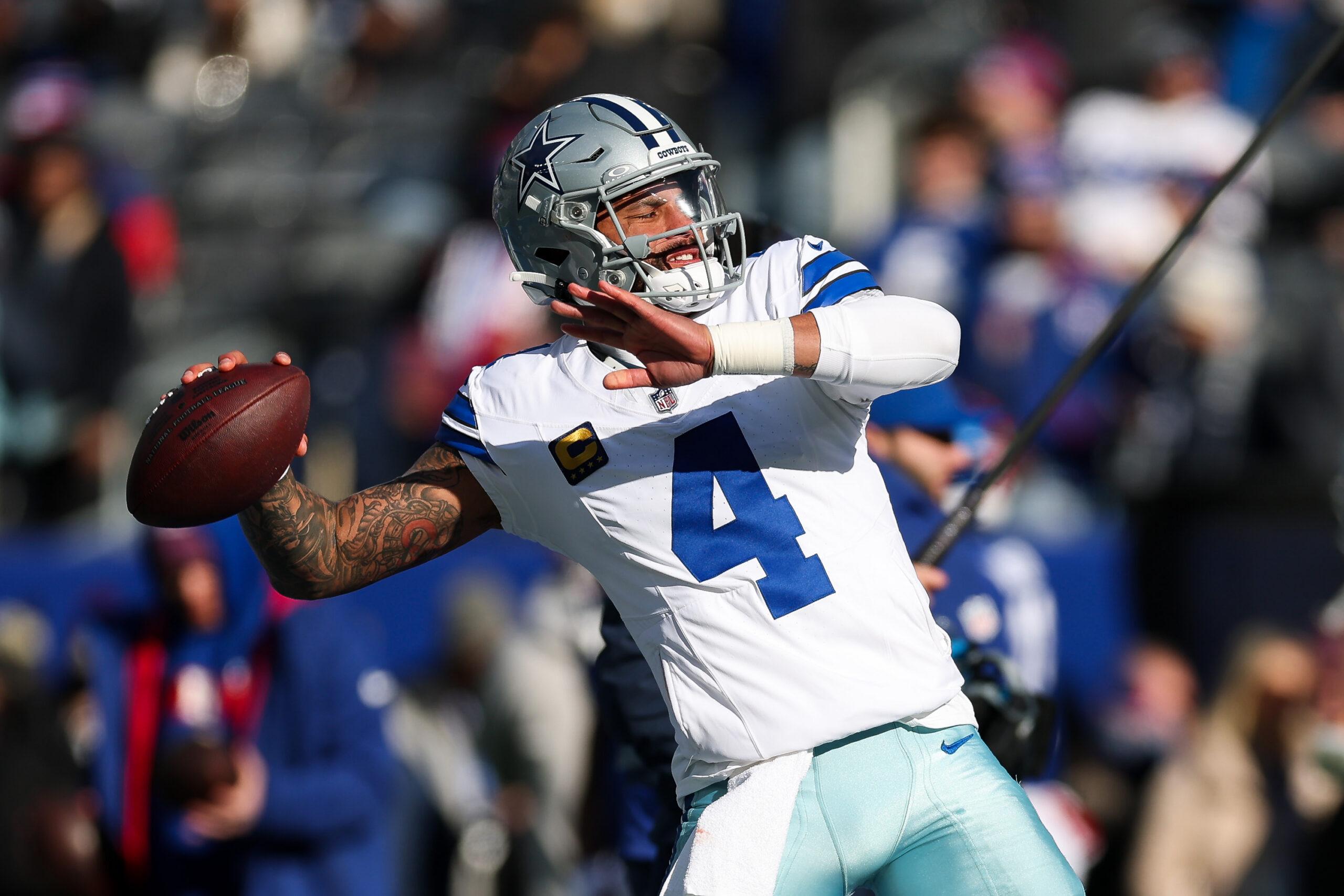
Then there’s the large cluster of quarterbacks behind the elite tier, each one under pressure to stay in the hunt for relevance in this era. The oldest is Cowboys quarterback Dak Prescott, whose legacy would be forever changed with a championship (similar to Stafford in 2021). At 32 years old and with a history of significant injuries, he’s running out of time to make something happen, and expectations will be through the roof if Dallas builds a contending roster around him this offseason. The others are younger quarterbacks like Justin Herbert, Trevor Lawrence, and Jordan Love. Each has had multiple playoff appearances but never been a real contender to win a title, and young players like Maye and Bears quarterback Caleb Williams are pushing to pass them in the coming years. The level of quarterback play has never been higher in this league, and that means the jostling to get to the mountaintop has never been more desperate.
What names should we watch for in free agency?
If you think your team is one free agent signing away from making a Seahawks- or Patriots-esque leap, I regret to inform you that this offseason doesn’t have much to offer on the free market.
There are some impactful players whose current contracts are expiring, but I’d expect most to sign extensions with their current teams. The Colts are almost certainly re-signing quarterback Daniel Jones, the Cowboys are using the franchise tag on receiver George Pickens, the Eagles will probably re-sign edge rusher Jaelan Phillips, and the Ravens will probably give center Tyler Linderbaum a market-setting deal. I’d argue those four are the best players on the market, and each may have a new deal in place by the NFL combine.
However, there will be a few names for the league’s near contenders to pursue. Colts receiver Alec Pierce just had one of the most efficient seasons of 2025, with six touchdowns and over 1,000 yards on just 47 receptions. Packers left tackle Rasheed Walker would give an offensive line instant stability. Jets running back Breece Hall is one of the best athletes in the league and maybe just needs a change of scenery to truly unlock his explosive potential. Because there aren’t as many offensive impact players set to hit free agency, I expect these guys to see their contract values balloon. Teams like the Titans, Raiders, and Commanders will all be vying for players like these, and each one has the cap space to offer above-market-rate deals.
You won’t find impact players on defense this year, but there will be several starting-level defensive backs and linebackers available. Broncos defensive lineman John Franklin-Myers is a personal favorite of mine to watch. He’s one of the league’s most disruptive forces (7.5 sacks, six tackles for loss) and sure to be one of the highest earners in free agency. Seahawks defensive backs Tariq Woolen and Coby Bryant could be on new teams next season. Bryant is a dependable slot-safety hybrid, and Woolen is a physical outside cornerback with a high ceiling. Chargers edge rusher Odafe Oweh and Patriots safety Jaylinn Hawkins are two players approaching 30 who haven’t always produced but could be finishing touches for any defense that needs a little help in its rotation. I would keep an eye on the Jets and 49ers as big spenders on defense, as both have units suffering from a disappointing lack of development from their younger players.
The quarterback market will probably be quiet this spring. Packers backup Malik Willis will likely be the only one to draw attention as a potential starter. Willis has a couple of obvious landing spots in Arizona and Miami, which both have head coaches with connections to Green Bay—Mike LaFleur being Matt’s younger brother and Jeff Hafley most recently working as the Packers’ defensive coordinator. As for Pittsburgh and Aaron Rodgers … I can’t even pretend to care.

Prep for the NFL Draft
The 2026 NFL draft is low on juice but not quality prospects.
You’ve probably heard about quarterback Fernando Mendoza already, a national champion, Heisman winner, and the presumed top pick in the draft (and if you haven’t, go read about him on our site). But the top talent in this year’s draft is in the trenches on both sides of the ball, and that’s great news for most teams picking in the top half of the first round.
My two favorite players in this class are edge rushers Rueben Bain Jr. and David Bailey of Miami and Texas Tech, respectively. The two are opposites stylistically, Bain a better run defender and power rusher, and Bailey more of a long-armed, speedy type. The Jets, Titans, Chiefs, and Bengals have needs for impact players on defense, and those are the best ones available to check that box. Bain’s going to draw some criticism because of his shorter wingspan (and Bailey for being slim), but we’ve seen players like Aidan Hutchinson, Nik Bonitto, and Trey Hendrickson succeed in the league without ideal measurables.
The Browns are another team that should be excited about this draft. With most of its aging offensive line coming to the end of their contracts, this offense is a couple of years overdue on bringing in new talent at the position. Miami’s Francis Mauigoa is the top offensive lineman on The Ringer’s NFL draft board, and the big right tackle has flashed the kind of power and footwork that suggest a Pro Bowl ceiling at his best. If he’s not available by Cleveland’s no. 6 pick, Utah tackles Spencer Fano and Caleb Lomu each project to be immediate starters in the pros.
There are several other offensive and defensive linemen worth keeping an eye on in the first round, too. Auburn defender Keldric Faulk checks all the boxes on size and power, and edge rusher Cashius Howell from Texas A&M might have the best motor and pass-rushing repertoire of anyone in this class. There are potential studs at guard too, namely Oregon’s Emmanuel Pregnon and Alabama’s Kadyn Proctor. Proctor spent his college career at left tackle, but his power and size make him a much better fit on the interior.
There are several good playmakers at receiver, defensive back, and linebacker too, but the story of this draft will be told by the players with their hands in the dirt.
The Eagles are on the precipice of a reset.
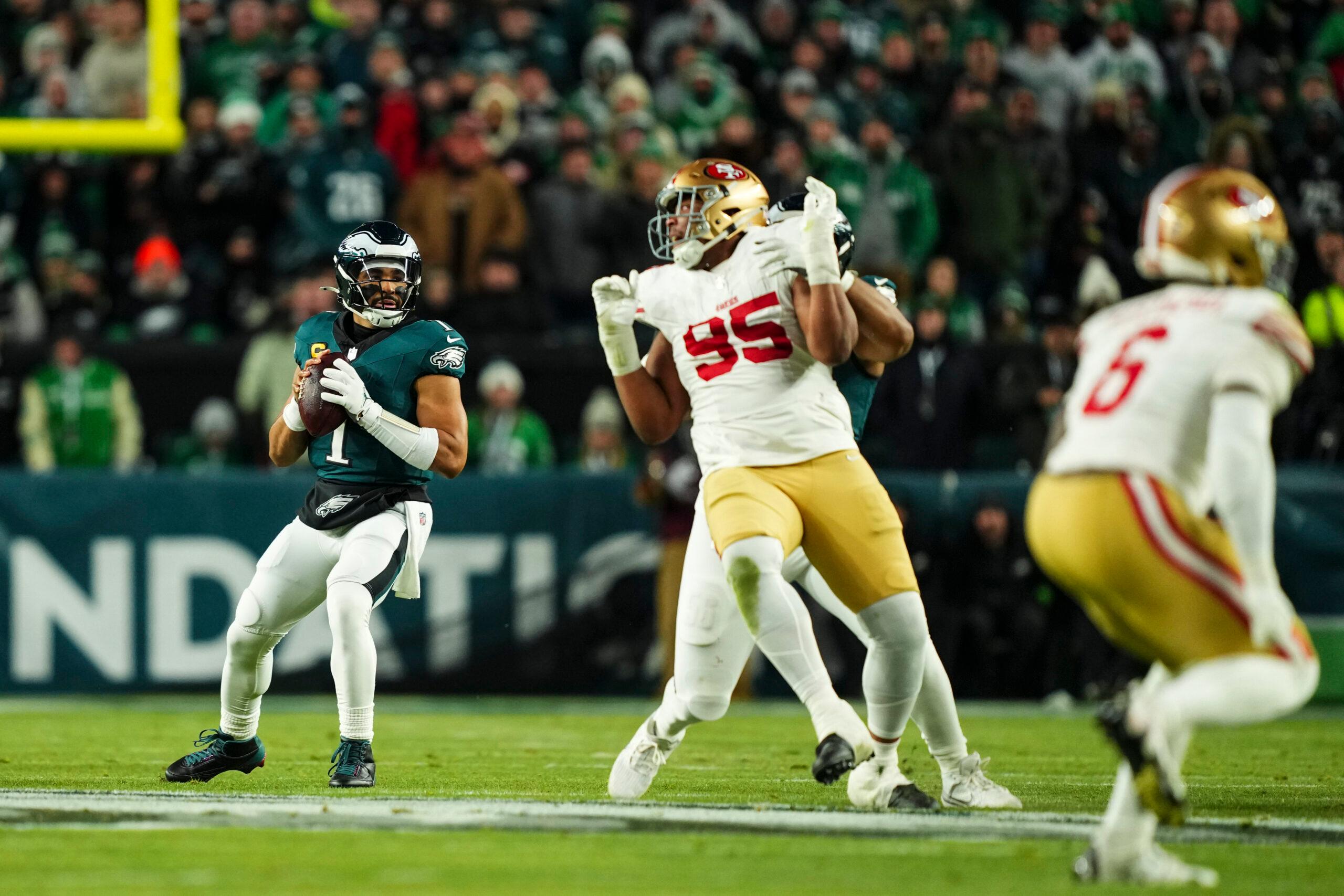
Time to get all my Eagles-related feelings off my chest. Philadelphia’s constant pressure to meet a standard of excellence will make them champions—or implode the organization. The Eagles have experienced both extremes in the past two seasons and are now walking down the road of uncomfortable but necessary change.
Hiring new offensive coordinator Sean Mannion was a signal of major changes to come for this team. A former quarterback, Mannion played in Los Angeles and Minnesota under head coaches Sean McVay, Kevin O’Connell, and Matt LaFleur, then coached in Green Bay under LaFleur for two seasons. There’s no prior connection between him and Eagles head coach Nick Sirianni, which means there’s a real chance that Philadelphia is adopting a brand-new scheme built around pre-snap motion, under-center runs, and play-action passes, three things we haven’t seen much of in the Sirianni era.
This kind of change will push quarterback Jalen Hurts to add new layers to his game as a passer. He’ll have to throw between the numbers more often than he ever has in his career, which hasn’t been his preference. Since he became the starter in 2021, Philadelphia’s offense has just 903 throws between the numbers. Not only does that rank last in the NFL (and more than 100 fewer than the next-lowest team), but it’s woefully below the league average of 1,258. Hurts doesn’t have to throw in-breaking routes like quarterbacks Tua Tagovailoa or Brock Purdy next year, but this offense would benefit from a handful more per game. He’ll also have to shave some time off of how long he typically holds the ball and let passes go with anticipation, even if it means risking a few more turnovers. With Hurts spending most of his career playing in the same system (albeit under different play callers), there’s a chance it will take him a while to find his rhythm.
But he and Sirianni aren’t the only ones getting out of their comfort zones and facing change. Philadelphia offensive line coach Jeff Stoutland resigned last week, leaving the team without one of the league’s best-ever position coaches. ESPN’s Tim McManus reported that Stoutland was miffed by offensive changes last year that he wasn’t consulted on, and that lack of communication led to his decision. And if Sirianni was willing to go around someone as tenured and proven as Stoutland to protect former coordinator (and close friend) Kevin Patullo, one has to wonder what he’d be willing to do to an unproven and unfamiliar play caller like Mannion if the offense struggles and Sirianni thinks his job is on the line.
Things are already tenuous enough in Philadelphia, and there’s still the spectre of a potential trade of receiver A.J. Brown. Brown hasn’t kicked up much dust lately, but after an acrimonious season with subpar production, there’s little reason to believe this team would bring him back and risk another blowup if he’s not touching the ball as much as he’d prefer. After New England’s disappointing showing in the Super Bowl, maybe he angles to get there and reunite with Vrabel, his former head coach in Tennessee. The Patriots need a receiver so badly that they might be willing to part with valuable draft picks in exchange, and the Eagles would need those picks to extend their championship timeline and get through the loss of one of the league’s best receivers.
This team is also waiting to hear about tackle Lane Johnson’s status as he mulls retirement. It just dodged another retirement scare from defensive coordinator Vic Fangio, is sure to lose tight end Dallas Goedert, and still has to work out a deal to retain edge rusher Jaelan Phillips this offseason. Just over a year removed from winning a title, Philadelphia is shaping up to take a step back on both sides of the ball.
Even the most optimistic Eagles fans would have to acknowledge the danger that could come from undergoing this major metamorphosis without a trustworthy head coach or superstar quarterback. If things go off the rails in 2026, a larger organizational reset is a real possibility.
Can the AFC bounce back?
We talked earlier about New England’s path back to the Super Bowl, and the Patriots aren’t the only team that should be concerned about keeping pace with the tight competition in the AFC. Three elite quarterbacks in the conference didn’t even make the postseason this year, and I expect each to come roaring back in 2026.
Kansas City’s roster needs some tweaking around Mahomes, but he’ll make sure whatever supporting cast he has next season is in the wild-card race (at worst). A top-10 pick could net this team more help in the trenches on either side of the ball, which is extremely necessary given how competitive the AFC West has become. And even if Denver stays atop the division, it’s hard to imagine any team in this year’s wild-card race being more trustworthy than the Chiefs.
Baltimore made the difficult choice to turn over its coaching regime this offseason, and hopes new head coach Jesse Minter is to the Ravens what Macdonald is to the Seahawks. He’ll be working with some star-level pieces in safety Kyle Hamilton, linebacker Roquan Smith, and defensive tackle Justin Madubuike (assuming he’s able to return from his neck injury). And he’ll have what Macdonald doesn’t, a quarterback in Jackson that can throw on the superhero cape and win games if the defense needs some support. The AFC North is theirs to win in 2026, so long as Jackson and the core pieces of this defense stay healthy.
The Bengals and Burrow are lurking, too. Even with its dubious approach to roster-building, which leaves this offense to do too much make-up work for an awful defense, there’s no way we can dismiss the possibility that things break in Cincinnati’s favor next season. The schedule won’t be announced until later this offseason, but we know this team’s interconference games will be against the NFC South, and its 17th game will be against the Commanders. Those five matchups could all be wins for Burrow and this offense, and just lurking around .500 against its tougher AFC competition could be enough to sneak into the playoffs. While I don’t expect this team to compete for a championship in the near future, I certainly wouldn’t want to play against Burrow in a win-or-go-home situation.
I expect all three to factor into next year’s playoff race, with one of Baltimore or Cincinnati supplanting the Steelers as AFC North winners. That means teams like the Broncos, Bills, Texans, Chargers, Patriots, and Jaguars will be under immense pressure to win their respective divisions and stay clear of a packed wild-card race. And if I had to circle a few that I’m concerned about, it’s the pair of teams from the AFC East. Buffalo and New England can count on a few wins over rebuilding teams like Miami and the Jets, but their interconference matchups will be against a loaded NFC North and NFC West. Any regression from either could lead to a disastrous 2026 campaign.
What sleeper in the NFC will break out next year?
If there’s one thing we learned from New England’s run to the Super Bowl, it’s to be ready to strike against inferior opponents. Let’s take a look at the teams in the NFC and see if any team can ride a favorable schedule to Super Bowl LXI.
The division most likely to benefit from next year’s schedule is the NFC North. The Vikings, Lions, Packers, and Bears will be matched up against the NFC South and AFC East for nearly half of their respective schedules. Matching up against each other will be tough—as will the guaranteed games against Allen and Maye—but beating up on the Jets, Saints, and Dolphins will be a welcome reprieve and valuable wins in the wild-card race.
The NFC East will be an interesting one to watch, too. The Eagles, Cowboys, Commanders, and Giants will have to deal with the highly competitive NFC West, but its interconference slate matches them up against the AFC South and AFC North. It won’t be easy dealing with Houston’s defense or Jacksonville’s offense, but the Titans and Colts provide winnable games for each team in this division, and the Cowboys are the only ones who’ll have to deal with Jackson and Baltimore.
This schedule bodes well for the Packers and Eagles, who are both hoping to bounce back from disappointing playoff exits. And for teams like Dallas and Detroit, winning games against weak opponents next season will help them get back into the wild-card race, especially because the NFC West will have to face off against the Chiefs, Chargers, and Broncos in the regular season.
Who starts next season on the hot seat?
After such an active coaching carousel, it feels a little gluttonous to look ahead to potential job openings next year—but that’s exactly what the offseason is for!
The easiest candidate to pick out is Jets head coach Aaron Glenn, who’s fresh off a three-win season and clearing out his entire staff. New York was always going to need a multiyear rebuild, but the failure of the Justin Fields experiment and the mess Glenn has made of his coordinator search doesn’t inspire confidence that better days are coming. Frank Reich is his new offensive coordinator, a choice that feels uninspired. Reich is 64 years old, has been out of the league since 2023, and struggled to keep pace in his one year as head coach of the Panthers.
Glenn also botched his pursuit of Wink Martindale this offseason by changing his mind on who would call plays for the defense. That’s a non-starter for a coordinator as tenured as Martindale, and I wasn’t certain that hire would’ve worked in the first place. Now the defensive coordinator is Brian Duker, who was with Glenn during his time in Detroit. And while I can respect Glenn wanting his fingerprints directly on this defense, there are severe talent issues that make it a near guarantee he gets blamed for future failings. With no quarterback or star talent to build around, this regime feels like it’s already close to its doom.
Commanders head coach Dan Quinn is another obvious candidate. Quinn moved on from former offensive coordinator Kliff Kingsbury and opted to promote quarterbacks coach David Blough, as unproven a candidate as he could find. After an injury-filled season for Jayden Daniels, any game in which the quarterback takes too many hits in the pocket or is overly relied upon as a runner will reflect poorly on Quinn. And like Glenn, he’s decided not to relent on running the defense, using a dated scheme that offenses have been relentlessly tearing through for the past half decade. If Blough’s not a home-run hire, this regime is probably done, too.
Some less obvious candidates to watch are Sirianni, Shane Steichen (Colts), Zac Taylor (Bengals), and Todd Bowles (Bucs). None of these coaches need to win a title to save their jobs in 2026, but missing the playoffs could certainly be enough impetus for their respective franchises to move on. With solid (or better) quarterbacks already in place at each spot, these would be the most sought-after jobs to potentially come open next season.
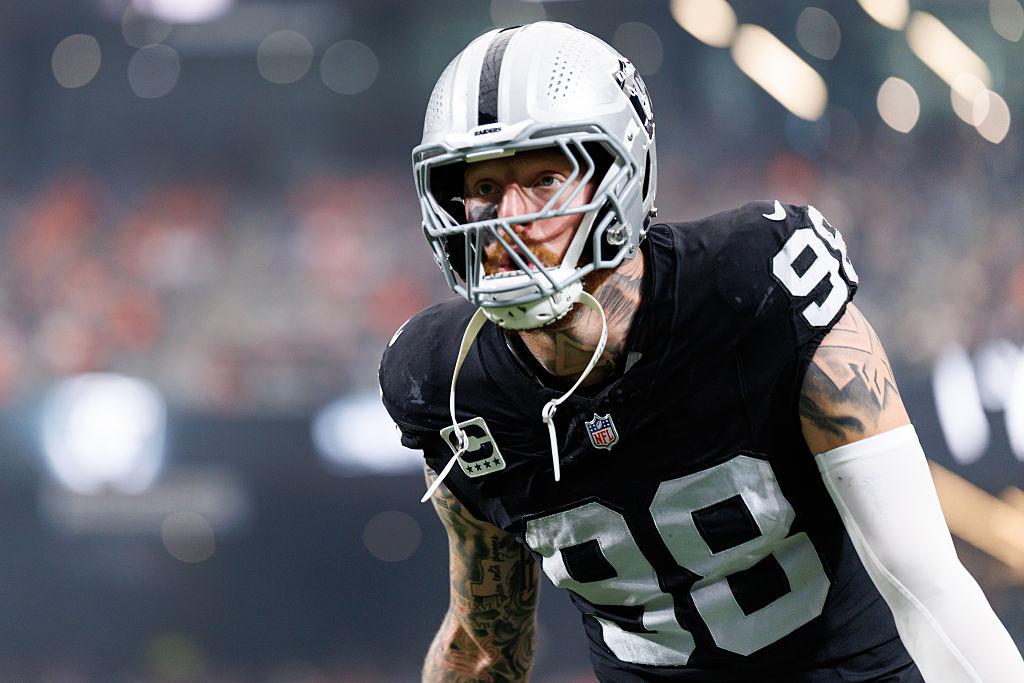
What’ll it take to trade A.J. Brown and Maxx Crosby?
We discussed Brown earlier, and with recent news that Raiders edge rusher Maxx Crosby informed the team that he wants out, there’s now a pair of high-profile veterans out on the trade market. Let’s evaluate the compensation each one would demand and the teams that would be in the market.
Brown is a difficult trade case to evaluate for several reasons. First, he’ll be 29 years old next season, and his deal runs through his age-32 season, so the contract he’s currently on is probably his last as a major contributor. He’s also been battling some hamstring issues in the past two seasons, so there’s reason to worry about how his play style and speed will be affected in his 30s. Related to that contract are the financial ramifications Philadelphia would incur from trading him. According to Over the Cap, the Eagles would incur $43 million of dead cap by trading him. While that isn’t necessarily prohibitive, it does mean that the Eagles would likely want to move Brown for a high pick—either a late first-round or an early second-rounder—and a young offensive player to get the most value back on any potential deal. Brown doesn’t have to be shipped to a contender, but I’d imagine there’d be more urgency to consummate a deal if the offer was coming from a team in need of an instant-impact player.
Crosby, on the other hand, has a much easier deal to work around. Trading him this offseason would leave only $5 million in dead cap, but would free up over $30 million to spend elsewhere—and the Raiders could use that space to address their offensive line. The only potential snag in a Crosby deal is related to usage and career trajectory. He has logged over 4,000 snaps at defensive end since 2021, more than 300 snaps clear of Steelers edge rusher T.J. Watt, who’s in second place. Crosby will turn 29 next summer, and looking at how Watt’s play has slowly declined since he turned 30, it’s fair to assume Crosby is probably near the end of his peak. He’s productive enough to command a first-round pick, but acquiring him would only make sense for a team that can contend right now.
I’d keep my eyes on the Patriots, 49ers, and Ravens this offseason. Each of the three wants to keep pace with the top contenders in their respective conferences, and all have major needs at receiver and defensive end. The Patriots are an easy landing spot to project for Brown, and the latter two would be wise to swing for Crosby. With the NFL scouting combine a couple of weeks away, I think we’ll have a clear idea of the market for both players soon.
Diante Lee
Diante Lee joined The Ringer as an NFL writer and podcaster in 2024. Before that, he served as a staff writer at The Athletic, covering the NFL and college football. He currently coaches at the high school level in his hometown of San Diego.
First Appeared on
Source link






