


Team USA’s Speedy Children Delivered A Beatdown Of Canada
If every instinct the U.S. women’s hockey team had at the 2022 Olympics was wrong, then the opposite would have to be right. On Tuesday, in their round-robin meeting at the Olympics, the Americans celebrated a 5-0 win over Canada, the sort of thorough beatdown atypical of their meetings in international play. The rivalry is usually characterized by nervy overtime periods and tense shootouts, so no surprise that this was the largest margin of victory in any U.S.-Canada game at the Olympics. It was also the first time the Canadian women had been shut out in an Olympic game.
Chalk some of it up to the absence of team captain Marie-Philip Poulin—she’s out with a lower-body injury and poised to return later in the tournament—but a more honest accounting of this game would say the result has been long in the making. After being swept in their exhibition Rivalry Series and dropping both meetings at last year’s world championships in Czechia, Canada has now lost seventh consecutive games to Team USA. (And Poulin did play in the other ones.) Yesterday only reaffirmed what was clear in the six games prior: This American team and its young superstars are too fast and too skilled for the veteran-heavy Team Canada to handle.
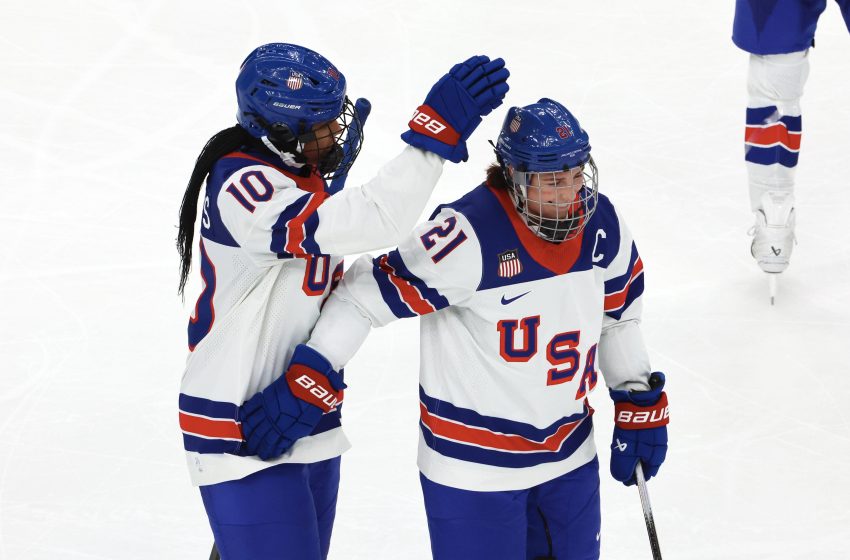
If you remember the vibe around these teams at the 2022 Olympics, you’d be right to see a kind of role reversal taking shape in this rivalry. Where college players brought to Beijing saw limited ice time under head coach Joel Johnson, they’ve been unleashed by new head coach John Wroblewski. Twenty-three-year-old Wisconsin defender Caroline Harvey, the smoothest skater in the sport, now often leads the U.S. in ice time in international competition. Last year, Wroblewski converted Harvey’s Wisconsin teammate Laila Edwards from forward to defense, giving the U.S. blue line more size and offensive juice. (She became the first black woman to score a goal in an Olympic hockey game yesterday.) They’ll headline the upcoming PWHL draft with some Team USA forwards: Kirsten Simms, she of the clutch showing in last spring’s NCAA championship; Penn State’s relentless Tessa Janecke; and absolute hellion Abbey Murphy, who leads NCAA women’s hockey in goals in her final season at Minnesota. All of them had points in Tuesday’s game.
In the last couple years, the team has been remade in the image of its NCAA talent. Thirteen of the players on Team USA’s roster were born in the 2000s; for Canada, that number is just five. Jenn Gardiner, a 24-year-old forward, is the youngest player Canada brought to Milan; on Team USA, she’d be 10th-youngest. After yesterday’s game, I chuckled at an angry post from a popular Oilers fan account that suggested Team Canada “focus less on making tiktoks.” This boomer silliness might have the problem exactly backward. Canada might need more TikTok teens on their team.
Hold your grave conclusions about the state of hockey in either nation. In January, at the most recent U18 championship, Canada shut out the Americans in the gold medal game. Sometimes teams just get caught in different parts of the talent cycle. The 19-year-old Canadian phenom Chloe Primerano, currently playing at Minnesota, was left off the Olympic roster, but she’ll no doubt be an important piece of the team in future international tournaments. In the 2022 Olympics, it was Harvey and Murphy who found themselves in a similar position, obviously talented but still too young to be trusted. Right now, Canada just doesn’t have a real counterpart to this Harvey-Edwards-Murphy-Janecke-Simms wave of NCAAers, who will claim the top spots in the PWHL draft this summer. The very best players of their spry age cohort conveniently happen to be American.
It doesn’t help Canada that their decisions seem motivated by little else than habit. Renata Fast, the PWHL’s reigning defender of the year and a standout at the world championships last spring, absolutely deserves the team-high ice time she got yesterday. The issue is that a slow-footed 37-year-old Jocelyne Larocque is also getting those minutes on the basis of being Fast’s D-partner for a long time. Even after a bad showing in the Rivalry Series, Canada’s roster is basically unchanged from the one that could not beat the Americans in six tries. Coach Troy Ryan didn’t experiment with different lines or deployments during Tuesday’s game either, even when it was clear early that Canada was struggling to create chances. The talented players Canada does have aren’t being put in a position to succeed.
In past Olympic cycles, fans have complained about the clubby politics of these national teams, which felt impossible to break into for players who weren’t already on their national team’s radar at a young age. The clubbiness could be frustrating, but it made some sense; before the PWHL began, opportunities to measure certain players against others were so scarce. That’s no longer the case. Ryan and Team Canada GM Gina Kingsbury have ample opportunities to see which of their players has got it and which do not: The two of them hold the same jobs on the Toronto Sceptres. The second goal the U.S. scored on Tuesday (1:30 in the video above) told two linked stories about where these teams are right now. With her footspeed, Murphy beat out an icing call, then pounced on the ensuing moment of Canadian puck-watching that left her teammate Hannah Bilka alone in the slot. The Americans might just be too fast and talented to overcome in any circumstance. They are definitely too good to let sloppiness and poor coaching go unpunished.
With all that said, I fully expect Marie-Philip Poulin to score a bullshit game-winner (assisted by Jocelyne Larocque) in a maddening gold medal game that Canada takes 2-1, after a 48-save performance from Ann-Renée Desbiens.
First Appeared on
Source link






