


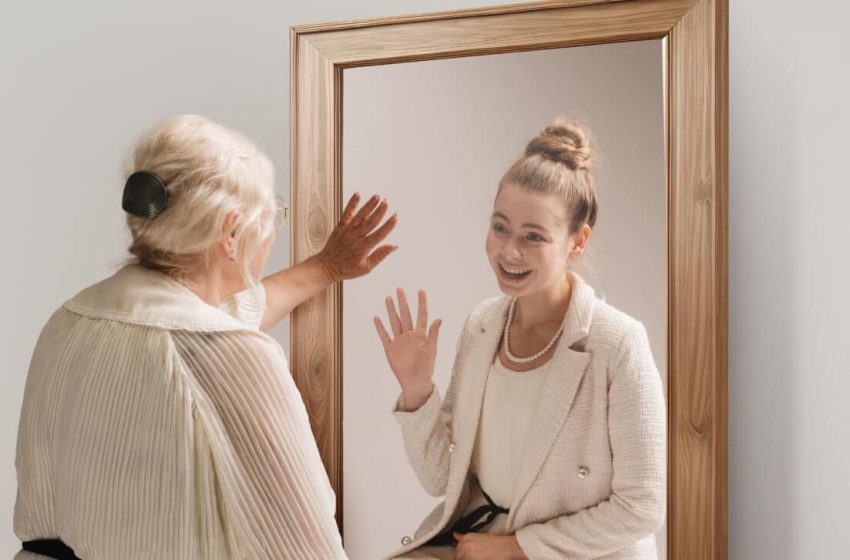
Scientists Say You Might Be Able to Reverse Aging, Just by Thinking Younger
The idea sounds like a cultural joke at first. A viral 2024 meme comparing Jason Alexander at 30 in the 1980s to Timothée Chalamet at 30 today plays on the feeling that millennials seem younger than previous generations did at the same age. But beneath the humor lies a serious scientific question: can beliefs about aging reshape physical reality?
Psychologists have explored mind–body links since the 1950s, when researchers began observing that expectation alone could trigger physiological change. It was Ellen Langer, PhD, a Harvard psychologist, who pushed that idea further in 1979 with what became known as the “Counterclockwise” experiment, an intervention designed to see whether rewinding the psychological clock might also shift the biological one.
Recreating the past to Test the Body
In 1979, Ellen Langer invited older men to spend a week in a retreat setting recreated to mirror life in 1959. Participants were instructed to behave as they had two decades earlier, speaking in the present tense about that time and carrying themselves as if they were younger. By the end of the week, Langer reported improvements in posture, grip strength, and even eyesight. She later described the findings in her 1989 book Mindfulness, framing the experiment as evidence that aging might not be purely biological.
Decades later, one of her longtime collaborators, Francesco Pagnini, PhD, a professor at Università Cattolica in Milan, sought to test those claims under modern scientific standards. According to Popular Mechanics, Pagnini and Langer published a detailed study protocol in BMJ Open in 2021 outlining a randomized controlled trial designed to isolate cause and effect.
Roughly 90 volunteers aged 75 and older spent a week at a countryside resort outside Milan. The setting was reconstructed to resemble 1989, complete with period furniture, posters, newspapers, television programs, music, and technology. Participants were asked to behave as their younger selves, discussing their lives in the present tense and performing daily tasks independently whenever possible, as if the intervening decades had not occurred.
Three Groups, Measurable Outcomes
The study included three groups: a “counterclockwise” group immersed in 1989; an active control group that performed the same activities while discussing contemporary topics such as Brexit; and a passive control group that simply took a vacation.
Researchers assessed strength, balance, gait, and self-perceived age, functional measures often used as stand-ins for biological aging. The counterclockwise group showed marked improvement on a physical-performance battery commonly used to predict longevity. Participants also reported believing they looked younger when rating before-and-after photographs of themselves, though the study did not specify whether clothing or presentation were standardized in those images.
“The hypothesis is that a counterclockwise intervention like this, where you put people back in time, making them think they are younger than they are, can lead them to physically and psychologically rejuvenate,” Pagnini said. The official results are still under peer review, but the preliminary findings suggest that expectation may influence measurable aspects of physical performance.
Expectation, Placebo, and the Weight of Culture
While the biological mechanisms of aging, genetics and cellular processes, are well established, Pagnini argues that psychology plays a substantial role as well. “Aging is a complex phenomenon,” he explains, noting that emotional and cognitive factors, along with placebo-related processes, may shape how individuals experience physical decline. “The way I look at aging heavily influences the way I’m going to age myself,” he says.
Neuroscientific research offers possible frameworks. The predictive-processing model proposes that the brain continuously adjusts bodily systems to align with expectations. A 2024 Nature fMRI placebo study involving nearly 400 participants found that expectations could influence perceived pain levels. In related work, Luana Colloca, MD, PhD, identified distinct gene-expression patterns in placebo responders, molecular signatures linked to belief and expectation.
Cultural narratives also matter. Becca Levy, a psychologist at Yale, developed the “stereotype embodiment” theory, suggesting that people internalize societal beliefs about aging. Long-term studies cited by Popular Mechanics indicate that individuals who absorb more negative age stereotypes tend to experience worse physical outcomes and may even live up to 7.5 years less than those with more positive views.
“When people retire, they’re pushed outside the crux of our culture,” says James M. Hyman, PhD, of the University of Nevada, Las Vegas. If identity and social relevance shape vitality, then reframing one’s place in society could influence energy and engagement.
For Pagnini, mindfulness may serve as a counterweight to internalized stereotypes. Living in the present and resisting self-imposed limitations, he suggests, can buffer against the automatic adoption of cultural narratives about decline. Laughing, maintaining social connections, and staying engaged, these behaviors, he says, help loosen the grip of aging stereotypes.
First Appeared on
Source link






