


Diabetes: The blood sugar blind spot: Borderline HbA1c, fasting sugar, isn’t safe, warns doctor |
Most of us think we are safe if our fasting sugar is “almost normal” or our HbA1c hovers just below the diabetic range. But that’s a sneaky trap. Borderline numbers don’t mean everything is fine, they are a red flag your body is quietly struggling. Blood sugar doesn’t spike overnight; it creeps up over years, silently damaging blood vessels, nerves, and organs before you even feel it. And because it’s slow, many people ignore it.And it’s not just about numbers. You might feel fine, have energy, go about your day, and still be at risk. That creeping insulin resistance, the subtle spikes after meals, the small dips that leave you tired, these are all signals that something’s off.
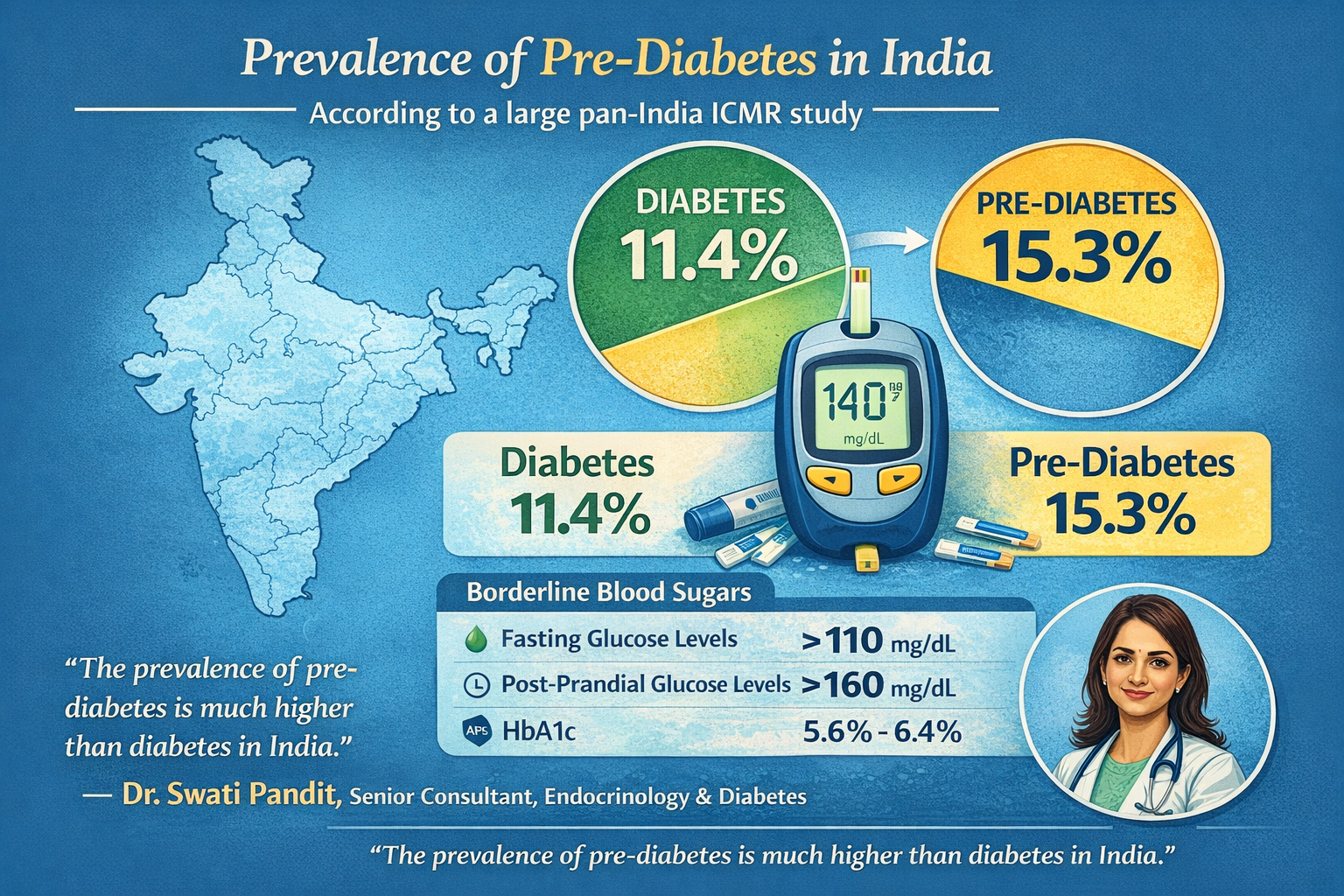
The borderline zone is really a window of opportunity, catch it early, act now, and you can prevent it from sliding into full-blown diabetes. “According to a large ICMR India study conducted pan India, the prevalence of pre-diabetes is much more than diabetes in India. The prevalence of diabetes in India is around 11.4 percent, but the prevalence of pre-diabetes is around 15.3 percent. Borderline blood sugars mean fasting glucose levels more than 110 and post-prandial glucose levels more than 160 and HbA1c which is anywhere more than 5.6 to 6.4 or more is a raised HbA1c,” Dr. Swati Pandit, Senior Consultant, Endocrinology & Diabetes, Max Smart Super Speciality Hospital, Saket told TOI Health.
What does “borderline” blood sugar or HbA1c really mean? Is it safe to ignore?
“The HbA1c between 5.7 to 6.4 is borderline and is suggestive of pre-diabetes and according to the Indian prevalence of pre-diabetes, which is much more than diabetes, we should be very very careful at even this HbA1c which ranges between 5.6 to 6.4 and it is actually not safe to ignore it because the prevalence of pre-diabetes is rising and it will eventually if ignored it will eventually land up into diabetes. The factors which commonly push the borderline sugars into diabetes range are first and foremost ignoring the blood sugar levels if you found them to be raised, kindly do not ignore them, they are the first alarms and start working towards it. The lifestyles which matter most is sedentary lifestyles, sitting at one place for very long hours, not following dietary routines or patterns, eating haywire throughout the day, not eating on time, say breakfast, lunch and dinners is not on time and is say a late breakfast is a very common thing in the current Indian context, then the lunch gets delayed and eventually the dinner also gets delayed,” says Dr. Swati Pandit.
Lifestyle factors like daytime sleeping play key roles, says the doctor. She says eating on time is very important along with that a good amount of physical activity on a daily basis is very important for both men and women, avoiding long sitting hours, long sedentary hours, long sleeping hours or alteration of the saccade rhythm in a way that you are awake most of the night and sleeping most of the time during the day that also is one thing which can precipitate diabetes, excessive alcohol intake, excessive smoking, a family history of diabetes, in spite of having a family history of diabetes ignoring or getting blood tests done is another risk factor and progressive weight gain because of one or the other reason can certainly push the borderline glucose levels to the diabetes ranges. Yes, pre-diabetes can certainly be reversed in certain scenarios with dietary changes, lifestyle modifications and regular physical activity aiming at weight loss and regular lifestyle changes and regular monitoring. Yes, pre-diabetes can certainly be reversed.
Myths
“Sometimes we do come across the fact that certain sugar levels are considered as misconceptions but we must try to understand that the safe sugar levels are fasting sugars less than 110 and post-prandial sugars less than 160 and HbA1c of less than 5.6 are safer sugars but if you have any other metabolic risk factors like family history of diabetes, obesity or a bad lifestyle or a sedentary lifestyle then certainly you are at an increased risk and you must keep a closer watch on these sugar levels,” says the expert.
Diabetes is the breeding ground for several diseases
“The most urgent piece of advice for young adults with borderline blood glucose levels would be that diabetes is a common soil for many metabolic diseases and is a very important risk factor for heart disease, hypertension, liver disease, kidney disease, stroke and cancer as well,” warns the doctor. “So, you have to take care of yourself, try to manage your diet properly which includes quantity, quality and timely diet and lifestyle modifications which includes a good amount of sleep and a regular physical activity and try to reduce stressors as much as possible and keep a closer watch on your sugar levels,” urges Dr. Swati Pandit.Medical experts consulted This article includes expert inputs shared with TOI Health by: Dr. Swati Pandit, Senior Consultant, Endocrinology & Diabetes, Max Smart Super Speciality Hospital, SaketInputs were used to explain why it is not healthy to ignore borderline blood sugar report results.
First Appeared on
Source link






