


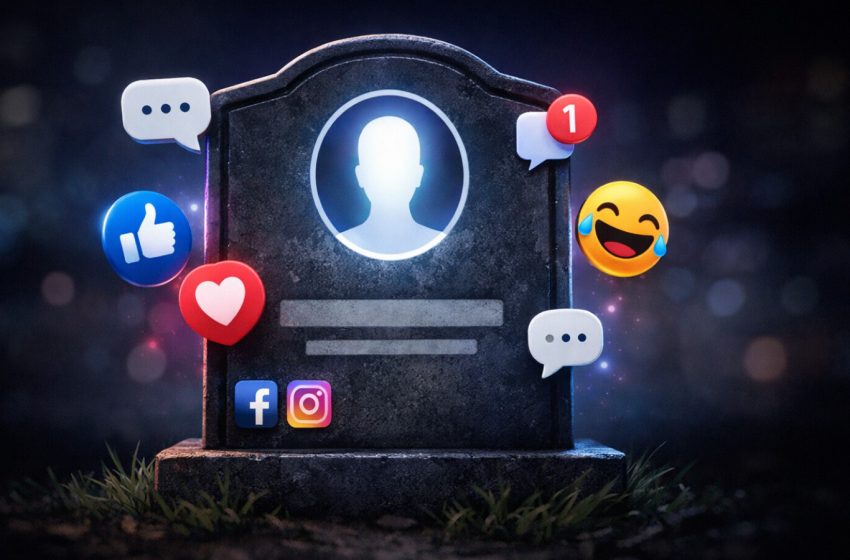
Meta patents AI that takes over a dead person’s account to keep posting and chatting
Meta has been granted a patent outlining an AI system capable of simulating a user’s activity on social media, including continuing to post after their death.
The filing, granted in late December and originally submitted in 2023, describes how a large language model could replicate a person’s online behavior using their past data.
As reported by Business Insider, this includes posts, comments, chats, voice messages, likes, and other interactions, allowing the system to respond to content, publish updates, or message other users in a way that mirrors the original account holder.
According to the patent, the model “may be used for simulating the user when the user is absent from the social networking system,” including cases where the person is on a long break or deceased. The filing notes that the impact is “much more severe and permanent” if the user has died and cannot return to the platform.
The technology appears designed with Meta’s own platforms like Facebook and Instagram in mind. By analyzing “user-specific” data, the system could reconstruct a digital persona that continues interacting on the platform as if the person were still active.
The patent also references more advanced possibilities, including technology that could simulate audio or even video calls using the reconstructed persona.
Mark Zuckerberg hinted at AI replicas of dead users in 2023
Despite the implications, Meta says the patent does not mean the feature is coming. A spokesperson stated the company has “no plans to move forward with this example,” adding that patents are often filed to protect ideas or concepts that may never be developed into products.
However, the concept of AI replicas of deceased users has surfaced before in Meta’s broader discussions about the technology. In a 2023 interview with Lex Fridman, CEO Mark Zuckerberg said there “may be ways” for AI systems to help people interact with memories of loved ones, suggesting Meta will eventually “have the capacity” to create AI replicas of individuals.
He emphasized that such systems should require the person’s consent, saying it “should ultimately be your call.”
The idea isn’t unique to Meta. Similar tools have already sparked debate online, with startups launching apps that let users create interactive digital avatars of deceased relatives, drawing comparisons to dystopian scenarios portrayed in shows like Black Mirror.
While Meta insists the patent is only conceptual, the filing highlights how quickly AI-driven digital identity technology is evolving and the ethical questions that could follow if it ever becomes real.
First Appeared on
Source link






