


Mars as a Tropical Haven? Rocks Discovered by Perseverance Prove It Was Once Warm and Wet
Mars may have been much warmer and wetter billions of years ago than previously thought, according to new findings from NASA’s Perseverance Rover. The discovery challenges earlier theories that the Red Planet was predominantly cold and icy during a time when it may have been habitable.
Mars’ history has long been a subject of intense debate, especially regarding its climate during the Noachian epoch, which spanned from about 4.1 to 3.7 billion years ago. Previous studies suggested that the planet may have been covered in ice during this time, but new evidence gathered by Perseverance suggests a far more temperate environment.
The Noachian Epoch: A Period of Intense Meteorite Bombardment
The Noachian epoch is known for the Late Heavy Bombardment (LHB), a period during which Mars was heavily impacted by meteorites. This cataclysmic era left behind massive scars on the Martian surface, including the Hellas and Argyre impact basins, which are so large they could each contain the entire Mediterranean Sea.
Despite the violent nature of this period, evidence points to the presence of water in the form of river valleys, ancient coastlines, and lakebeds, suggesting that Mars may have been much more hospitable than previously imagined. Scientists have long debated whether this period was dominated by icy conditions or if it was warmer, wet, and conducive to life.
Warm, Wet Mars: A New Theory Gains Ground
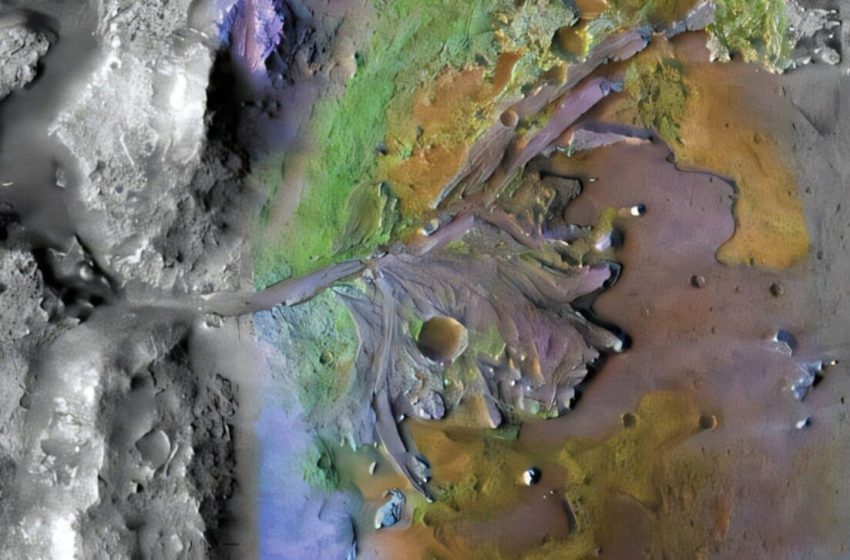
raditionally, scientists believed that Mars during the Noachian epoch was cold and icy, with occasional periods of melting water caused by volcanic activity or meteorite impacts. However, new research, based on data from Perseverance’s exploration of Jezero Crater, proposes a different view. Based on the findings published in Communications Earth & Environment, the conditions during this period were likely warm and wet, with a climate more like Earth’s greenhouse periods.
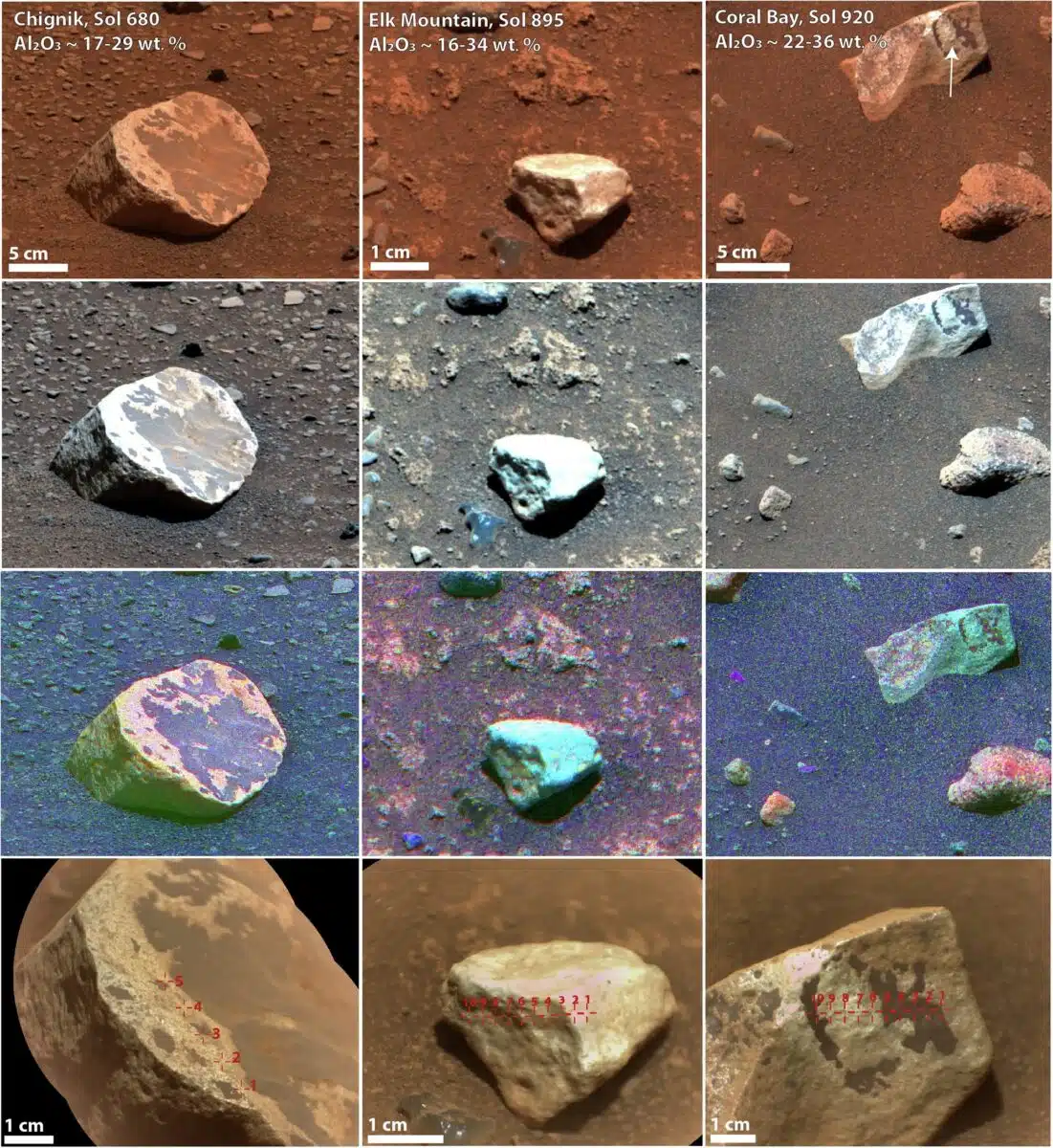
The evidence comes from the chemical analysis of clay pebbles found in the crater’s ancient flow channels, which show signs of alteration by persistent rainfall rather than the high heat typically associated with volcanic or impact-related processes. As the researchers noted that these pebbles contain a rather interesting composition:
“Aluminum and titanium enrichments coupled with depletion of iron and magnesium are unlike hydrothermal deposits and instead comparable to bleached horizons of paleosols that formed under high rainfall during past greenhouse climates on Earth. These rocks therefore likely represent some of the wettest intervals of Mars’ history.”
Evidence of Water-Driven Chemistry on Mars
One of the key pieces of evidence in the study is the discovery of kaolinite, a type of clay mineral, in the Martian surface. The kaolinite pebbles found in Jezero Crater show chemical signatures that match those of clays formed on Earth in wet, warm environments. According to the researchers, this points to a Mars with heavy rainfall and a stable, warm climate over a period of thousands to millions of years.
The clay pebbles’ chemical composition, particularly their low levels of iron and magnesium, suggests they were not altered in high-temperature conditions, such as those caused by volcanic activity or meteorite impacts. Instead, the alteration appears to have happened in a more temperate, wet environment. This new evidence suggests that the planet may have had the most favorable conditions for life during the Noachian epoch.
Perseverance has gathered important samples, but the canceled Mars sample return mission means these materials may not be analyzed on Earth for many years. Nonetheless, these new discoveries provide a compelling argument that Mars could have supported life in the distant past, perhaps even during the very era when our own planet was beginning to develop its own ecosystems.
First Appeared on
Source link






