


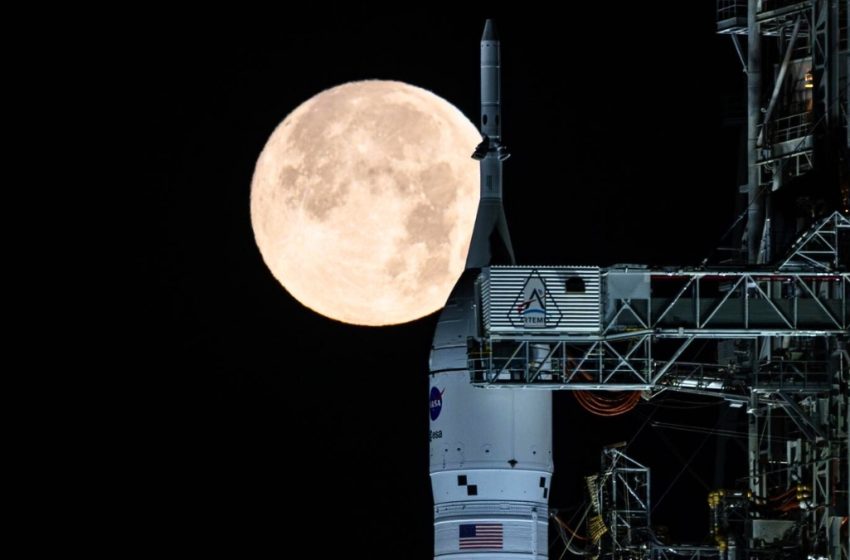
NASA Restarts Countdown After Fixing Hydrogen Leaks on Its Moon Rocket : ScienceAlert
CAPE CANAVERAL, Fla. (AP) – NASA began another practice launch countdown Tuesday for its first moonshot with astronauts in decades, after making repairs to fix dangerous fuel leaks that already have bumped the flight into March.
The first fueling test was halted two weeks ago by the same kind of liquid hydrogen leaks that disrupted the Artemis program’s first flight without anyone aboard three years ago.
Launch controllers have arrived at their consoles at @NASAKennedy to begin the second wet dress rehearsal for Artemis II.
The tanking portion of the test will be streamed live to our YouTube channel on Feb. 19. Timely updates can be found on our blog: https://t.co/40PMWktQjO pic.twitter.com/0WeZ8uNqgj
— NASA (@NASA) February 18, 2026
Launch teams replaced a pair of seals and a clogged filter at the Kennedy Space Center pad where the giant Moon rocket stands, before starting the countdown clocks back up.
The two-day test will culminate on Thursday with the attempted fill-up of the rocket’s fuel tanks.
The four Artemis II astronauts will monitor the crucial dress rehearsal from afar.
The nearly 10-day mission will send the astronauts past the moon, around the mysterious far side, and then straight back to Earth, with the goal of testing the capsule’s life support and other vital systems.

A successful, leak-free test is needed before NASA will set a launch date.
The earliest the Space Launch System, or SLS, rocket could blast off is March 6.
Officials had considered moving it up by three days, but said the extra time was needed to analyze the fueling test results.
 frameborder=”0″ allow=”accelerometer; autoplay; clipboard-write; encrypted-media; gyroscope; picture-in-picture; web-share” referrerpolicy=”strict-origin-when-cross-origin” allowfullscreen>
Related: Our Moon Is Curiously Lopsided, And a Massive Impact Could Be to Blame
The last time astronauts blasted off for the Moon was in 1972 during NASA’s Apollo program.
The Artemis program is aiming for new territory – the Moon’s south polar region – and looking to keep crews on the lunar surface for much longer periods.
First Appeared on
Source link






