


A New Moon Race Starts This Year—and This Time It’s All About the Water
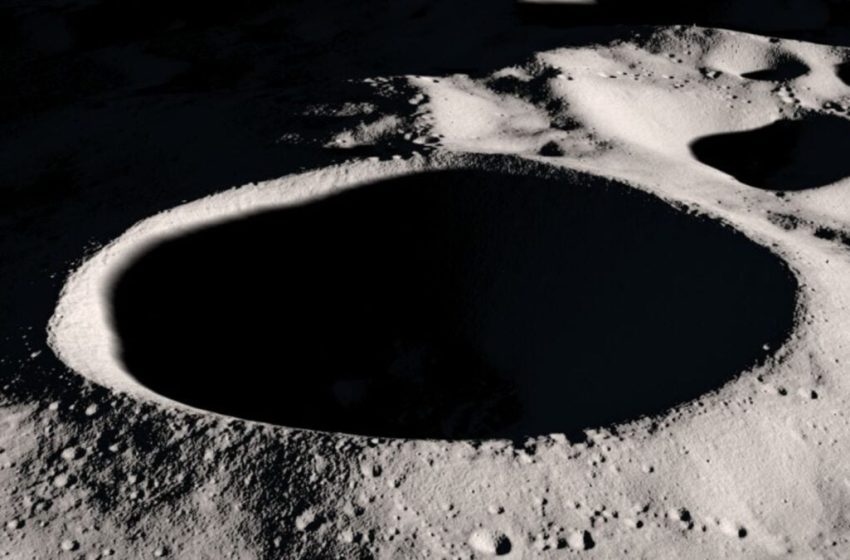
The interior of the Moon’s Shackleton crater is shrouded in eternal darkness. This not only makes it one of the most mysterious geologic features of the lunar south pole but also one of the most promising for harboring precious resources—most notably water ice.
The prospect of extracting water from the Moon is tantalizing. An in situ water source could support a sustained lunar presence and enable in-space rocket fuel production, turning the Moon into the perfect pit stop for deep space missions. The U.S. and China are racing to accomplish this feat because whoever does so first will secure a first-mover advantage, allowing it to establish extraction infrastructure and shape how this resource is used.
Each nation plans to land a spacecraft on the rim of Shackleton crater this year. While neither has announced an official launch date, both missions have reached key development milestones in recent weeks, signaling they’re on track to launch in the coming months. They represent the first efforts to attempt controlled landings in one of the Moon’s most coveted regions, kicking off a high-stakes race to claim its water.
Blue Origin’s MK1 Pathfinder mission
On the U.S. side, Blue Origin is gearing up for the first demonstration flight of its Blue Moon Mark 1 (MK1) cargo lander in early 2026. The 26-foot-tall (8-meter-tall) lander will launch aboard the company’s New Glenn rocket and touch down near the Shackleton crater to validate its hardware and systems.
MK1 is designed to ferry up to three tons of cargo to the lunar surface, so if it passes this first test, it will become a valuable asset to NASA. The agency has already selected MK1 to carry its Volatiles Investigating Polar Exploration Rover (VIPER) to the lunar south pole in 2027. This rover will search for volatile resources, such as water ice, in the Shackleton crater and other permanently shadowed parts of the Moon.
But first, Blue Origin has to nail this upcoming demonstration flight. MK1 has been undergoing testing at NASA’s Johnson Space Center in Houston, Texas, since early February. On Friday, Blue Origin CEO Dave Limp said the lander had entered a chamber for thermal vacuum testing, which will simulate the extreme thermal and vacuum conditions of space and the lunar surface.
There is still much work to be done before MK1 is ready to launch. Once thermal vacuum testing is complete, the lander will be shipped back to Kennedy Space Center in Cape Canaveral, Florida, where it will undergo final assembly, engine installation, and integration with the New Glenn rocket. How long this will take remains to be seen, but if Blue can progress through these steps without any major hiccups, we can probably expect a launch this spring.
China’s Chang’e 7 mission
While Blue Origin is making good progress, China has taken a much more aggressive approach to lunar water ice exploration. The Chinese National Space Agency’s Chang’e 7 mission is on track to launch aboard the agency’s Long March 5 rocket in August, delivering an orbiter, lander, rover, and “hopper” probe to the Moon.
Like MK1, this lander will touch down near the Shackleton crater, where it will then deploy the rover and hopper probe. Each of these payloads will carry scientific instruments to study the lunar surface and search for water ice. Since Blue Origin won’t launch NASA’s VIPER rover until 2027, China could gain at least a year’s head start in the hunt for this resource.
If CNSA does manage to extract the Shackleton crater’s water ice before NASA, it would win a major strategic advantage that could dramatically shift the geopolitical landscape of space exploration. While the Outer Space Treaty prohibits nations from claiming sovereign control over lunar resources, the first-mover advantage would allow China to set industry standards, develop proprietary extraction technologies, and establish de facto exclusive operational zones.
Of course, the jury is out on whether CNSA or Blue Origin will adhere to their respective mission timelines. Controlled lunar landings are extremely challenging, and the rough terrain near the Shackleton crater will add another layer of complexity. If these high-stakes missions do get off the ground this year, 2026 could go down in history as the year that defined the lunar water race.
First Appeared on
Source link






