


Emerald Fennell Now Going Moor-To-Moor Trying To Shock People
“My sister Emily loved the moors,” wrote Charlotte Brontë, in the introduction to a selection of Emily’s poems published in 1850. Emily had died in 1848, and had not lived to see the publication of the second edition of Wuthering Heights, carefully revised by her older sister. “Flowers brighter than the rose bloomed in the blackest of the heath for her; out of sullen hollow in livid hillside her mind could make an Eden. She found in the bleak solitude many and dear delights and not the least and best loved was—liberty.”
The hills and moors that were Emily’s Eden, says Charlotte, offered very little beyond liberty. “The scenery of these hills is not grand—it is not romantic; it is scarcely striking. Long low moors, dark with heath, shut in little valleys, where a stream waters, here and there, a fringe of stunted copse. Mills and scattered cottages chase romance from these valleys; it is only higher up, deep in amongst the ridges of the moors, that Imagination can find rest for the sole of her foot: and even if she finds it there, she must be a solitude-loving raven—no gentle dove. If she demand beauty to inspire her, she must bring it inborn; these moors are too stern to yield any product so delicate.”
Emerald Fennell, whose Wuthering Heights adaptation is presently in theaters, clearly did not find anything worth examining in the stark, scoured emptiness of Emily’s Eden, the liberty and solitude. Fennell’s “Wuthering Heights” is drowned in visual excess. Scenes are made to revolve around matters of costuming, with skirts, corsets, and bustiers used as flamboyant and ham-handed markers of luxury or poverty, or internal torment, or social surrender, or romantic desperation. More confounding is the focus on rooms and interior spaces. Fennell’s “Wuthering Heights” is trapped indoors by the director’s evident infatuation with photogenic living spaces. There are grand rooms washed in garish hues and suffocating rooms arranged in arresting squalor; there’s at least one room wallpapered with what appears to be fragments of dyed glass; another room where hundreds of plastered hand-shapes form a bizarre mantle; another room explicitly upholstered and colored to evoke the complexion and texture of a character’s skin. Because whole big movements of the film are told in the format of soundtracked montages, I guess it should not be surprising that they are also decorated like a mid-career Hype Williams joint.
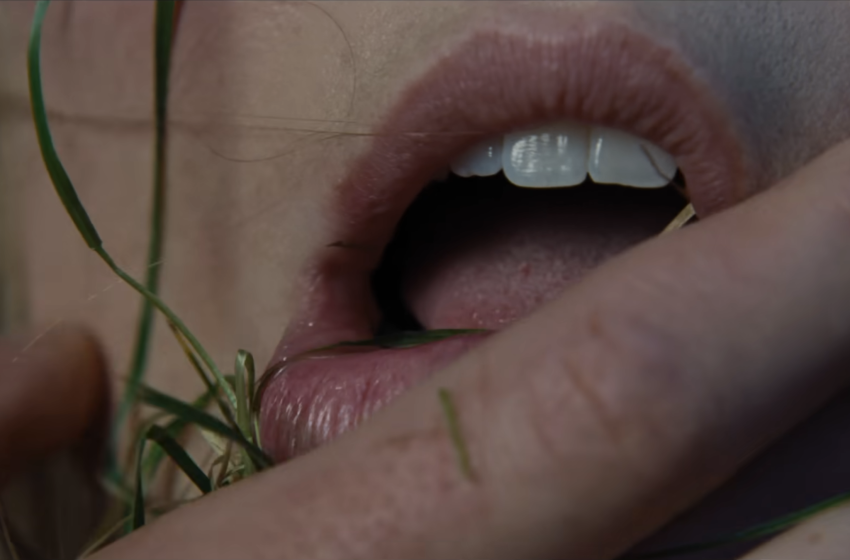
Emily Brontë picked out a particular place to express her characters’ natures, and not by accident. Because she was the solitude-loving raven, so was her Catherine Earnshaw, into whom she wrote her own pull to liberty and defining love of bleak and dismal highlands. Fennell, I guess, found Catherine’s attachment to the moors creatively frustrating. Her Catherine seems to yearn not to escape to the moors, but rather from them. Fennell’s one notable use for the moors, in this adaptation, is as the setting of a scene where Catherine masturbates, to the memory of watching two other characters fuck in a toolshed. It’s hard not to read into that choice a triumphant sneer.
To the extent that Fennell’s movie expresses any interest in addressing Catherine’s nature, it positions her as basically a demonic child. We first see Catherine, in the movie’s opening scene, standing in a town square, watching a man be hanged, and showing almost orgasmic delight at the sight of the dying man’s erection. The audience is immediately put to it: Do I hate this child? Yeah, maybe a little. But Fennell’s movie is too chicken-shit to contend with this behavior as a reflection of anything innate to Catherine, who after all must spend the rest of the movie working her way into our sympathies. Thus, we are immediately shown that the hanging is the climax of what is evidently a rural bacchanalia: People in period garb are fucking one another out in the open, everyone is all drunk and rowdy, even a nun cannot fully suppress her glee at the sight of a boner.
This is the movie’s first insane and cowardly inversion. Readers of Wuthering Heights probably remember wanting to kick a hole in a wall over Catherine’s fundamental ungovernability. On her deathbed, at the emotional climax of the first volume of Wuthering Heights, Catherine imagines that windswept shrubland outside the gates as her personal heaven, at least until she is reminded that as a ghost she will return there alone. “I’m wearying to escape into that glorious world, and to be always there,” she proclaims to Nelly, but really to Heathcliff, who is agonizing over in a corner, “not seeing it dimly through tears, and yearning for it through the walls of an aching heart; but really with it, and in it.” Catherine and her brother Hindley, bored and indulged children, had grown up profoundly isolated at Wuthering Heights, but where Hindley had had a patriarch to emulate and a more-or-less certain future to pursue, Catherine had the moors. Around the house she was cooped-up and mischievous; Nelly, Catherine’s servant and confidant and the novel’s main narrator—whose imagination runs only so far, and who certainly is not a solitude-loving raven—describes Catherine as almost feral. Nothing in the half-polished and contradictory culture of her home—not Mr. Earnshaw’s clumsy favoritism, not Joseph’s false and weaponized piety, not Hindley’s volcanic resentment, not Nelly’s relentless manipulation—seems capable of entirely subduing her, and certainly she will not contain herself. She needs, God forgive me, wide open spaces.
Fennell dispenses with this inside of the movie’s opening five minutes, possibly because she loves draperies and overstuffed sofas, possibly because it’s hard to make a movie about runway-accented sweaty humping when your main characters want more than anything else to go walking in tall grass. The setting that defines and drives Fennell’s Catherine is not the quiet moors, with their promise of liberty; it’s the dirty town and the vulgar townspeople, who are just out there in the street day-drinking and dicking each other down. Fennell’s setting is a roiling orgy of unrestrained carnal impulses, and her Catherine is an unfortunate product of this environment. Why?
The inversions mount. Mr. Earnshaw is not a bumbling and neglectful father-figure, he is a raging drunkard (Hindley, who in the book vies with Heathcliff for a foothold in the Wuthering Heights social hierarchy, is deleted from the story altogether). Wuthering Heights is not a basically respectable sub-gentry household rotted from within by conflict and simmering dysfunction, but is a squalid hellhole brought to acute ruin by financial disaster. Joseph, a longtime servant of the Earnshaws and eventually an accomplice to Heathcliff’s matured monstrosity, is not “the wearisomest, self-righteous pharisee that ever ransacked a Bible to rake the promises to himself, and fling the curses on his neighbors,” as he is described in the book, but is an amicable and bright-eyed charmer, who engages in after-hours sadomasochistic sex with a naughty housemaid. The relationship between Catherine and Heathcliff is not secluded and spiritual, but is explicit and entirely groin-based. And young Heathcliff is not an unsettlingly affectless opportunist, but is a courageous and fair-minded defender who inspires in Catherine her first and only stirrings of integrity and gentleness, and later settles in as a good-natured and even-tempered farmhand.
In an adaptation that twists itself into agonizing knots to avoid contending with the nuances of these characters, that particular inversion is among the hardest to stomach. The Heathcliff of Emily Brontë’s imagination matures from isolated and weird to angry and vengeful to finally evil, maybe driven to cruelty by a broken heart but also maybe released from the inconveniences of conscience by slights and setbacks. He and Catherine have a spooky, one-off connection: She is the only person or thing on the planet that he is capable of caring about. Their bond is spiritual and defining; they represent to one another freedom and acceptance. Far from acting as mutually civilizing forces—the way that a cute girl might inspire a lovestruck boy to wash his face and get a job, for example—Catherine and Heathcliff lure and drive one another into the wilderness, for the most part caring not at all for notions of better nature. The world could be whatever it was, but because it demanded conformity to standards of polite decorum it could never really be for the two of them, or nurture their alliance. Heathcliff experienced the world as unfair and brutal, and so he met it with contempt; Catherine experienced it as intermittently amusing but largely stultifying, and could take it or leave it. They made themselves native to the moors.
You make a choice when you describe their relationship as romantic. It could just as easily be platonic—in the book it vastly transcends and diminishes mere affection; they do not seem to need to like each other in order to belong together, and to believe that they belong together. Fennell wanted boning, and decided that her Heathcliff needed to be more palatable on the terms of unsophisticated normies—that, like her Catherine, he required heavy-handed redemption—and so the movie goes out of its way to establish him as this nice hard-luck guy, happy to be here, super chill about everything, but incredibly good-looking and magnetized to Catherine by their overwhelming hotness. Which is why it is so striking that Fennell also decided that her Heathcliff did not need to be dark-skinned and swarthy, but should be a rugged white guy.
Here comes another, related inversion. Edgar Linton, Catherine’s eventual husband, who in the novel is well-born, genteel, generally moderate, and mostly decent, in the movie has the dial turned all the way up on his wealth and flash, so that his influence can be made into a corrupting force on the humbled and financially distressed Catherine. The movie hedges somewhat by making sure that Edgar is more-or-less well-behaved, but the Lintons of Fennell’s adaptation are grotesque, and there is a scene, ripped directly from The Great Gatsby, where Edgar and his sister Isabella treat Catherine to a bizarrely nouveau riche-coded showcase of all the fancy dresses they’ve ordered for her new life at Thrushcross Grange.
In one of the like seven different Charlie XCX music videos jammed into Wuthering Heights‘s runtime, Catherine is shown alternately delighting and languishing in Edgar’s obscene opulence, while the ultra-subtle lyric “the chains of love are cruel, I shouldn’t feel like a prisoner” is repeated 1,000 times. Cut into this montage are clips of Catherine having unfulfilling sex with Edgar, who obviously cannot be as appealing to her as her wild white heartthrob of a playmate. All of which makes it so striking that Fennell decided that her Edgar did not need to be a white guy, but should be played by actor Shazad Latif, a brown-skinned man of Pakistani descent. Isabella, Heathcliff’s eventual wife and victim, is played by white Irish actress Alison Oliver, with a line tossed awkwardly in there about how she and Edgar are basically siblings. The reversal of the ethnic makeup of Catherine’s suitors could read as a Bridgerton-ish casting correction, except that Fennell’s screenplay heaps favors onto Heathcliff, sandbags Edgar, and reworks these relationships in order to make Heathcliff sexier and more palatable as a protagonist. It becomes hard not to understand his whitewashing as an extension of this effort.
The combined cowardice of all these storytelling choices eventually becomes a distraction. At a certain point, you are forced to ask just what the hell story this movie wants to tell, and why. Heathcliff’s relentless brutality toward his wife, Isabella Linton, is transformed into a game of hideous sexual domination that she enthusiastically enjoys. Why does Heathcliff require this redemption? There is a kind of essential puritanism hidden behind all of Fennell’s choices, a refusal to face these characters and their circumstances and contend with their meaning, which Fennell then attempts to mask with the cinematic equivalent of a pubescent virgin boy drawing penises all over his Trapper Keeper. That discomfort that the book inspires, the feeling that you might want Catherine and Heathcliff to go out onto the moors and freeze to death, but then the little voice inside of you that warns you to consider on whose behalf you might be daydreaming, that is at least one of the real ingenuities of the story. And the movie hates all of that, and wipes it away as forcefully as it can manage. Incurious and intellectually incapable of grappling with what Catherine and Heathcliff mean to one another, the movie settles for they like smashing their crotches together. Unwilling to leave the hunky anti-hero accountable for his actions, the movie shrugs at his victim and says that bitch wanted it. Unable to relate at all to Catherine’s sincere otherness, it goes with she just needed some good dick.
My copy of Wuthering Heights was once owned and read by someone else, someone who did a lot of underlining and filled the margins with notes. Heathcliff arrives at Catherine’s deathbed and the two sob and shout at one another, exchanging bitter accusations and condemnations. “You teach me how cruel you’ve been—cruel and false,” rages Heathcliff, to the love of his life, who is actively dying. “Why did you despise me? Why did you betray your own heart, Cathy? I have not one word of comfort. You deserve this. You have killed yourself. Yes, you may kiss me, and cry; and wring out my kisses and tears. They’ll blight you—they’ll damn you. You loved me—then what right had you to leave me?” It’s just about the last set of complete sentences he ever says to her, and she begs him for forgiveness, and then a page later she is dead. The person who owned the book before me underlined the words “deserve this,” and under them wrote the word, “Yike!” I give this person points for timing: This “yike” saps a lot of the drama from the moment, like a sewing needle rammed into a balloon. Looking at it now, I find it hysterical.
But it is yike! It’s a terribly hurtful thing to say to someone who is dying, in particular if what you truly believe is that the two of you are joined at the soul and belong together for eternity. Emily Brontë was a fearless fucking goddess for this, for holding these characters true even in moments where a reader might very reasonably fling the book away and shout, What the fuck!
Fennell, who I gather considers herself some sort of daring maverick or whatever, keeps the lines in the story, but has Heathcliff deliver them under an archway during a rainstorm, while he and Catherine are both very healthy and looking their very sexiest. Amazingly, the two of them soon clear up the very simple misunderstanding that got them into this gosh-darned pickle—the matter of Catherine having married someone else—and then have sex with each other dozens of times over another Charlie XCX music video montage covering weeks or months of illicit bliss. They eventually do have a falling out, but only because Heathcliff wants to hump while talking shit about snapping Edgar’s neck, suddenly inspiring something like umbrage in Catherine. These are not soulmates who have been deprived of one another, to their mutual ruin, but horny brats who, if anything, have overindulged in one another’s limited and dubious charms.
The Catherine of the book dies of something like what eventually killed her creator. Charlotte Brontë observed of Emily that she could be killed by “disciplined routine,” which she encountered first at boarding school. Cut off and removed from the “unrestricted and inartificial mode of life” of her beloved moors, she would simply die. “Liberty was the breath of Emily’s nostrils,” as Charlotte knew her. Emily could not thrive until she returned to those “desolate Yorkshire hills,” enriched by whatever she’d gained by leaving, sure, but also sadly and permanently diminished by the separation, by the exhausting exercise of fortitude and resolution that the separation required. Catherine, it turned out, could also die by routine: Hers came not from school and physical distance from the moors, but from marriage and a cloistered and circumscribed experience of womanhood. The moors were right outside her window, but subtler forces pinned her indoors, and death came by emotional isolation from the person whose society kept her connected to her native place.
Fennell’s Catherine dies by septicemia, in the room wallpapered to look like it is lined in her own skin. It’s a final contrivance, not just the aesthetics of the scene but the death itself: The movie has entirely run out of things for Heathcliff and Catherine to do, and has stuffed itself too full of music videos to engage with the second half of the book, and must therefore kill one of the lovers. Catherine’s death illuminates nothing at all about her character or her relationship to the people in her life or her environment; it’s just a setup for a musical crescendo and underneath of which to draw a visually striking pool of blood.
I know there are people who will eat this up. Maybe your thing is set design? Jacob Elordi is very hot, and he certainly commits to his character, although he is powerless to make anything three-dimensional or interesting of Heathcliff during the character’s hippy-farmhand phase. Margot Robbie is capable of playing not-a-sexpot, but Fennell cast her in this one to play a sexpot, and Robbie’s toolkit for playing sexpots is by now overused to the point of wear. Sometimes she is Harley Quinn, sometimes she’s Naomi Lapaglia; the very few scenes that have anything in the same universe as emotional resonance fail to land in part because Robbie is stuck trying to put soul behind the eyes of a character she has already worked hard to depict as utterly depthless. Martin Clunes plays Mr. Earnshaw as cheap comic relief, but then they put gross falsies in his mouth, and he becomes a dark symbol of Catherine’s moral compromise. Latif is stranded with a thankless role; Hong Chau, cast as Nelly, is tasked with making faces that are evil but not too evil; Oliver is unbearable.
A contemporaneous review of the book in the newspaper The Atlas—written in 1848, not entirely positive but struck by the story’s power—pondered whether “even a happy love would have tamed down the natural ferocity” of Heathcliff’s character. In the long passages of the book not adapted for Fennell’s awful movie, Heathcliff stoops to breathtaking depths of cruelty, acts somehow even worse than the imprisonment and savage abuse of a teenaged bride. Of course, a happy love would not have tamed his character, but it’s at least an interesting question, one that contends with his nature, and considers whether his capacity for love could’ve ever been nurtured outward. Another good one: Would Heathcliff ever have been capable of sustaining “a happy love,” in particular with Catherine, or would the two of them always have repelled one another? Wouldn’t Heathcliff’s misanthropy eventually have thwarted even Catherine’s forbearance? Fennell’s curiosity about all of this is as shallow as Baz Luhrmann’s engagement with The Great Gatsby: The parts of it that can be made to look cool on celluloid were cherished, tackily, while the parts that might cross the eyes of a not-bright middle-schooler were flattened, so as not to distract an audience evidently deserving of no respect whatsoever.
“I love working with Emerald because she always prioritizes an emotional experience over a heady idea,” said Margot Robbie, defending Fennell’s “Wuthering Heights” from disapproving critics. “She’s got great ideas, but she’ll let a cool idea fall by the wayside to offer the option that’s going to be most exciting for the audience.” Yes, sure, boners and heaving bosoms are exciting for an audience, whips and wet shirts and babes masturbating on a hilltop. That was true in 1848, too, but Emily Brontë gave the world something that wasn’t that, a complex and challenging thing, worthy of close attention. You don’t have to love Wuthering Heights. Plenty of people do not. The first time I read it, I thought it was the nastiest shit I’d ever encountered. I was also a freshman in high school. Now I am a grown-up, and I would very much love to see a Wuthering Heights adaptation made for grown-ups. This one was made for people who will never read Wuthering Heights, and it was made by someone who evidently hated it.
First Appeared on
Source link






