


Long COVID devastated her, but new treatments offer hope
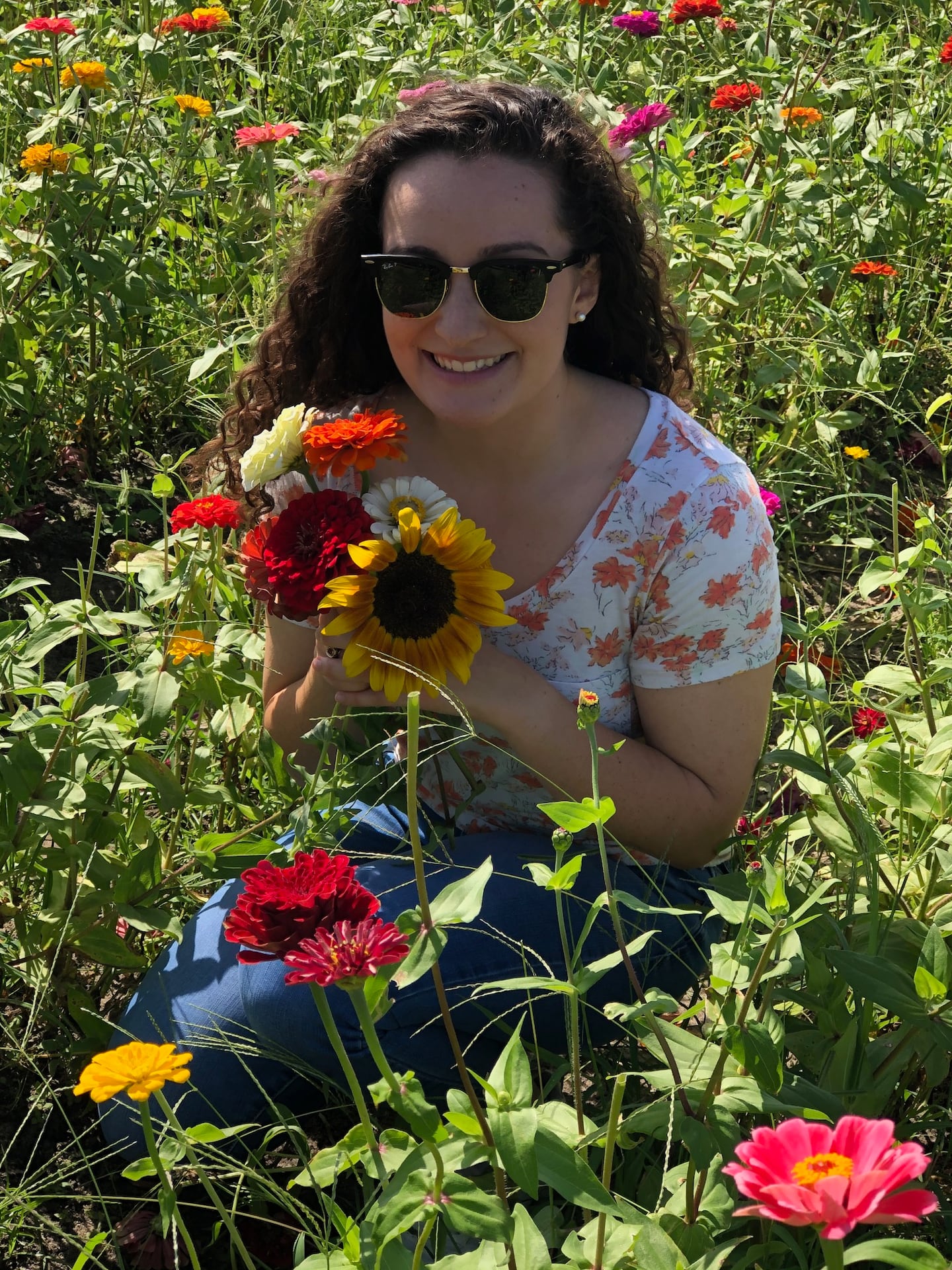
Crausman’s symptoms began four years ago, after she contracted COVID-19. She’d returned home from Florida to Rehoboth, Mass., to live with her parents during the pandemic. She planned to soon move to New York to launch a career in entertainment.
Now she’s 28, trapped in an existence that seems to shrink with each passing year, her young life stalled.
As the world has moved on from the pandemic, some 20 million Americans – most of them women – continue to suffer from a variety of COVID-19 symptoms, especially brain fog and fatigue. The majority of people recover from an infection within weeks, but one in 10 still have symptoms three months later, a condition that has come to be known as long COVID. More than 80 percent of those who were suffering at three months were still sick 12 months later, according to one recent study.
It’s a sickness that limits a person’s life to varying degrees – some can work but forgo other activities; others have to quit or work part-time.
Crausman is among a small minority so severely debilitated they cannot even leave home. As part of long COVID, she has developed the symptoms of myalgic encephalomyelitis/chronic fatigue syndrome or ME/CFS, a condition believed to be triggered by infections.
COVID-19, of course, is only a few years old, a blip in the history of science. Researchers have only recently started to unlock the mechanisms driving long COVID and unearth potential treatments. A cure could be a long way off.
Patients like Crausman, meanwhile, are left to wrangle with their doctors’ skepticism and use their limited energy to search for clinical trials – and for reasons to hope.
For Samantha Crausman’s parents – Rob Crausman, a doctor, and Alicia Crausman, a nurse – their younger daughter’s illness is a heartbreaking reversal of her life’s trajectory.
A graduate of Brown University, Samantha Crausman had been working in Florida’s Walt Disney World, hoping to eventually act in one of their live shows, when the pandemic struck, and she and other workers were laid off.
She and her parents were fully vaccinated when they came down with COVID in May 2022. Only Samantha Crausman didn’t recover.
The first sign came when Crausman, who’d always been energetic and athletic, couldn’t keep up with her parents while walking, her legs leaden with fatigue. When her parents took her apartment hunting in the suburbs of New York, she retreated to the car to rest after a few blocks.
Soon, severe gastrointestinal problems caused her to lose 20 pounds. Once medication and dietary changes mitigated that problem, other symptoms became apparent: brain fog, sensitivity to light and sound, the inability to stand for any length of time, and those “crashes,” known as post-exertional malaise.
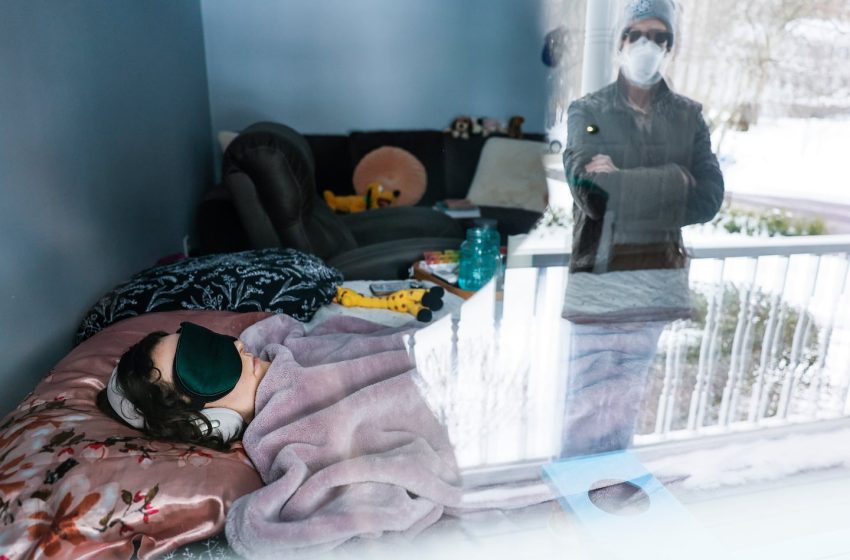
During the first year of her illness, Crausman could walk down the driveway and manage a staircase, even swim a little in the pool out back. The second year, she needed a wheelchair. Now, she rarely goes out at all. About a year ago, when Crausman could no longer climb the stairs to her bedroom, her parents blocked off a section of their living space and built a room for her on the first floor.
Much of her time is spent in what she calls “aggressive rest.” Focusing her eyes on written words or television brings severe headaches. Music she once enjoyed feels like an assault of noise her brain can’t process. She dons noise-canceling headphones and an eye mask, and lies still, perhaps daydreaming or letting her brain go silent. Sometimes she listens to audiobooks.
“It is a good day when I can open my curtain at dusk and see the outside world, or when I can play with our dogs for a while,” she wrote in an email. The family owns two Lakeland terriers, Stella and Luna. “But in the back of my mind, I know I’m one good ‘crash’ away from losing all of that, from no longer being able to tolerate the light outside my window even at dusk, the noise and activity of two dogs, or the screen on my phone.”
Crausman is not able to accept visitors or even do a phone interview. Instead, she shared aspects of her life in emails and audio recordings.
Long COVID is a complex illness, with some 200 possible symptoms and effects on virtually every organ system, ranging from palpitations to difficulty breathing to digestive distress.
Dr. Ziyad Al-Aly, a clinical epidemiologist at Washington University School of Medicine in St. Louis and one of the leading researchers of long COVID, estimated that out of every 100 long COVID patients, “a handful” are homebound or unable to work. Because so many people – an estimated 400 million around the world – have long COVID, that adds up to a lot of severely disabled people.
Women are more likely than men to develop long COVID, with those between 40 and 54 at highest risk, according to recent research. This may be because of differences in women’s immune systems and hormones.
There’s evidence for several theories about long COVID’s causes: The virus hides in tissues after seeming recovery. Inflammation spawns microclots that damage organs. Dormant viruses from earlier infections are reactivated. Auto-antibodies attack the body. Or – more likely – an intermingling of more than one of these.
As a result, patients’ experiences vary. A recent study from the federal RECOVER, or Researching COVID to Enhance Recovery, initiative identified eight trajectories following COVID infection.
These included the 5 percent who, like Crausman, had persistently severe symptoms. There were also those whose symptoms gradually improved and those who seemed to recover from the initial infection but fell ill a year later. For each category, the mechanism driving illness is likely to be different and so is the likely treatment, said the study’s senior author, Dr. Bruce D. Levy, executive vice-chair of the Mass General Brigham Department of Medicine.
Levy wasn’t expecting such diversity. “I was surprised that there were eight,” he said.
The RECOVER program survived the Trump administration’s cuts to medical research, after pushback from advocates, but the Office for Long Covid Research, which coordinated research efforts, was shut down last year.
While individual researchers are doing their best, Al-Aly said, the nation lacks a coherent strategy for addressing long COVID.
And it’s not over – people are still getting long COVID today. The risk has diminished, perhaps as a result of vaccination or different viral strains. Those infected in March 2020 had a 10 percent risk of long COVID. That has dropped to about 3.5 to 5 percent, with those who were not vaccinated or who had severe illness more likely to be affected.
Still, Al-Aly cautioned, each time someone is infected, the risk of long COVID remains.
“Even if you dodged the bullet before one time or two times or three times, it doesn’t mean you’re gonna keep dodging the bullet every single time,” he said.
‘Fighting to be heard’
Fearing that Crausman could get worse if she had another COVID infection, her parents restrict their lives to prevent exposure.
“We continue to live like we did during the pandemic,” Rob Crausman said. N95 masks whenever they leave the house. No guests. No dinners out. Ordering groceries online for pickup. Rob Crausman sees his patients only by telehealth.
When their older daughter, Amanda Crausman, a medical student in Philadelphia, wants to come for a visit, her father drives down to test her for COVID before she leaves. If her test is negative and she comes to the house, he will continue to test her every day, using a handheld PCR machine that he ordered from Germany, which provides more accurate results than the store-bought rapid tests.
Crausman, 62, was at a crossroads professionally when his daughter got sick. He had just sold the urgent care centers he’d founded, and was ready for the next chapter. He wasn’t planning the semi-retirement he eventually had to choose, working part-time as a telehealth provider to people in recovery from addiction.
Crausman said he is fortunate that he’s in a position to devote himself fully to his daughter. He has used his knowledge and connections to try every treatment that had evidence of possibly working. He sent a blood sample for testing in Germany, and found she had a high level of auto-antibodies, which attack certain receptors throughout the body. He started her on a prolonged course of the antiviral Paxlovid. Her experience was later written up in a case series of 13 patients. Some got better. Samantha Crausman “crashed” and had to stop the drug after 10 days.
The same thing happened when she tried monoclonal antibodies, which eased post-exertional malaise in some patients, possibly by clearing lingering fragments of the virus. She traveled to Boston for another treatment that seemed to hold promise – injecting the anaesthetic lidocaine into a cluster of neurons in her neck. This procedure had been used to treat PTSD and anecdotally had helped some long COVID patients. Not only did that fail to yield any benefit, the experience left her immobilized for months, and she never fully recovered.
“We have tried more things than I can count that worked for others or were suggested by small research studies, and at best, they haven’t made her worse,” Rob Crausman said.
She did experience subtle benefits from low-dose naltrexone, which reduces brain inflammation, and immunoglobulin injections, which can quiet autoimmune responses.
As Samantha Crausman sought care in the early days of her illness, she was often met with befuddlement.
“I was fighting to be heard by doctors who didn’t care about COVID and had never heard of long COVID. (‘what did you say? Lung COVID?’ – a direct quote from a provider),” she wrote in an email, describing the first year of her illness.
“They didn’t believe I was as sick as I claimed, and they’d say all the things that don’t make sense for people with energy-limiting illnesses. ‘Go for a walk,’ or ‘do Tai Chi,’ but I have exercise intolerance and deteriorate when I push myself.”
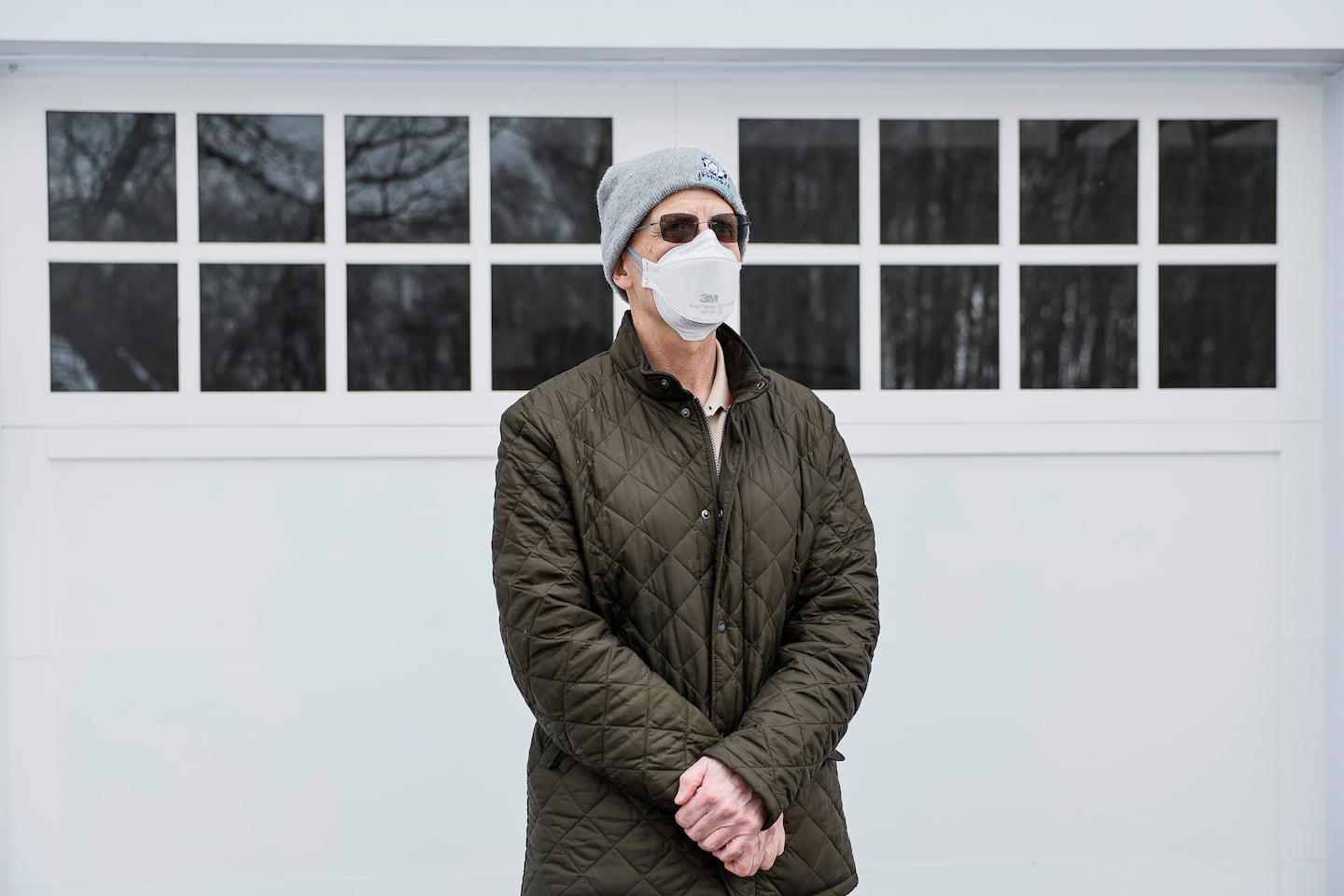
Rob Crausman is a lung specialist who for a decade ran the Brown-affiliated residency training program at a Pawtucket, R.I., hospital. He’s also the former administrator of the Rhode Island medical board, a former hospital chief medical officer, and co-founder of a string of primary care and urgent care centers. After practicing medicine in so many different settings, he never imagined his profession could so completely fail his own child at her time of greatest need.
“I’m profoundly disappointed,” he said.
To this day, he gets well-meaning advice from physician friends who show surprising ignorance about his daughter’s condition.
“If I have one more person tell me that she just needs to do yoga, I will lose my mind,” he said.
As Samantha Crausman got sicker and showed no signs of recovering, her friends drifted away. She made new ones online in the community of fellow patients. That community led her to conclude that in addition to long COVID, she had ME/CFS, which involves severe fatigue, exercise intolerance, and unrefreshing sleep. Like long COVID, ME/CFS is triggered by a viral infection.
A portion of long COVID patients – estimates range from 4.5 percent to around half – also have the symptoms of ME/CFS, but it’s not exactly the same illness because it is sparked by a new virus.
ME/CFS also has no cure, but some people benefit from treatments, such as drugs to address the nervous system problems, and they learn how to conserve energy and pace themselves, said Dr. Lucinda Bateman, founder and medical director of the Bateman Horne Center in Utah, which focuses on the study and treatment of ME/CFS.
“Gradually they learn how to tame the illness a little bit, or come to some kind of terms with it, and find a rhythm where they can maintain with more stability,” she said. “But that’s not the same as being cured.”
The Bateman Horne Center added a long COVID clinic in 2021. Long COVID has drawn heightened attention to what are called “infection-associated chronic illnesses,” and that will reap benefits for patients with ME/CFS, Bateman said.
“It’s definitely expanded the numbers of scientists and clinicians who are involved and committed,” she said.
For long COVID patients, the illness can mean major life changes. Jessica White, 35, a patient in New York City, stopped working full-time and plans to step aside from her role as CEO of an AI start-up, because long COVID has sapped her energy. She’s earning a master’s in biomedical sciences, which involves working in a long COVID lab. And she’s participating in clinical trials.
“When you’re a patient, science never feels fast enough,” she said.
Still, White feels hopeful. “There are many more treatments on the horizon that I’m really looking forward to trying this year,” she said.
White also serves on the board of the PolyBio Research Foundation, a Medford-based non-profit that started in 2018 to study the role of infections in promoting chronic disease, and soon pivoted to long COVID.
PolyBio is launching a program to develop and validate tests that would establish the root cause of an individual’s long COVID symptoms. Such diagnostic tests would enable pharmaceutical companies to target studies of new drugs to the people most likely to benefit.
Once they’re available, “I think you’ll see massive engagement by the pharmaceutical industry in this space,” said Amy Proal, PolyBio CEO and research program director.
Meanwhile, Samantha Crausman endures day by day.
“I have periods of time where looking towards the future is so daunting, and I realize just how much I have lost,” she writes in an email. “In those moments, reflecting on how small my life is brings immediate tears … How much longer can I survive like this? How many more years do I want to survive like this? There is so much I wish I could do, and so much still left to lose.”
Alicia Crausman, her mother, describes the family as being “in a waiting period with no real end in sight.”
Her father clings fiercely to hope. He takes Samantha’s navy-blue Volkswagen Jetta for a spin once a month to keep it functioning so one day she can drive again. He obsessively follows the long COVID and ME/CFS research occurring around the world, and remains encouraged by where it’s headed. Medical science, after all, has a history of producing results.
When he was an intern during the dark, early days of the AIDS epidemic, a friend was diagnosed with HIV, and expected to die.
“And you know what?” Rob Crausman said. “That friend has lived a happy life and is still doing wonderful things to this day.”
He wishes the same for his daughter.
Felice J. Freyer can be reached at [email protected]. Follow her @felicejfreyer.
First Appeared on
Source link






