


The Everyday Essentials That Longevity Experts in Their 50s, 60s, and 70s Use in Their Own Homes
If there’s a single rule to aging well, it may be that you simply need to keep moving. In fact, even if you engage in moderate exercise for less than the minimal recommendation of 150 minutes per week, it can still make a big difference: A 2011 study found that when people of all age groups engaged in just 15 minutes a day of moderate-intensity activity, they extended their life expectancy by three years. (According to the American Heart Association, moderate-intensity activities include brisk walking, dancing, gardening, and doubles tennis.)
In other words, you don’t have to magically transform into a jock or a gym rat overnight to reap the benefits of moving more. “It’s about setting up nudges so that you’re making unconscious decisions on a day-to-day, moment-to-moment basis that are slightly better,” says Dan Buettner, a longevity researcher, National Geographic fellow, and founder of the Blue Zones Project, a community-based well-being initiative. “That adds up hugely.”
Start (or continue) strength or resistance training. The experts we spoke to said that doing exercises that help maintain muscle mass and bone density — commonly referred to as strength training or resistance training — should be considered nonnegotiable. “The link between strength or resistance training and healthy aging is quite strong,” Eric Topol, MD, a cardiologist and author of Super Agers: An Evidence-Based Approach to Longevity, said. “The sooner that becomes part of your normal physical activity, the better.”
That can mean joining a gym, seeking professional assistance from your doctor or a trainer, or developing an at-home weightlifting routine (perhaps with one of our adjustable dumbbell picks). However, if you’re intimidated by all of that, both Topol and Rosanne M. Leipzig, MD, PhD, a professor of medicine in the department of geriatrics and palliative medicine at the Icahn School of Medicine at Mount Sinai in New York City and author of Honest Aging: An Insider’s Guide to the Second Half of Life, recommend working out with resistance bands as an alternative.
Not only are resistance bands lightweight and inexpensive, but they can also provide an effective workout that’s less grueling. “It’s not ‘no pain, no gain,’” Leipzig noted. “It’s about doing more reps at a level that you can tolerate until you get tired, instead of hurting yourself.” (The New York Times has a suggested 20-minute resistance-band strength-building routine that can get you started.)
Top pick
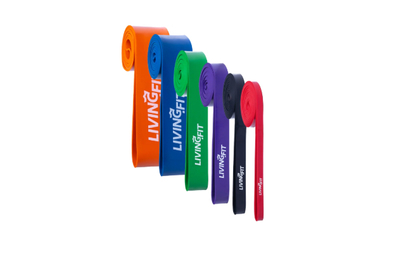
This set of seven superbands is ideal for assisted pull-ups, full-body stretches, and other exercises. Plus, it has a stellar warranty.
Invest in shoes that are made for walking. A 2023 study found that regular walks are effective at “preventing or delaying age-related functional decline and the onset of age-related diseases in multiple organ systems.”
Buettner suggests splurging on a good pair of walking shoes and keeping them by your front door as a reminder to get your steps in. Two of our running-shoe picks — the Adidas Adizero Evo SL and the Altra Escalante 4 — work well as walking shoes, according to our fitness writer Seth Berkman.
Top pick
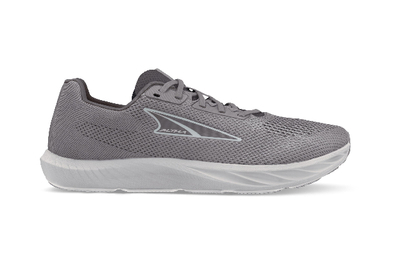
This is the rare zero-drop shoe that feels springy but still flexible underfoot. An ample toe box creates a comfortable fit that helps prevent blisters and hot spots.
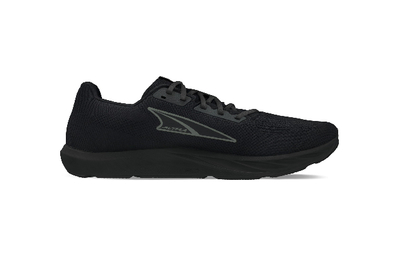
This is the same shoe, in men’s sizing.
Consider a step counter. Whether you use a smartphone app, a fitness tracker, an Apple Watch, or something analog, a step counter can help ensure that you’re getting enough daily movement.
While 10,000 steps per day was long considered the benchmark, newer research indicates that you can reap the same health benefits with less. “If I can get people to do 7,000 [steps], myself included, I’m really happy,” Leipzig said.
Top pick
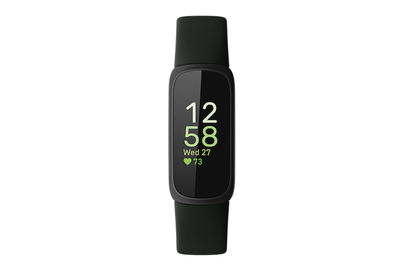
This easy-to-use tracker is comfortable to wear all day and provides accurate measurements, without too much clutter on the home screen.
Practice yoga. Like walking, yoga can be an easy yet highly effective safeguard against age-related decline. A 2023 study found that it increases walking speed and leg strength, two common predictors for better longevity.
Also like walking, yoga requires next to no equipment. A yoga mat that you keep somewhere visible and a YouTube channel you like — Buettner’s personal favorite is Boho Beautiful Yoga — are all it takes to get started. (If you want to try a yoga class instead, all the better, as it adds a social component to your routine.)
Top pick
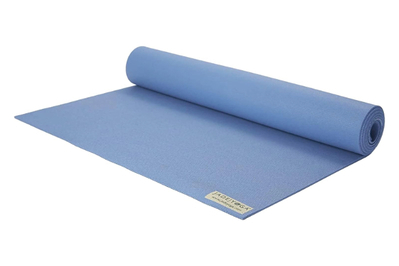
This natural-rubber mat creates premium suction for your fingers and toes to prevent slippage and is especially good for hot yoga. But it has a strong odor that takes a while to dissipate.
Get into gardening. A 2020 study found that gardening “provides opportunities for increased physical activity, which can prevent osteoporosis, reduce the risk of some cancers, Type 2 diabetes, depression and heart disease.”
“My dad is 90 years old and works in the garden every day, and I think he is the most fit person I know,” Buettner said. “Right now it’s harvest time, and he gives what he grows to his neighbors, which also gives him a reason to talk to people.”
Getting started requires little more than a patch of soil, some seeds, and maybe a pair of gloves, a sun hat, and a kneeling pad. (If you don’t have yard space, you can use the American Community Garden Association’s online locator tool to find available plots near you.)
Top pick
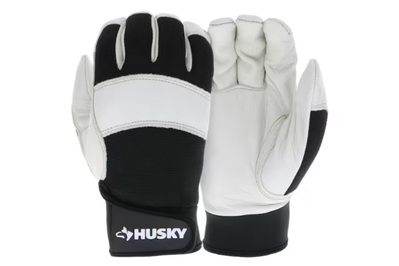
Resistant to punctures and moisture, these gloves have snug, adjustable wrist straps and a spandex backing, which allow them to fit a range of hand sizes while preventing debris from entering at the wrist.
First Appeared on
Source link






