


Scientists Find Alien-Like Creatures in Colombia’s Oceans, and They’re Older than Dinosaurs!
Beneath the surface of Colombia’s oceans, scientists have uncovered a stunning array of alien-like creatures, previously hidden from view. These ancient marine animals, with their shimmering, rainbow-colored patterns, have roamed the seas long before dinosaurs. Despite their fragile and mysterious nature, they play a crucial role in the delicate balance of marine ecosystems, offering scientists new insights into the often-overlooked world of gelatinous plankton.
Ctenophores: Ancient Creatures with Unique Features
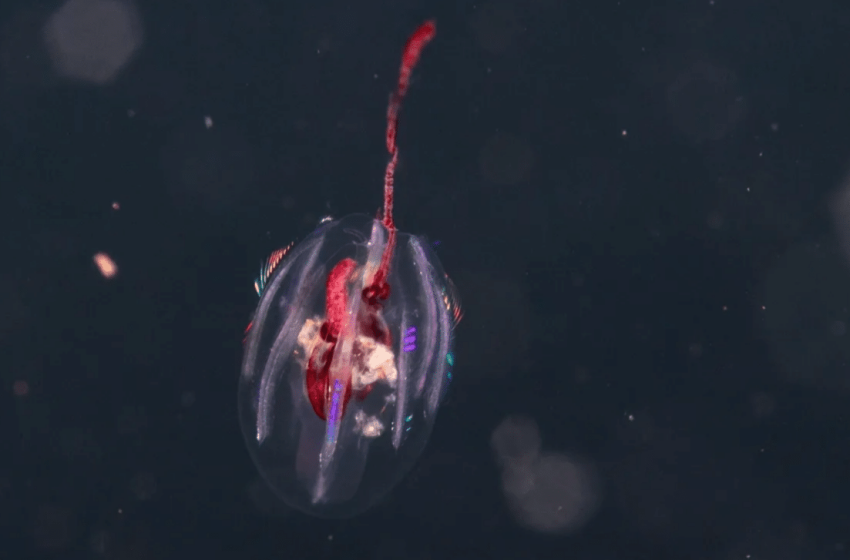
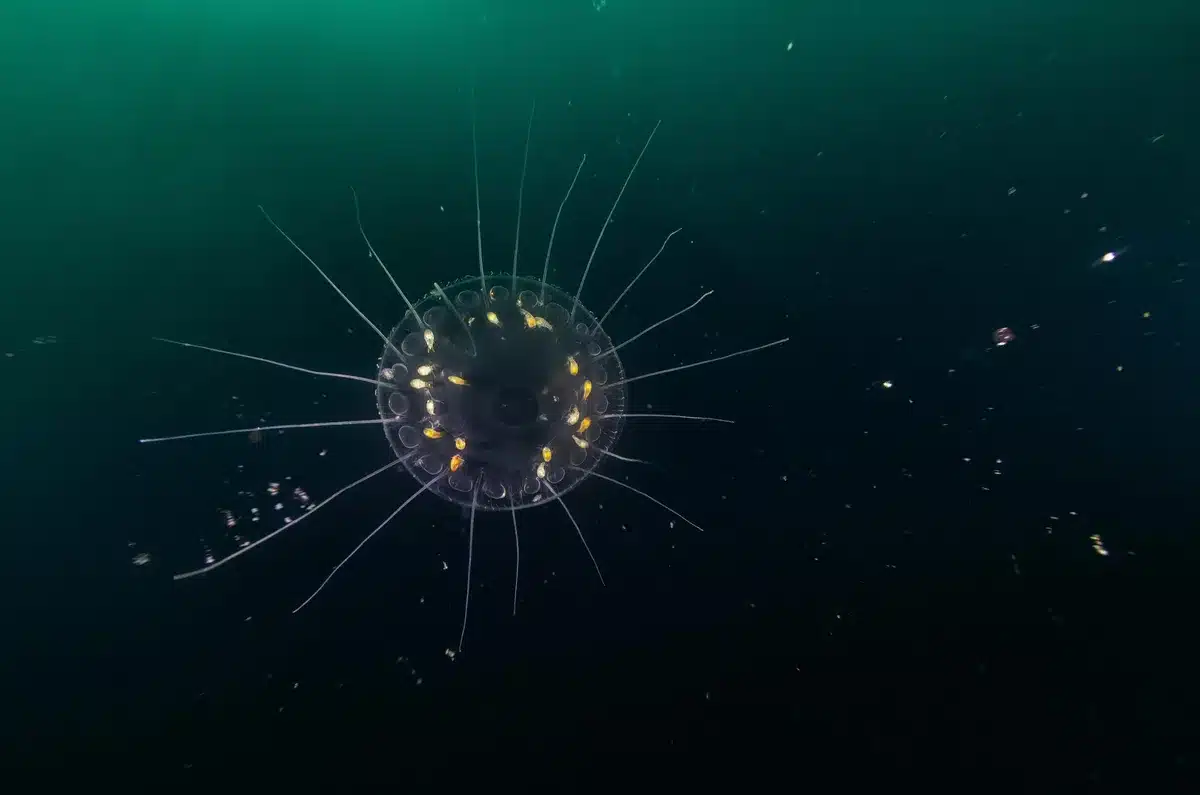
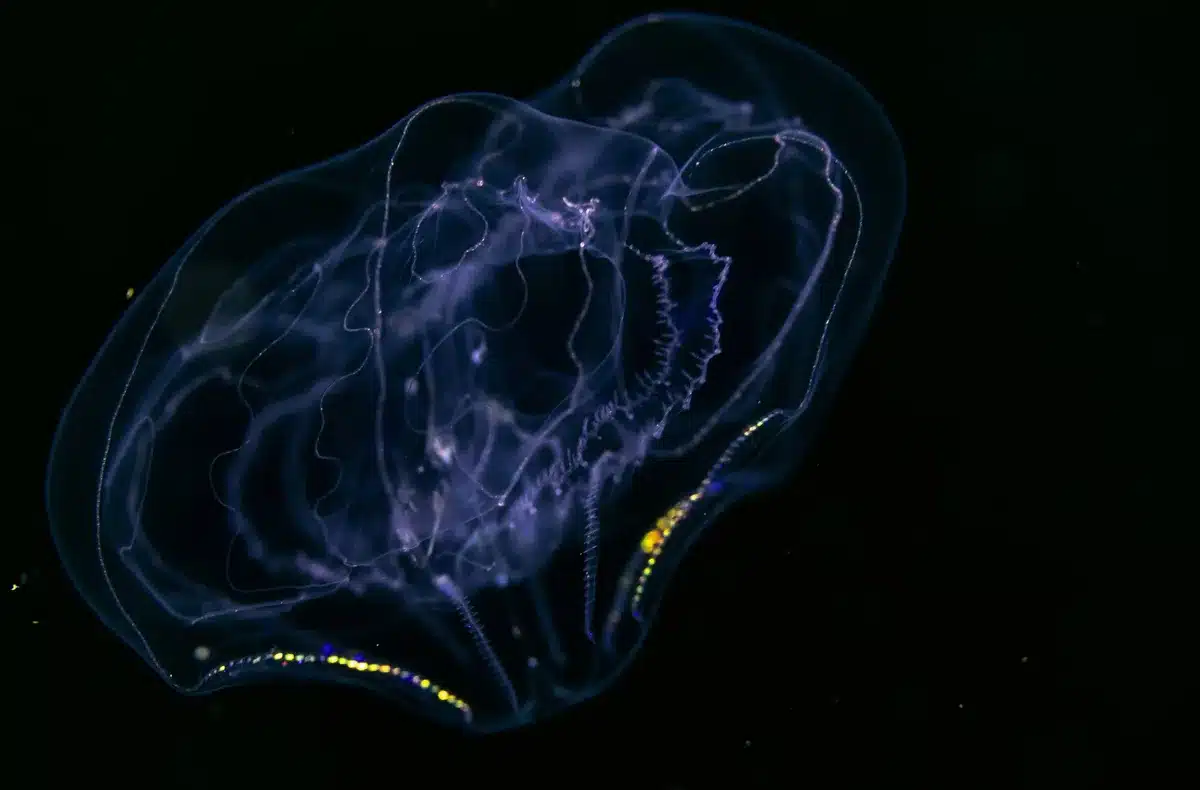
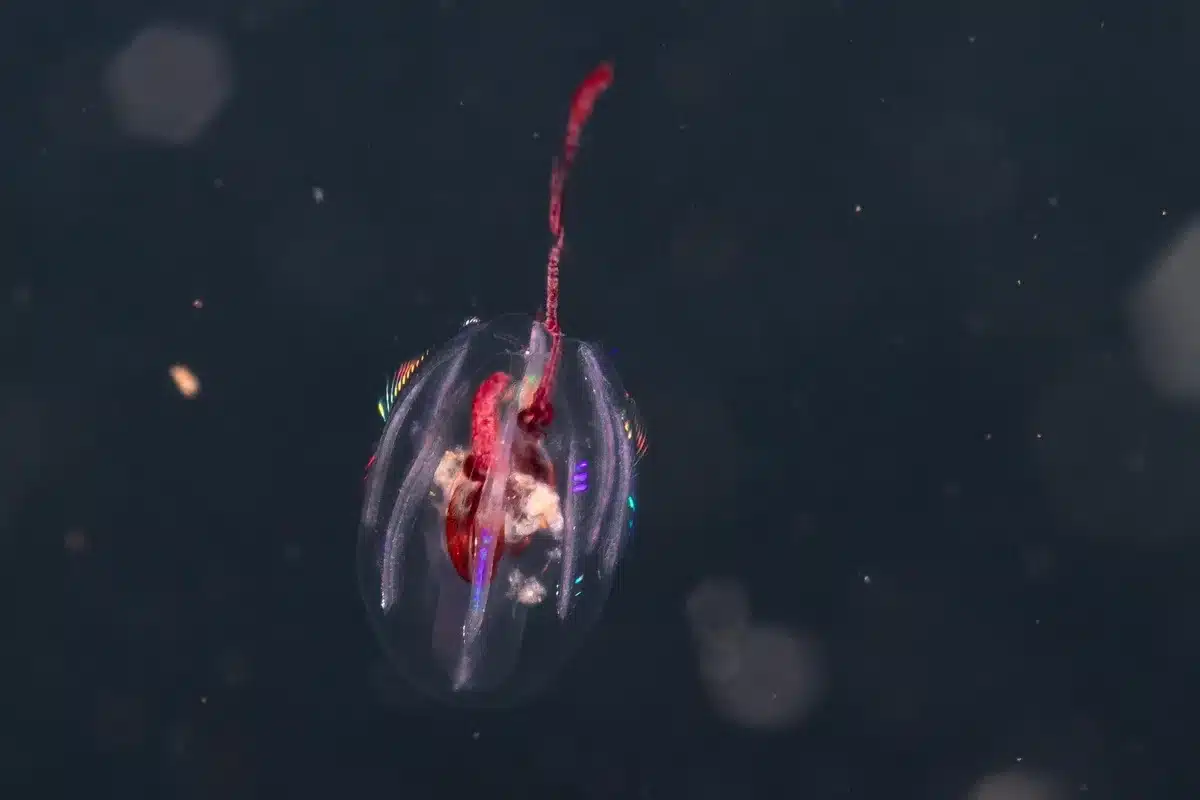
Ctenophores are fascinating, translucent animals that have been around for hundreds of millions of years, long before the rise of the dinosaurs. Often mistaken for jellyfish, comb jellies are an entirely different group of marine animals. What sets them apart is their appearance and unique method of movement. Their bodies shimmer with a kaleidoscope of colors, created by eight rows of cilia, hair-like appendages that move back and forth to propel them through the water. The light refraction from these cilia creates the mesmerizing effect, giving some species the appearance of glowing or shimmering. Unlike jellyfish, comb jellies do not have stinging cells but instead use a different feeding strategy involving specialized cells known as colloblasts.
Credit: Enric Sala, National Geographic Pristine Seas
“These fragile organisms dissolve when collected in nets, so they can only be studied through images,” says Juan Mayorga, a National Geographic Pristine Seas marine scientist and one of the authors of the new study, published in published in the Revista de la Academia Colombiana de Ciencias Exactas, Físicas y Naturales, documenting 15 ctenophores in Colombian waters. This delicate nature makes comb jellies particularly difficult to study and underscores the importance of innovative methods for observing them in their natural environment.
Credit: Manu San Félix, National Geographic Pristine Seas
A Critical Discovery in Colombian Waters
The recent study, conducted by a team of scientists including Mayorga and lead author Cristina Cedeño-Posso from INVEMAR, documented the presence of 15 different species of ctenophores in the waters off Colombia, six of which had never before been recorded in the region. The study’s findings are significant, filling a long-standing gap in the knowledge of marine biodiversity in the region. As part of their research, the scientists used non-invasive techniques, such as underwater photography and observation, to study the comb jellies without harming them. The result was a collection of stunning images that not only documented these creatures’ ethereal beauty but also contributed to advancing scientific understanding of their role in marine ecosystems.
“The results fill a historical information gap on a key group of gelatinous plankton and demonstrate the value of non-invasive methodologies and explorations in remote areas to strengthen knowledge of marine biodiversity,” says Cristina Cedeño-Posso, the study’s lead author and a researcher at INVEMAR.
Credit: Manu San Félix, National Geographic Pristine Seas
The Role of Ctenophores in the Oceanic Food Web
Despite their fragile and alien-like appearance, ctenophores are vital components of the ocean’s food web. These carnivorous creatures feed primarily on plankton, including fish eggs and larvae, and other small marine organisms. They use their colloblasts, a unique feature found on their tentacles, to capture prey. Colloblasts function similarly to the stinging cells of other marine creatures like jellyfish but instead of venom, they release a sticky glue when touched. This glue captures the prey, and the comb jelly then reels it in to consume.
“Ctenophores are carnivorous, and many comb jellies have colloblasts lining their tentacles, which work like nematocysts but release glue instead of venom,” says the Smithsonian Ocean website. The feeding strategy of comb jellies plays an essential role in controlling populations of smaller planktonic creatures and maintaining balance in marine ecosystems. They, in turn, become prey for a variety of marine animals, including fish, turtles, and crustaceans.
Credit: Enric Sala, National Geographic Pristine Seas
Non-Invasive Methodologies: A Revolution in Marine Exploration
The study of ctenophores in Colombian waters showcases the importance of using non-invasive methodologies in marine research. Because comb jellies are so delicate, traditional methods of collection—such as trapping or netting—can easily destroy these fragile organisms. Instead, researchers have turned to innovative techniques like underwater photography and remote observations to document and study these animals without harm. These methods allow scientists to gather valuable data while minimizing their impact on the creatures being studied.
The use of non-invasive techniques not only helps protect delicate marine life but also provides new opportunities for exploring and studying remote or otherwise inaccessible parts of the ocean. As researchers continue to develop and refine these methods, the hope is to gain a deeper understanding of the complexities of marine ecosystems and the important roles that these mysterious creatures play.
First Appeared on
Source link






