


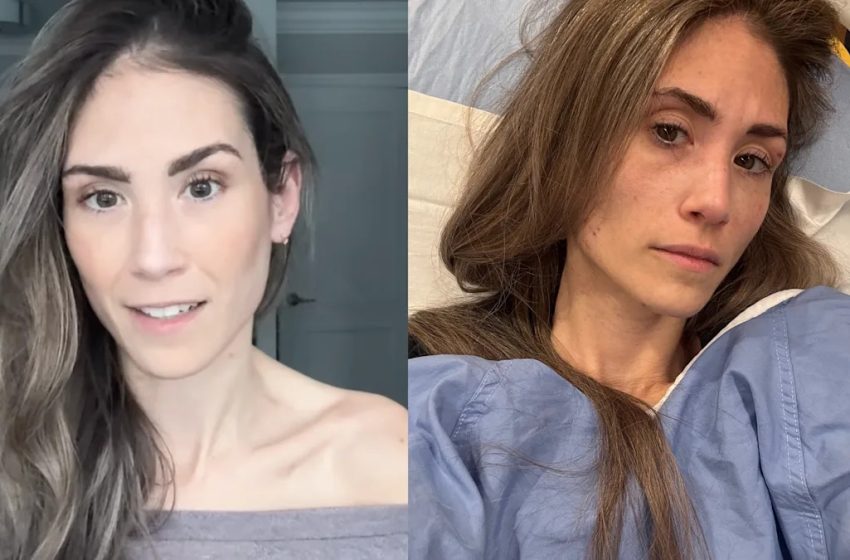
Toronto model Jess Grossman says an ER doctor ‘brushed off’ her pain. Then, she was diagnosed with rectal cancer
Jess Grossman, a model and entrepreneur from Toronto, is chronicling her rectal cancer diagnosis online. (Images via Instagram/@JessGrossman/JessGrossman)
Jess Grossman is no stranger to sharing the ins and outs of her life online. The 36-year-old model and entrepreneur has built an online following by advocating for ostomy awareness. Grossman, who lives in Toronto, was diagnosed with Crohn’s disease and colitis as a child and underwent surgery to have her colon removed. Although most of her life has been plagued by health issues, Grossman is now facing another battle: rectal cancer.
In October 2025, Grossman was heading into Thanksgiving feeling grateful. She had just thrown a big party to celebrate the 10th anniversary of the marketing agency she founded, but began experiencing persistent pelvic pain.
“Two weeks later, I found out that I had cancer,” she told Yahoo Canada.
A different kind of pain
Grossman often experienced recurring pelvic pain that would dissipate after a few days. Her family doctor suspected it may be endometriosis, but she says her Crohn’s disease made it difficult for her to receive a formal diagnosis. But this time, the pain didn’t go away, and her doctor encouraged her to go to the ER.
According to Grossman, she was “brushed off” by ER staff, who also attributed her pain to endometriosis — until they saw the results of her CT scan.
This article is for informational purposes only and is not a substitute for professional medical advice, diagnosis or treatment. Contact a qualified medical professional before engaging in any physical activity, or making any changes to your diet, medication or lifestyle.

Grossman with her husband, Matt Heisz, at the party to celebrate the tenth anniversary of her marketing company, In Social. (Image via Jess Grossman)
“The doctor came back into the room and said there was something strange going on there that needed to be investigated,” she recalled, adding that the issue was her rectum — not her pelvis.
Since Grossman has an ostomy bag instead of a colon, doctors were interested in her rectal stump — the part of the rectum that remained, but wasn’t connected to stool flow. Two weeks after a biopsy, just four weeks total from when the symptoms started, Grossman was diagnosed with rectal cancer.
Colorectal cancer cases are on the rise for people under 50, and currently among the most commonly-diagnosed types of cancer in Canada.
According to the Canadian Cancer Society, approximately 26,400 Canadians were diagnosed with colorectal cancer in 2025, and an estimated 25 people die from the disease each day.
‘We knew it was a possibility’
When Grossman had her colon removed at 13, the decision was made to keep the rectal stump. Removing the entire rectum would have been another major surgery, and because the rectum has a great septicity, there’s a “considerable rate” of septic complications when removed.
Aside from a lengthy recovery time, there’s also a risk of sexual dysfunction as well as the development of scar tissue, which could potentially cause fertility issues.
When weighed against the “low” risk of rectal stumps developing cancer, the plan was for Grossman to retain her rectal stump and go for frequent scans to monitor for any signs of cancer. Her last MRI in May 2025 showed normal results.
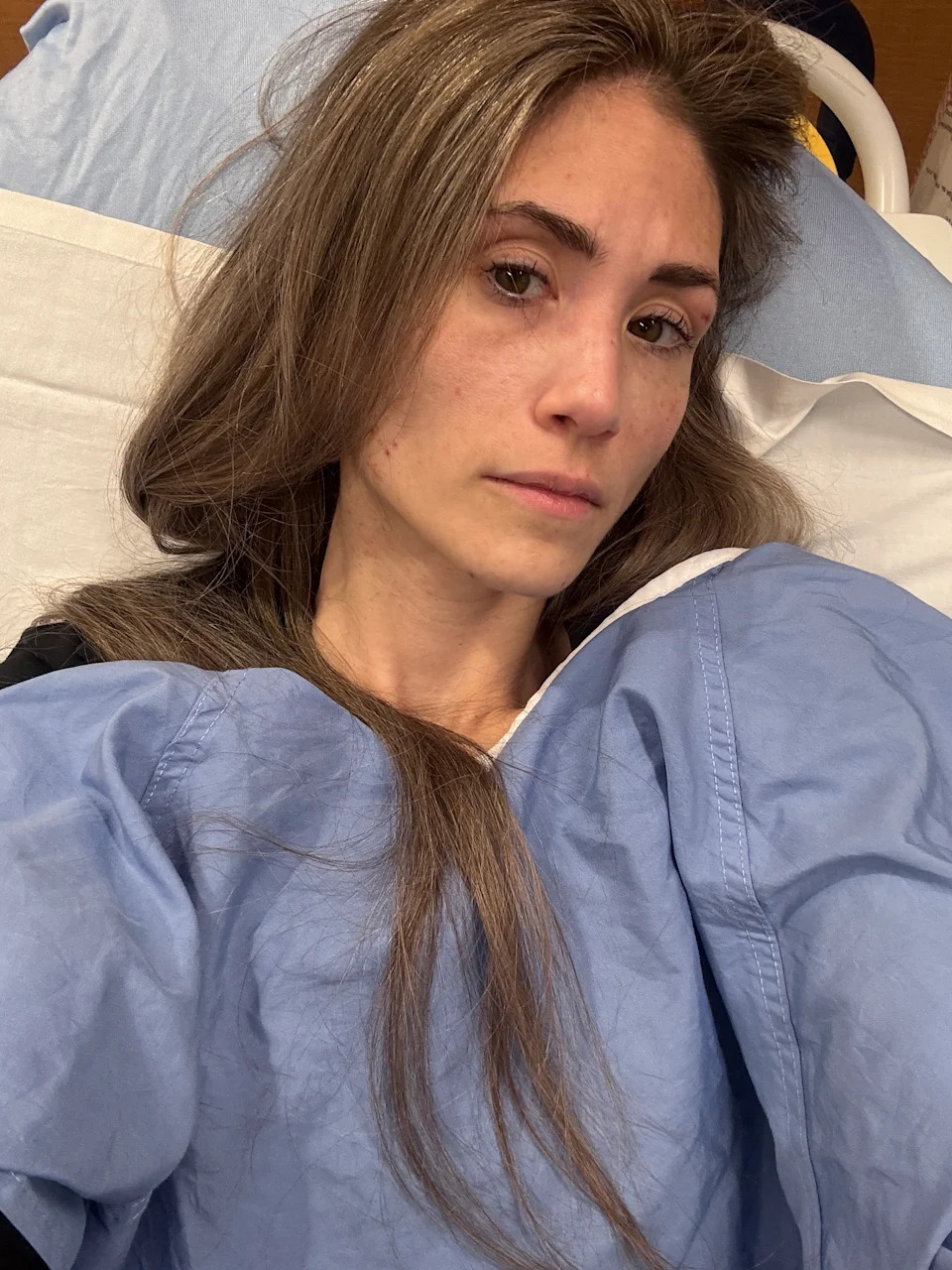
Grossman is currently undergoing chemotherapy to treat rectal cancer. (Image via Jess Grossman)
“We basically caught it as soon as it appeared — but that’s only because I have a rectum I don’t use. So I shouldn’t be feeling anything in there.”
The cancer initially fell somewhere between stage 2 and 3. “Because of where it is, it’s hard to see if it’s involving my uterus,” she said.
As of now, chemotherapy is still the best course of action to take before getting the surgery to remove the rectal stump completely.
“They told me I need eight treatments of chemo — two weeks apart for 16 weeks,” Grossman said. “For me, the goal of this whole thing is to take out the rectum. We’re not saving the organ. We just need to get the cancer to a place to take the rectum out.”
‘They don’t help you to prepare’
Grossman is nervous about the side effects of chemotherapy. Her father, who died in 2009, was diagnosed with a rare form of blood cancer called myelofibrosis. She can vividly recall how ill he became during chemotherapy and subsequent bone marrow transplant, which significantly impaired his immune system.
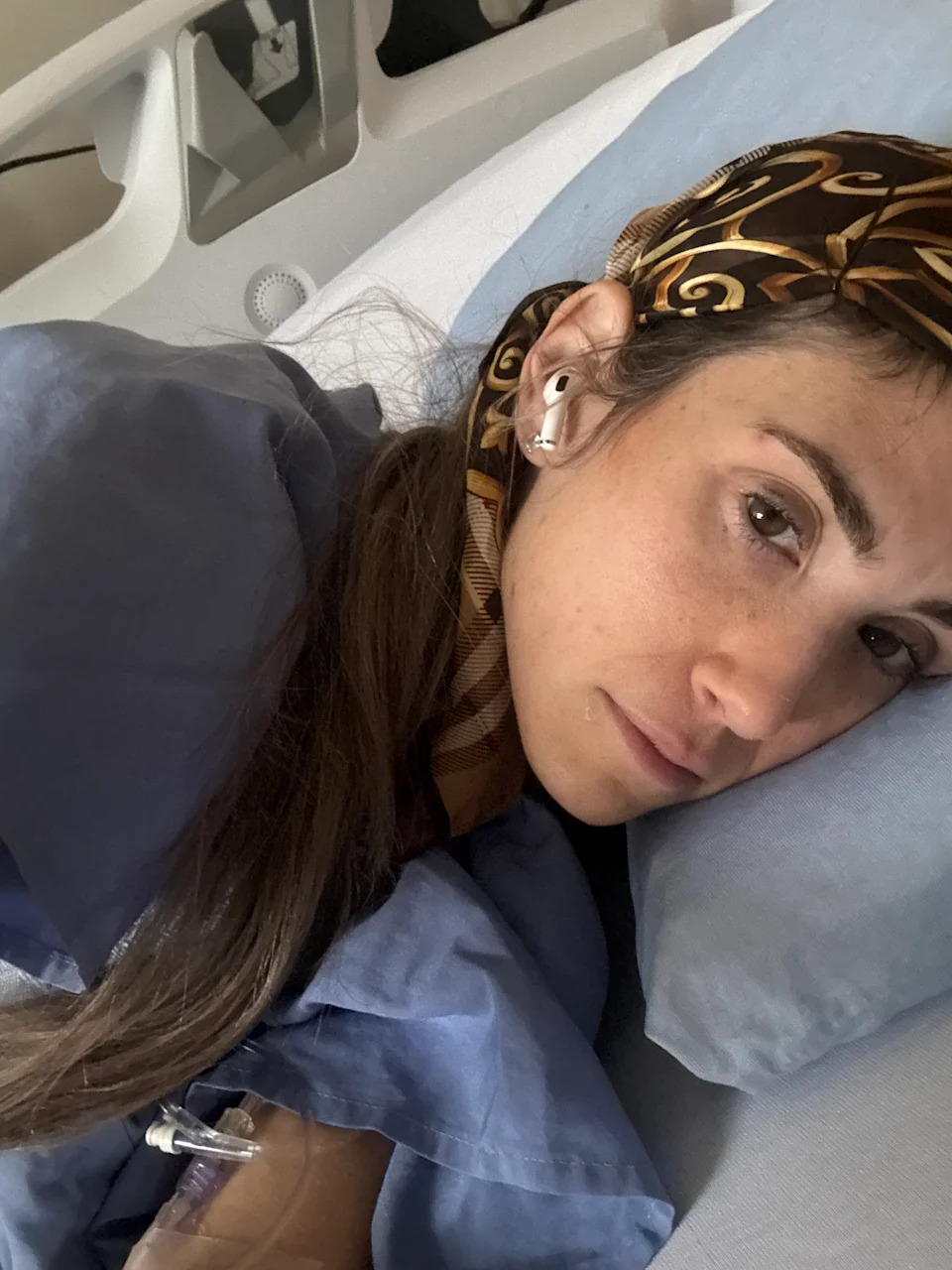
Grossman is sharing her rectal cancer journey online with her thousands of followers. (Image via Jess Grossman)
The prior experience of watching her father’s illness made Grossman particularly worried prior to her first chemotherapy session.
“I haven’t been really getting advice from any of my medical professionals,” she said. Ahead of treatment, she says emailed her team with a list of questions about what to expect. “They said, ‘Oh, we’ll tell you on your first chemo appointment. We’ll go through it.’ Do you think I’m going to feel up to it then…? After I’ve already started treatment and am feeling fatigued? I can’t believe this is the normal way of operating. They don’t help you to prepare.”
Grossman credits her more than 30,000 Instagram followers with helping her mentally prepare for chemo. When she announced she had been diagnosed with cancer, she received a flood of messages from people sharing tips about what to expect or bring with her for treatment. Others simply shared motivational and positive messages to keep her spirits high.
“I couldn’t do this without them,” she said.
Early detection saves lives
The colorectal surgeon overseeing her anticipates the chemo being enough to prepare her for surgery —but on the off chance it doesn’t shrink the tumour enough, radiation might be the next step.
The surgery, known as a protectomy, will be a major one. In addition to removing the rectal stump, it’s been called the “Barbie butt” surgery in the patient community because it involves having the anus removed and sewn shut.
“It’s removing a big part of your body,” Grossman said. “Think about your butt: It’s connected to your core,” she said. “So, having that surgery is literally sewing up the hole. I won’t be able to move for months and months. I won’t be able to sit. So it’s a really big surgery.”
Now, Grossman is using her platform to raise awareness for colorectal cancer and the importance of early detection.
In a recent post to Instagram, she told followers that had she not advocated for herself in the ER, her cancer might not have been detected.
“Early detection is the solution. But you can only detect it if you get checked for it…,” she said. “If I can save one life because of this reel, I’ll have done something worthwhile.”
Let us know what you think by emailing us or threading us @yahoocanada. Follow us on TikTok, WhatsApp and Instagram.
First Appeared on
Source link






