


Six years in, long Covid is still with many Vermonters — and they say the system is failing them
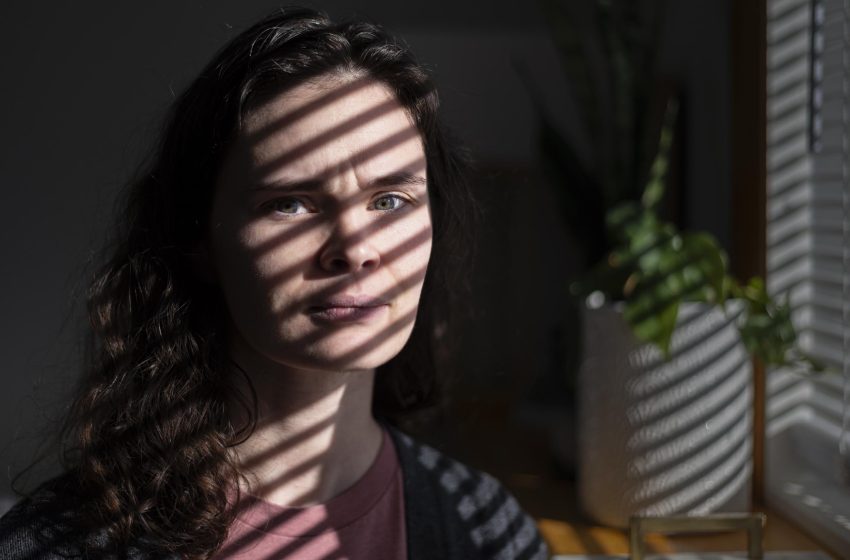
Ali knew something was wrong with her body.
She’d always been an active Vermonter and a full-time nurse. But in 2024, she began experiencing shortness of breath, chest pain or sheer exhaustion after the slightest exertion.
So she went to the emergency room — twice. Both times, the doctors performed a battery of tests: a chest CT scan, an echocardiogram, blood work. Nothing appeared.
“Why do I feel this horrible all the time?” she said she asked herself. “And like, why isn’t anything being picked up if I feel like this horrendous?”
It took months for her to make the connection between these life-altering symptoms and the relatively mild case of Covid she’d contracted before they began. A neurologist made the final diagnosis: long Covid.
Nearly six years since Covid-19 first came to Vermont, there is still very little known about long Covid, an illness that can cause debilitating chronic fatigue, respiratory issues, brain fog and a host of other symptoms. Despite the fact that millions of Americans have reported living with the disease, there are no clear-cut diagnostic tests. Nor are there treatments with a clear-cut record of success.
Cut off from established pathways for managing a chronic illness, many Vermonters with long Covid have reported living in a sort of permanent limbo. They have faced stigma and disbelief from loved ones, colleagues and people in their community. They have struggled to access workplace accommodations and social services for people with disabilities.
Long Covid patients are uniquely vulnerable to the recently rising costs and reduced benefits of the health care system under the Trump administration. The status of health insurance subsidies for low-income Americans is still up in the air and annual premiums on the marketplace have more than doubled.
That’s particularly tough for people who heavily rely on the health care system. In an email, Ali said that she’d recently learned that her insurer might no longer cover a medication she’d been taking for years. It would cost her $80,000 annually out of pocket, she said.
“I was a lot more functional on the medication, I was considering working more hours while still on the med (in the study),” wrote Ali, who requested VTDigger use only her first name, citing ongoing disputes with her employer. “I can’t work full time because I can’t get this med,” but “because I can’t work full time it makes my insurance cost even more.”
But interviews with disability rights advocates, clinicians and more than a dozen long Covid patients demonstrated that the systemic barriers for Vermonters with long Covid extend well beyond the Trump administration. They reach into deep-seated divides in health care, ableism and shame over chronic illness in Vermont.
Chawna Cota, a member of the Vermont Democratic Disability Caucus who has long Covid, said via email that long Covid sufferers need research, resources and therapies from informed providers.
“We are still not there yet,” she wrote.
“The most positive takeaway I have had from all of this is reinforcement of my knowledge that I have the capability to self-educate and self-advocate within a system that seems to be working against providing care,” Cota added. “Will that change in the future? I really don’t know, and with the current administration’s hostility toward medical research and our medical system in general, I don’t think that will be improving any time soon.”
There are many adjustments, both large and small, that Krista Coombs has made to keep working.
She often works out of her bed because even sitting up can trigger fatigue for long Covid patients. She wears headphones because of what she calls her “dementia-type” brain fog that can make it easy to get distracted.
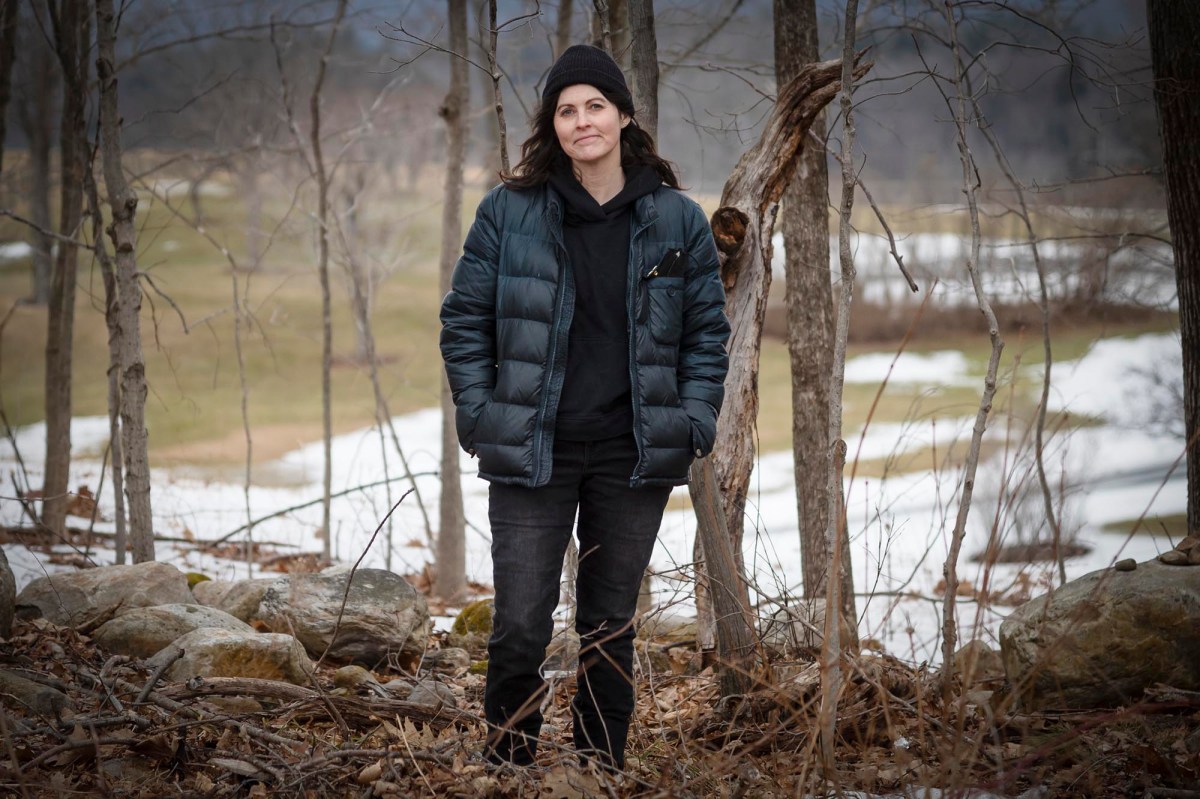
But she feels her work is too critical to step back from. She leads a support group for Vermonters with long Covid through the Vermont Center for Independent Living, where people living with the disease can vent, share tips on treatments and find ways of coping.
“I’ve been listening to what people need,” Coombs said. “They’re very clear, and giving people a space to actually identify their needs is really powerful.”
The experience of long Covid varies widely. A 2025 patient survey found more than 40 different symptoms can be linked to the disease. Another recent study classified long Covid into eight different trajectories of illness, from short-term to long-term, severe to mild, improving to worsening, persistent to intermittent. Even the mechanism by which Covid causes long Covid is unclear — a growing body of research suggests it may be an autoimmune condition, but some researchers believe it could be the result of organ damage caused by Covid.
That variety makes it additionally difficult to analyze the prevalence of long Covid in Vermont. Most surveys simply ask respondents if they experienced lingering symptoms after a bout of Covid. For example, a 2023 Vermont Department of Health report found 11% of adult Vermonters who had tested positive for Covid at any point experienced symptoms lasting three months or longer.
Despite those many different experiences of long Covid, Coombs noted one experience that seemed very common: a widespread lack of understanding of “what this actually is and what people are facing,” she said.
“We’re constantly torn down for just being sick, and continue to be sick from something no one wants to admit is a problem,” she said.
Looking for relief
Long Covid is recognized as an illness by official bodies such as the U.S. Centers for Disease Control and Prevention and the World Health Organization. Yet Coombs has encountered misinformation that the disease is actually caused by the Covid vaccine – or it simply does not exist at all.
The lack of recognition can even seep into personal relationships. Ali said that it took some time for the people in her life to understand just how debilitating chronic fatigue can be.
“My parents didn’t totally believe me about how sick I was,” she said. “I’m like, ‘No, I actually can’t go grocery shopping with you or help you with your stuff, because I feel so horrendous.’”
The negative messages can lead some long Covid patients to doubt their own experiences. Mary Kate Shanahan, a birth doula based in Winooski, said she felt embarrassed and worried about others’ judgment the first time she asked to use a wheelchair at the airport.
“Normal people don’t fall asleep driving, and that was something that I was experiencing, so I had to not drive for a long time,” she said. “Like it is a different level of what the typical person experiences, I would say. And that’s a hard thing to really describe to anyone.”
Coombs has worked for years to bring the voice of long Covid patients to people in power: the Vermont Department of Health, Gov. Phil Scott and Vermont’s Congressional delegation. There was a moment of hope in 2024, when U.S. Sen. Bernie Sanders, I-Vt. proposed a long Covid moonshot bill that would provide $1 billion in funding to the National Institutes of Health to study treatment and care options.
That bill has languished in Congress ever since.
“All this just feels so like a joke now, but it was so much effort and so much work,” Coombs said.
She said she was also frustrated that Long Covid Awareness Day, which takes place on March 15 each year, passed by in 2025 without acknowledgement from Vermont’s public officials.
Many long Covid advocates have also said they feel betrayed by Robert F. Kennedy, Jr., the Secretary of Health and Human Services under the Trump administration. Kennedy promised to fund long Covid research during his Senate confirmation in 2025, but shortly after he assumed his role, his department instead abolished the Office of Long Covid Research and Practice and terminated an advisory committee on long Covid.
Despite these setbacks, hundreds of clinical studies of long Covid have been performed around the world. Vermonters with long Covid have described experimenting with an array of medications, diets, exercises and therapies to try to find something that works.
Gretchen Kitsos, a social worker who leads another long Covid support group, said that one of the biggest hurdles to treatment she hears is the disconnected and siloed nature of medical specialties. Each provider has an incentive to view long Covid through the lens of their own expertise rather than as a multi-system whole.
The University of Vermont’s COVID Recovery Program is one attempt to address that gap. The program’s leads, David Kaminsky and Katherine Menson, are pulmonary physicians — but after interviews with long Covid patients, they realized what was needed most was a pathway that could connect patients with multiple specialists.
Kaminsky emphasized the importance of continuing to research long Covid.
“If we lose research, then we lose the opportunity to learn about new things and what works, and what doesn’t,” he said.
Kitsos said the momentum for helping people with long Covid seems to have ebbed since the pandemic has largely receded from many people’s minds.
She said people seem to think, “‘We survived that. Okay. Now let’s move on, and let’s not look in the rear view mirror and understand that that sucker is still with us.’”
Life with long Covid
After contracting Covid three times, Zoe Newmarco began experiencing crushing fatigue and suffered from migraines four to six times per week.
“It’s been an adventure,” they said jokingly. “I feel like I’ve learned all sorts of new things that my body can do.”
Newmarco said they called the long Covid clinic at Dartmouth-Hitchcock multiple times, but never heard back. They struggled to even find a primary care provider.
“I was on every waiting list in the state, just called everywhere, and they were like, ‘Yeah, we’ll get back to you in six months,’” they said.
So they decided to jump ship and move from Royalton, Vermont, to Ithaca, New York, roughly six hours away.
“For the first time I have access to health care, which has been a huge change,” they said.
Staffing shortages and rising health care costs have affected almost every corner of Vermont. But for Vermonters with chronic illnesses, including long Covid, those issues can be particularly pressing.
Coombs said for the past two months, she’s been dealing with her insurance refusing to reauthorize an infusion she’d been taking every week because her insurance company is based outside of Vermont. She said she has also been waiting to get access to an experimental treatment that has shown recent promise.
“It was only kind of on the West Coast, and it’s now moving to the East coast, so I’ve been literally watching it across the map,” she said. “I’ll be the first person within my doctor’s office who’s able to figure out how to get it.”
Her support group spent a great deal of time in 2025 trying to navigate news around benefit changes, health insurance subsidies and policies being discussed at the federal level, Coombs said.
“You look around Vermont, just so many struggles,” she said. “And then we know with long Covid, it can be really hard to work. So that makes things harder. I’m just trying to help people stay grounded in, what are the things we know now? What can we work on now?”
Kitsos pointed out that stress from economic struggles can potentially worsen autoimmune conditions like long Covid.
Yet at the same time, long Covid patients are forced to seek help while navigating symptoms like brain fog that can make it actively harder to think, Coombs said.
“People are trying to figure out how you do this with a lot of cognitive difficulties,” she said.
Ali, the nurse with long Covid, said that she had to submit and resubmit paperwork multiple times to receive her benefits under the Family and Medical Leave Act. Meanwhile, she ran out of medical leave to use, even though she was still in the midst of her worst symptoms.
“I was just kind of calling out of work sometimes and hoping that I wouldn’t get in trouble for that,’” she said. “And I’m like, ‘Please don’t fire me, because I need my benefits to pay for all of this, like, crazy amounts of testing and all the medications and everything.”
Still, despite the difficulties of the condition, there are moments of joy and hope. Coombs said that her progress with recovery was unsteady and slow.
But it was happening.
“(With) carrying in wood — the first year, I couldn’t even lift a log, and I couldn’t believe that,” she said. This year, she’s able to carry in wood and keep track of the fire without thinking about it.
For some patients, the most effective strategy for living with long Covid is not a specific treatment, but rethinking how they choose to expend energy to prevent later crashes, often called pacing. Shanahan said she began documenting all the ways she expended energy, both mentally and physically, to see how working too hard on Tuesday could cause fatigue on Thursday or Friday. Now, she’s learned how better to slow down and prevent overdoing it.
Ali said her experience had given her added insight as a nurse because she could better understand her patients who were living with a disability or chronic illness.
“You don’t really understand how difficult it is to live with a disability until you’ve experienced it yourself,” she said.
Newmarco said they have learned new tools for self-advocacy and communication about their needs. They’ve also formed a small community of friends who are supportive of them — including their partner, who they met in a Covid-cautious online forum.
“It feels so complex,” they said. “Of course I miss my body before long Covid. I miss being able to go for walks. I miss that, and also, it has totally changed my world. And I really love my life right now.”
First Appeared on
Source link






