


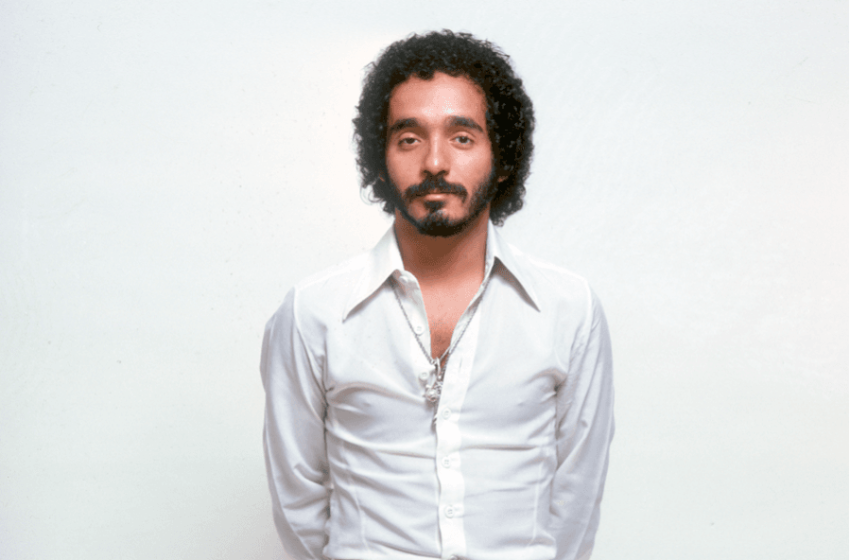
Willie Colón, Pioneering Salsa Trombonist, Dies at 75
Willie Colón, photo courtesy of Craft Latino
Willie Colón, a trombonist, bandleader, composer, and key architect of salsa music, has died. His family confirmed the news via social media on February 21; although they did not share a cause of death, they wrote that Colón “passed away peacefully” surrounded by love ones. Colón was 75.
Born in 1950 in The Bronx, Colón was raised by his Puerto Rican grandmother, who introduced him early on to an array of Latin sounds, from Cuban son to guaracha to jíbaro to tango. By age 11, he’d begun making his own music, learning flute, bugle, and trumpet before finally landing on trombone. He first fell in love with the instrument hearing Barry Rogers play it on Mon Rivera and Joe Cotto’s “Dolores.”
“It sounded like an elephant, a lion … an animal,” Colón told the Colombian newspaper El Tiempo in 2011. “Something so different that, as soon as I heard it, I said to myself: ‘I want to play that instrument.’” He cut his teeth playing at weddings and shadowing Rivera, who would become his mentor, at nightclub shows around the city. Colón eventually signed with Fania Records in 1967, at age 17.
At the label, Colón proved essential in developing the then-nascent sound of salsa, which fused traditional Latin rhythms with funk, jazz, and R&B and coursed with distinct activist undertones. “It was rebellious music,” Colón told the Miami Herald in 2006. “We were watching Martin Luther King walking into Selma and the dogs and water cannons. The music wasn’t explicitly political yet, but the music was a magnet that would bring people together.”
Colón’s first album, 1967’s El Malo, paired him with vocalist Héctor Lavoe; the duo would collaborate on many more records over the years, including Cosa Nuestra (1970), Crime Pays (1972), and Lo Mato (1973). Across his decades-long career, Colón released more than 40 albums and earned an 11 combined Grammy and Latin Grammy nominations. He received a Lifetime Achievement Award from the Latin Recording Academy in 2004, and joined the Latin Songwriters Hall of Fame in 2019.
During his life, Colón also fostered fruitful partnerships with Celia Cruz, Tito Puente, David Byrne, and Rubén Blades. Colón and Blades’ 1978 album Siembra—which featured the “Mack the Knife”-inspired “Pedro Navaja”—is widely considered a masterpiece, and remained the best-selling Latin album in history for decades after its release. Colón and Blades also partnered on records like 1981’s Canciones del Solar de los Aburridos, but stopped regularly collaborating after a financial dispute in the early 2000s.
Colón’s career did not begin and end with music. He was involved in politics, running in a 1994 Democratic primary for a U.S. House seat representing the Bronx and lower Westchester County. In 2004, he worked with Mayor Michael Bloomberg’s administration, serving as a liason between City Hall and New York’s Latin Media and Entertainment Commission. He also appeared in the films Vigilante, The Last Fight, and It Could Happen to You; the TV shows Miami Vice and Demasiado Corazón; and, more recently, Bad Bunny’s music video for “NuevaYol.”
Later in life, Colón became interested in the evolving reggaeton scene in his city, pointing out parallels between the genre’s emergence and the birth of salsa. “It might have been said about some reggaeton beats that it’s wrong — you can’t do this,” he told the Miami Herald in 2006. “But if it feels good musically, you do it.”
Over the past few days, Rauw Alejandro, J Balvin, Marc Anthony, Blades, and more have paid tribute to Colón and his legacy. Bad Bunny honored Colón at his Debí Tirar Mas Fotos world tour stop in Brazil, sharing, in Spanish: “The inspiration of so many of these great musicians who left their mark on this earth will never die as long as there are talented young people like those here, keeping the music, salsa, and all Caribbean rhythms alive.”
“Willie helped bring Latin music from the streets of New York to audiences around the world,” Fania Records shared in a statement on February 21. “His music declared identity, pride, resistance, and joy. His music was not just heard; it was lived.”
Originally Appeared on Pitchfork
First Appeared on
Source link






