


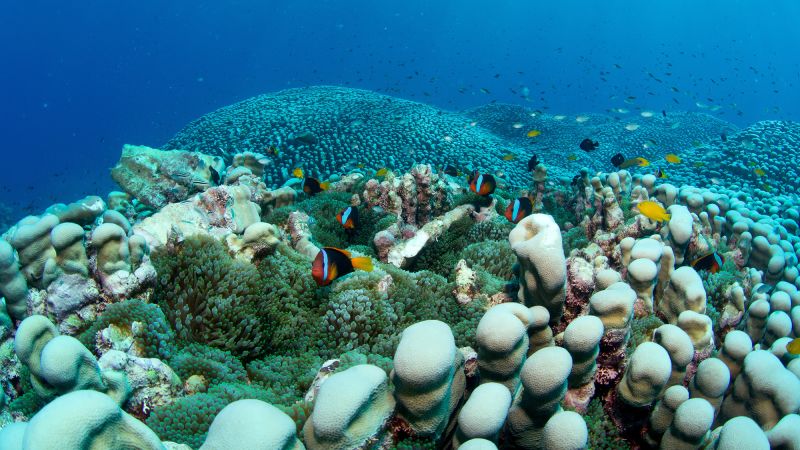
Great Barrier Reef: World’s largest coral colony discovered off Australian coast by mother-daughter team
A mother-and-daughter team of citizen scientists has identified the world’s largest known coral colony, found on the Great Barrier Reef off the coast of Australia.
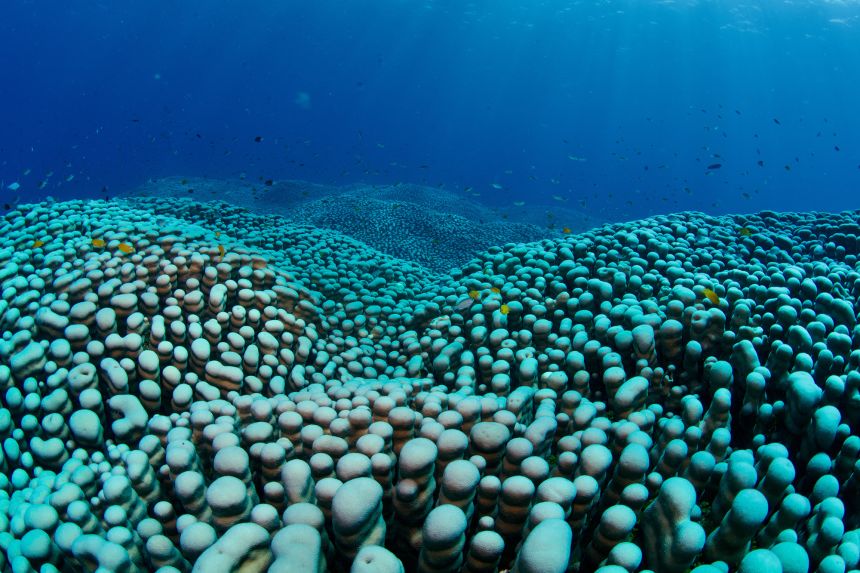
It spans about 111 meters (364 feet) – roughly the same length as a soccer pitch – and covers around 3,973 square meters (42,765 feet), according to a statement from conservation organization Citizens of the Reef Tuesday.
This means it is “among the most significant coral structures ever recorded on the Great Barrier Reef,” and “the largest documented and mapped coral colony in the world,” according to the organization.
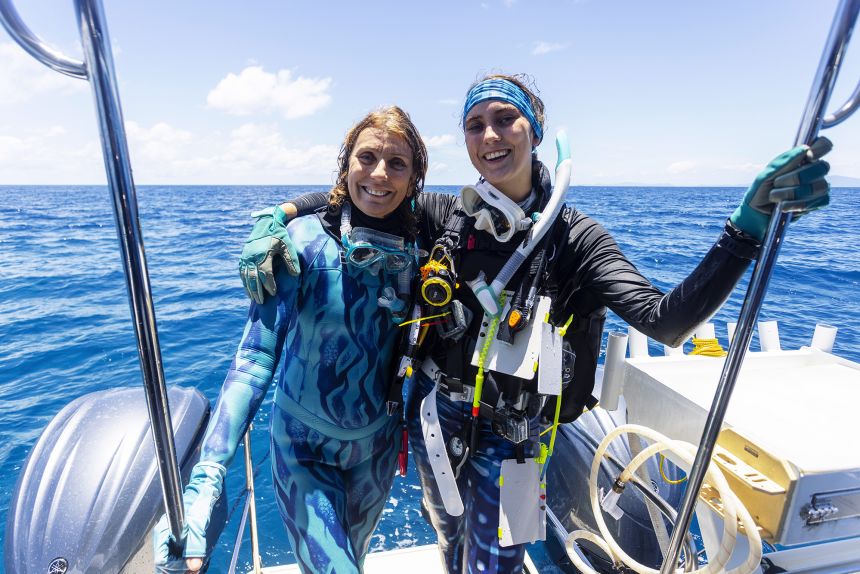
The coral was found late last year by Sophie Kalkowski-Pope, marine operations coordinator at Citizens of the Reef, and her mother, Jan Pope, an experienced diver and underwater photographer.
Pope had been diving at the site a week before, and knew she’d seen something special. So, the pair returned with measuring equipment.
“When we hopped in the water, immediately I could recognize the significance of what we were seeing,” said Kalkowski-Pope. Together, they filmed a video, swimming across the expanse of the J-shaped coral. “It took me a three-minute video just to swim from one side to the other,” Kalkowski-Pope said.
The size of the Pavona clavus coral was verified using manual underwater measurements and high-resolution imagery taken from platforms on the water surface.
This data was then used to produce a 3D model of the coral, according to Citizens of the Reef.
This kind of spatial modeling is useful in monitoring the site and how it changes, as it “means we can return in future months and years and make direct, one-to-one comparisons to understand how the coral changes over time,” said Serena Mou, research engineer at the Queensland University of Technology’s Centre for Robotics.
The site has been found to experience strong tidal currents and low exposure to tropical cylone waves compared with many other parts of the Great Barrier Reef, and scientists are now examining whether these conditions could play a role in the existence of such a large coral structure.
The exact location of the coral has not been released, so as to “reduce the risk of unintended impacts,” Citizens of the Reef said.
Australia’s Great Barrier Reef is the largest living structure on the planet and home to a vast array of species. But in recent years it has been hit by a series of devastating mass bleaching events, turning the vibrant colors of parts of the reef a bright white.
Across the world, corals are suffering a similar fate, with more than 80% of the ocean’s reefs hit by an ongoing global bleaching event that began in 2023, due to record-high marine temperatures. Bleaching can be deadly, as the corals are depleted of the algae that live inside them and act as a food source.
Citizens of the Reef is part of conservation efforts that aim to protect the reef, and the mother-and-daughter team were surveying the reef from the family boat as part of the Great Reef Census, a joint effort to collect reef imagery that involves more than 100 vessels.
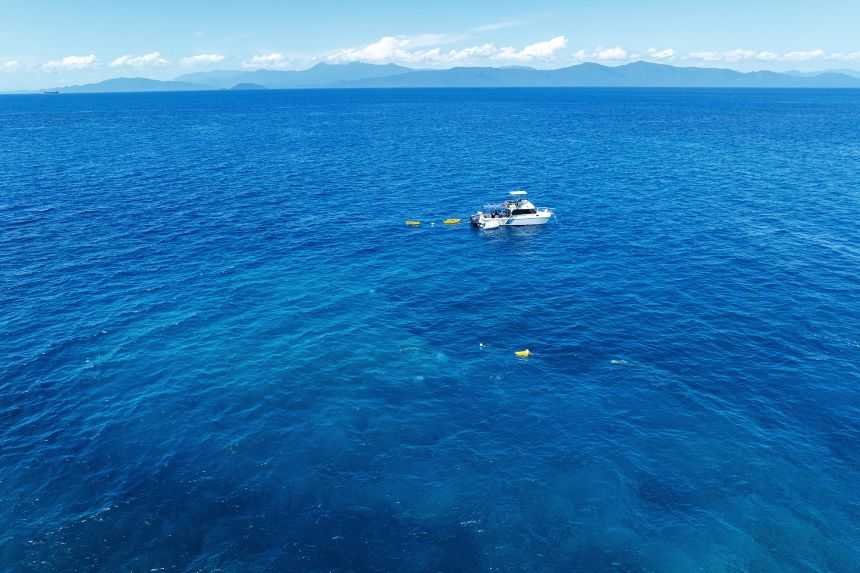
“The Great Reef Census helps us to locate the most important sources of reef recovery, helping scientists and managers better target their protection,” said Pete Mumby from the Marine Spatial Ecology Lab at the University of Queensland in the statement.
The initiative is part of efforts to engage “people power” to drive conservation efforts, said Andy Ridley, CEO of Citizens of the Reef, in the statement.
“The Great Reef Census was developed to compliment existing monitoring programs by gathering large-scale data,” he said.
“This is made possible by people already out on the water, like Sophie and Jan, and thousands of citizen scientists around the world.”
Michael Sweet, professor of molecular ecology at the University of Derby, England, told CNN that this colony “is bigger than any coral I have personally seen.”
“What makes this discovery even more special is that in a time where many corals are really struggling due to disease, bleaching, physical destruction from land reclamation and pollution, that individual genetic entities like this Pavona colony surpass all expectations and not only survive but flourish,” he said in a statement Tuesday.
Sweet also highlighted the fact that citizen scientists found the coral.
“This showcases that everyone can play a part in not only conserving our planet but also monitoring and documenting cool things like a colony at an unprecedented scale,” he said.
EDITOR’S NOTE: Call to Earth is a CNN editorial series committed to reporting on the environmental challenges facing our planet, together with the solutions. Rolex’s Perpetual Planet Initiative has partnered with CNN to drive awareness and education around key sustainability issues and to inspire positive action.
First Appeared on
Source link






