


Chicago Bears property tax incentives advance in Illinois House over city opposition
A tax incentive plan aimed at keeping the Bears in Illinois advanced in the state House Thursday amid opposition from City Hall and questions about whether Democrats can whip up enough votes to pass it.
The legislation, introduced by state Rep. Kam Buckner (D-Chicago), would allow the NFL team to negotiate a freeze on property tax assessments with local taxing districts — in this case, Arlington Heights, Cook County and local school districts.
About three hours later, Indiana Gov. Mike Braun signed a sprawling tax- incentive plan in the hopes of luring the Bears across state lines.
These are the latest developments in the high-stakes bidding war between Illinois and Indiana over which state can lay claim to one of the NFL’s most storied franchises as the team looks for the exits from its long-time lease at Soldier Field.
On a roll call opposed by Republicans, the Democratic-led House Revenue & Finance Committee voted 13-7 to back Buckner’s legislation and position it for a vote by the full House. But that vote didn’t happen because the House promptly adjourned for the week without taking action on the measure.
In a one-sentence statement, the Bears welcomed the first sign of legislative movement on a stadium deal in Springfield.
“We look forward to continued engagement as the lawmakers determine the legislative path forward,” Bears spokesman Danny Markino said.
Following the committee’s vote, Buckner said it’s time to start putting a legislative plan into motion, and the property tax concessions are essential for anything going forward.
“I don’t feel pressured by the Bears,” Buckner said. “What is important to me, though, is that we are able to put these tools in play. I do want the team to stay in Illinois. That’s very important to me.”
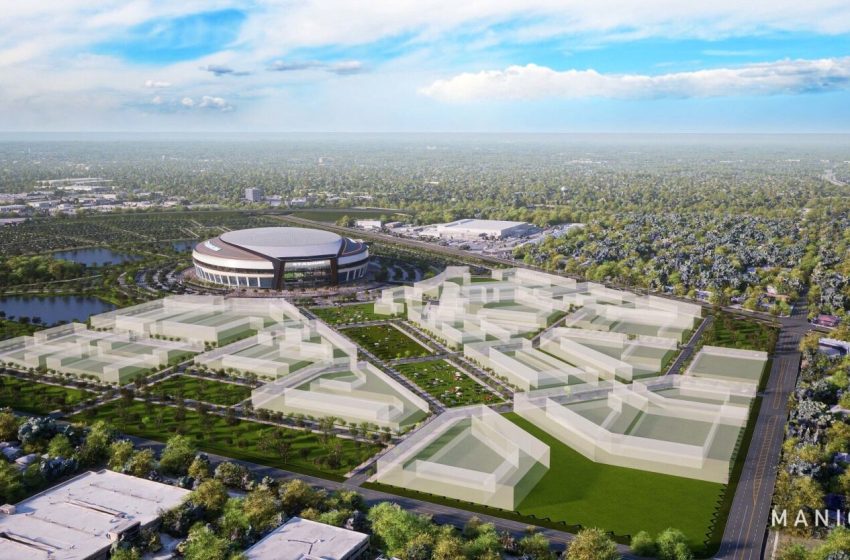
The bill that advanced Thursday deals only with the issue of property tax certainty and saving the Bears hundreds of millions of dollars by freezing property taxes on the Arlington International Racecourse site, and allowing the team to negotiate reduced “payments in lieu of property taxes with suburban school districts.”
Still to be determined is the massive infusion of infrastructure funding required to bankroll the road, sewer and utility work needed to ready the site for development.
Ahead of the vote, Buckner appeared on “The Fran Spielman Show” podcast and said the infrastructure wish list that started at $855 million has been whittled down to $734 million and said, “We’re still talking through it.”
But Buckner told the Chicago Sun-Times that whatever the final number turns out to be, the Chicago legislative delegation will demand similar help to renovate and refresh Soldier Field and ease the transportation bottleneck that makes it difficult to get in and out of the Museum Campus.
“We’ve still got some things to work on, including Chicago and what happens with Chicago and a Chicago package,” he said.
Buckner, whose district includes Soldier Field, has long spoken out against the state cutting a blank check to finance a new Bears’ stadium, particularly given that roughly half a billion dollars in debt remains from the 2003 renovation of Soldier Field. Buckner said the Bears should pick up that tab.
The Chicago Park District has made an ask for $630 million for infrastructure and renovation of the Soldier Field — an appeal that a representative of the mayor’s office renewed today despite formally registering as an opponent to Buckner’s legislation.
Steven Mahr, Chicago’s acting chief financial officer, told the House panel the relocation of the Bears would have “devastating consequences on the city,” and he re-upped the city’s previous $630 million infrastructure request.
“Some of those consequences are unknowable,” Mahr said. “It is clear that Chicago is the economic engine of the state of Illinois. Engines require fuel to run, otherwise engines stall and grind to a halt. The city is requesting a fair and equitable opportunity and a level playing field.”
Labor unions, business groups and several northwest suburbs, including Arlington Heights, voiced support for the legislation.
Under the bill, the Bears would have to make an annual special payment to Arlington Heights that’s at least 10 percent of the property tax levied against the property in the previous year. The team would have to operate the project in the area for at least 20 years.
The bill would apply to largescale promects across the state with an investment of $500 million or more. It also includes a carveout for state and local tax exemptions on building materials.
State Representative Rita Mayfield (D-Waukegan) voted for the plan in the House committee but without a guarantee of being a yes-vote if the bill gets called. She called Buckner’s legislation a “non-starter” that will result in “devastating” revenue losses for municipalities.
Republicans also were quick to criticize the plan.
Sen. Andrew Chesney (R-Freeport) blamed the Bears potential exit to Indiana on Democratic Gov. JB Pritzker.
“He’s proposing a special carve-out for the connected and the wealthy because Gov. Pritzker knows you cannot do business in this state with his high property taxes, his high taxes, in general,” Chesney said.
First Appeared on
Source link






