


A Hidden Brain Process May Help Explain Why Alzheimer’s Risk Rises With Age : ScienceAlert
The brain’s ‘garbage disposal‘ system falters with age, a new study finds, with long-lived neurons offloading clumpy, old proteins onto other brain cells.
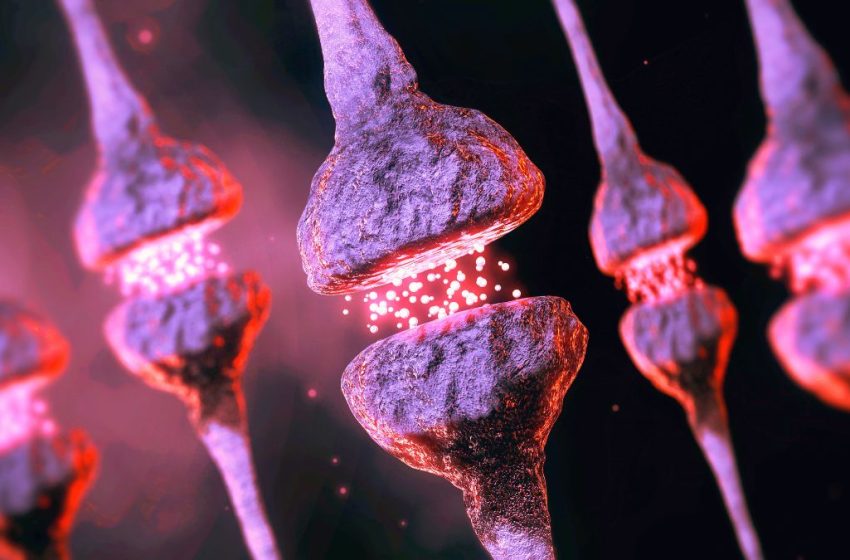
Many of those proteins are involved in brain cell signaling at synapses, the tiny gaps between neurons. But in old age, something about these proteins means they don’t get broken down as readily and start clogging up synapses.
Support cells called microglia step in to help, pruning clogged synapses to keep neurons firing, but their clean-up efforts may ultimately impair brain cell communication, the researchers surmise.
The findings tie together a few strands in our understanding of neurodegenerative diseases and could point to new therapeutic targets.
Loss and dysfunction of synapses have been linked to age-related cognitive decline and observed in Alzheimer’s and other neurodegenerative diseases, although a cascade of events likely leads to those synaptic problems.
“We didn’t set out to understand the synapse specifically, but rather the mechanisms behind the decline in general neuron health and function with age,” explains Ian Guldner, a neuroscientist at Stanford University.
“We just so happened to arrive at synaptic proteins being particularly vulnerable to slowed breakdown and aggregation.”
With some 86 billion neurons in the jiggly biological computer between our ears, each communicating with as many as 10,000 other neurons, the brain has more than a quadrillion synapses.
These connections are maintained by synaptic proteins, which help neurons grow, direct where synapses form, and regulate the release of neurotransmitters, the brain’s chemical messengers.
Before zeroing in on synapses, the researchers simply wanted to see how protein recycling changes with age in the brain cells of living animals. So they tagged and tracked thousands of proteins in young, middle-aged, and older mice.
The team developed a new type of biological tag that’s incorporated into proteins as they’re built from amino acids. That way, they could see how long proteins lasted before being broken down and recycled.
Experiments showed brain cells in mice at the ripe old age of 24 months were unable to recycle proteins as efficiently as their younger counterparts, aged just 4 months.
Neurons in old mice took twice as long to recycle neuronal proteins as those in young animals, meaning the spent proteins had more time to accumulate.
This slowing of protein turnover emerged after middle age, the researchers found.
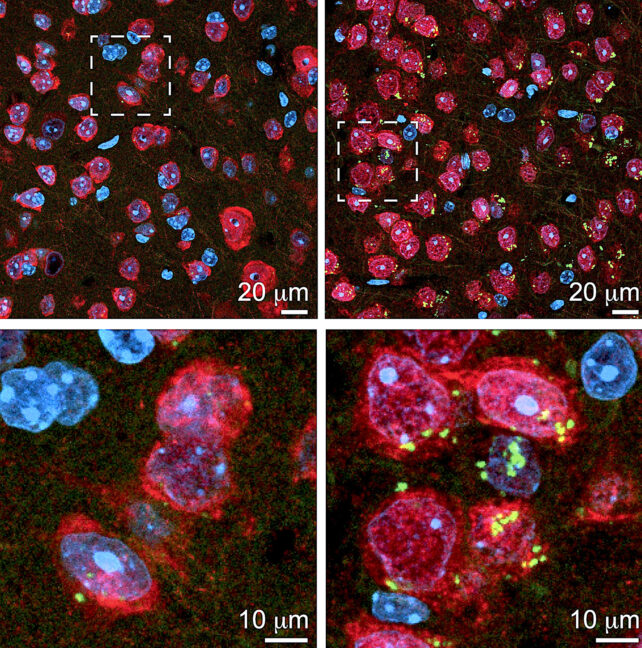
What’s more, the experiments revealed how neurons offload protein clumps into microglia, the primary immune cells and garbage-disposal units of the central nervous system.
Aside from cleaning up waste proteins, microglia also prune damaged synapses to help maintain healthy connections between brain cells.
“If microglia are taking in synapses’ damaged proteins, that could be overwhelming microglia and causing them to become dysfunctional. Overall, it would be a detrimental effect to brain health,” says Guldner.

Researchers don’t know why synaptic proteins are more likely to get tangled up in these clumps than the thousands of other proteins they studied in the mouse brain.
But the findings point to a mechanism that joins the dots between synaptic loss and microglial dysfunction, which may be part of the cascade that leads to neurodegenerative diseases in older age.
Some of the proteins that microglia gobbled up from overloaded neurons have previously been implicated in Alzheimer’s and Parkinson’s disease. But interestingly, the researchers also identified numerous proteins that haven’t been linked with neurodegeneration before.
“The achievement lies in the technical advance, namely by being able to look at protein degradation and aggregation specifically in neuronal cells,” biochemist F. Ulrich Hartl, director of the Max Planck Institute of Biochemistry, told Holly Barker at The Transmitter. Hartl was not involved in the study.
Related: Scientists Identify ‘Master Regulator’ Behind Alzheimer’s Problematic Proteins
“If we can leverage our system to study neuron-derived proteins in the blood during aging and disease,” says Guldner, “we could potentially identify new biomarkers of brain health.”
This research was published in Nature.
First Appeared on
Source link






