


Massachusetts reports two measles cases, one in the Boston area
The two cases are not connected, health officials said.
These are the first measles cases in Massachusetts residents since one was reported in 2024.
State officials learned of the child’s infection Wednesday. The child appears to have not been vaccinated, but health officials were still working to confirm that Friday afternoon.
The adult’s case was identified through lab results received Thursday, which sent officials scrambling to determine where the person had been and who else was exposed to the virus, said Dr. Catherine Brown, the state epidemiologist.
Last week’s blizzard may have played a role in limiting the virus’ spread, Brown said. The infected person sought medical care two days in a row, both times amid heavy snow, when the facilities were less busy than usual.
Brown described the infected person as “extraordinarily forthcoming,” and said the person is able to safely isolate.
“In this particular instance we’re counting ourselves pretty fortunate,” she said. “We know everywhere this person has been while they are contagious.”
The health care facilities have reached out to people exposed to the infected patient and are in the process of determining if any are at risk.
“Most of them will have had a vaccination history,” Brown said, citing Massachusetts’ high rate of vaccination against measles. “It will be not too big a deal for them.”
State officials are not naming the health care facilities involved, saying they are confident anyone exposed to measles has been identified.
The infected person was born in another country known to have measles and had recently returned from a visit with family there, state officials said. People with measles are contagious only after they’ve begun experiencing symptoms, Brown said, and health officials ruled out that the person could have infected others on their flight.
The state said both patients are recovering.
Measles is among the world’s most contagious viruses. It can spread to 90 percent of people exposed to it if they aren’t protected by vaccination or prior infection, according to the Centers for Disease Control and Prevention. And it can linger in the air for up to two hours, said Dr. Vandana Madhavan, a pediatric infectious disease expert at Mass General Brigham for Children. Because of how easily measles spreads, it’s impossible to be sure other cases won’t emerge, she said.
Measles, which had become rare in the United States, is surging nationally due to lower vaccination rates. Last year, 2,281 people fell ill with measles, the most since 1992. Three died.
Serious measles outbreaks have occurred in Texas and, more recently, South Carolina. With 1,136 people infected in the US since January, the country is on pace to see far more cases than last year.
In New England, Maine reported five cases this year, and Vermont reported one.
It can take up to two weeks for measles symptoms to develop, and they’re initially similar to the cough, runny nose, and fever that accompany a cold, the state DPH reported. Within two to four days, infected people develop a rash that lasts a few days. An infected person is typically contagious from four days before the rash appears through four days after.
Before vaccination became commonplace, catching measles was a childhood rite of passage, but the virus can cause serious complications, particularly for children younger than 5 years old. About 30 percent of infected people can become severely ill, including with pneumonia, diarrhea, and immune suppression. Some may develop encephalitis, a life-threatening brain inflammation.
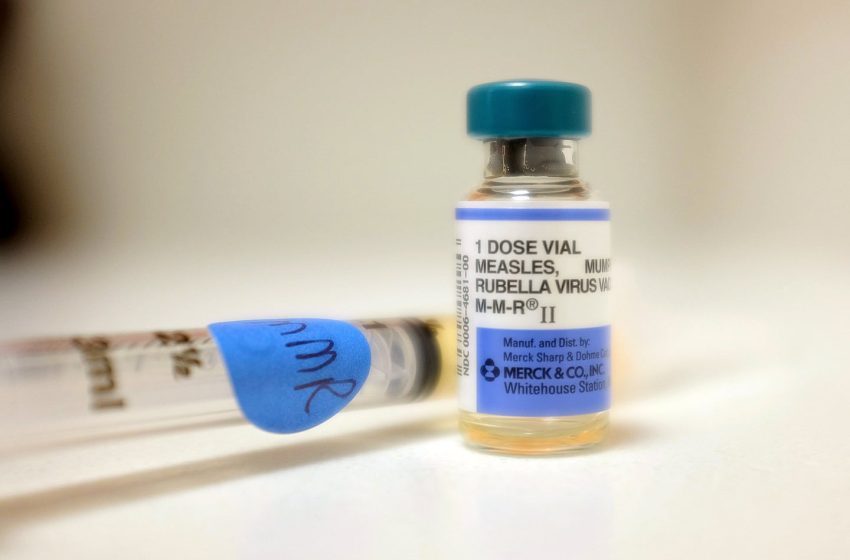
The American Academy of Pediatrics recommends most children receive their first dose of the MMR vaccine, which protects against measles, mumps, and rubella, when they are a year old and a second dose when they are between the ages of 4 and 6, which leaves many infants susceptible to infection.
More than 96 percent of the state’s kindergarteners are vaccinated against measles as of the 2024-25 school year, the most current data available.
But Massachusetts has pockets of low vaccination, particularly in western Massachusetts and on Cape Cod, according to state data.
A recent study from Boston Children’s Hospital evaluated the risk of measles outbreaks among children younger than 5. That study found vulnerability in the Greater Boston area, with some zip codes in or near the city at “high” risk.
One of the authors of that study, Dr. Benjamin Rader, scientific director of Boston Children’s Hospital’s innovation group, said the number of measles infections identified nationwide so far this year likely means Massachusetts will see additional cases in the near future.
“What these are is a signal that these are going to continue,” he said. “We should expect more of these importations into Boston.”
Jason Laughlin can be reached at [email protected]. Follow him @jasmlaughlin.
First Appeared on
Source link






