


‘Pushing this competition’: SpaceX’s Starship might not fly on NASA’s newly revamped Artemis 3 mission
NASA’s Artemis 3 mission will no longer land astronauts on the moon — and it might not involve SpaceX’s Starship megarocket, either.
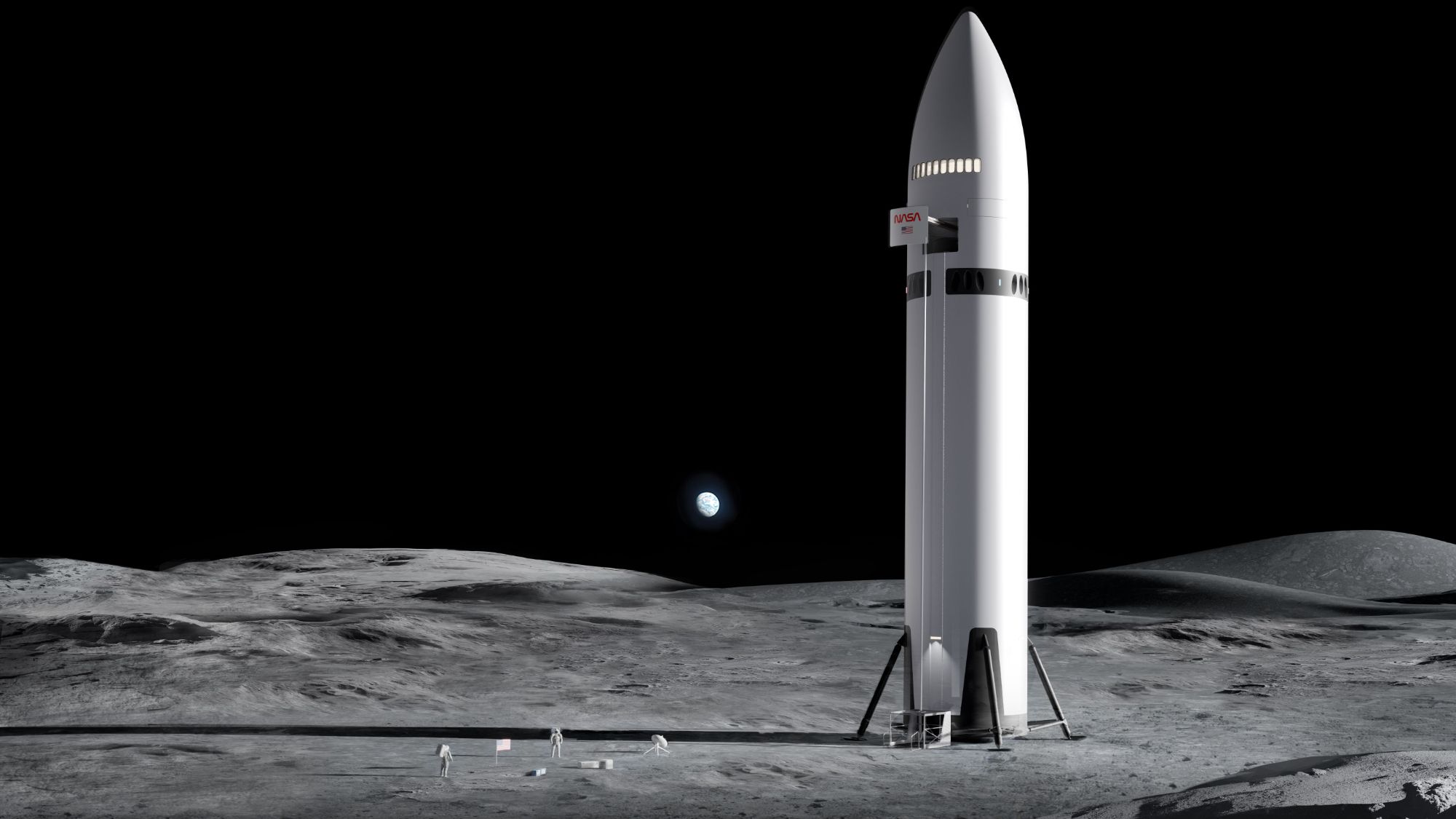
On Friday (Feb. 27), the space agency announced that it’s revamping the architecture of its Artemis program of lunar exploration. One of the biggest changes involves Artemis 3, which was originally supposed to land astronauts on the moon using Starship‘s upper stage.
NASA’s new plan launches Artemis 3 in 2027 but keeps it in low Earth orbit. The mission will aim to demonstrate a range of technologies and capabilities there, including a rendezvous and docking procedure between the Orion crew capsule and “one or both commercial landers from SpaceX and Blue Origin,” agency officials said in a statement on Friday.
Blue Origin, which was founded by Amazon’s Jeff Bezos, is developing a crewed lander called Blue Moon. That vehicle was supposed to carry NASA astronauts for the first time on Artemis 5, a lunar landing mission previously targeted for 2030.
But NASA has mused about pressing Blue Moon into service sooner than that. Last October, for example, then-Acting Administrator Sean Duffy announced that he planned to open the Artemis 3 landing contract to competition, explaining that he wasn’t satisfied with the pace of Starship’s development. (Starship has flown 11 test flights to date, and the most recent two were fully successful. However, the vehicle has yet to reach Earth orbit.)
Blue Origin was the only realistic competitor for that moon-landing gig. And it would appear the company remains in the running for the mission in its revised form, given the wording of Friday’s announcement.
“Otherwise, they could have simply said in this statement today that they’re going to dock the Orion with the Starship lunar lander and do their testing,” Don Platt, head of the Department of Aerospace, Physics and Space Sciences at the Florida Institute of Technology, told Space.com on Friday. “But they didn’t. They didn’t say that.”
Pace of development isn’t the only factor going into this decision, according to Platt, who also leads the university’s Spaceport Education Center.
“NASA does not want to have to rely on only one one contractor, either,” he said. “I think that’s why they’re really kind of pushing this competition between Blue Origin and SpaceX.”
Blue Origin appears to be leaning into the competition. In late January, the company announced that it’s pausing its suborbital space tourism flights for at least two years “to further accelerate development of the company’s human lunar capabilities.”
“The decision reflects Blue Origin’s commitment to the nation’s goal of returning to the moon and establishing a permanent, sustained lunar presence,” the company said in a statement at the time.
The revised Artemis architecture now envisions the first crewed lunar landing since the Apollo era to take place on Artemis 4 in 2028, with a possible second touchdown occurring that same year, on Artemis 5.
The new plans are part of a broader shift, which prioritizes a step-by-step approach and an increased launch cadence. (It’s been more than three years since the first — and so far only — Artemis mission lifted off; NASA is gearing up to launch the Artemis 2 crewed mission around the moon in a month or so.)
For example, NASA officials said on Friday that they want to keep flying Artemis’ Space Launch System rocket in a configuration as close to the current “Block I” as possible. Previously, Artemis 4 had been slated to use the “Block IB” variant, which would have featured a new, more capable upper stage.
The ultimate goal of Artemis is to establish a permanent, sustainable human presence on and around the moon in the next five to 10 years. NASA also wants to land the first Artemis astronauts before China puts boots on the moon, which the nation aims to do by 2030.
“With credible competition from our greatest geopolitical adversary increasing by the day, we need to move faster, eliminate delays and achieve our objectives,” NASA Administrator Jared Isaacman said in Friday’s statement.
“Standardizing vehicle configuration, increasing flight rate and progressing through objectives in a logical, phased approach, is how we achieved the near-impossible in 1969, and it is how we will do it again,” he added.
First Appeared on
Source link






