



I was paid $75,000 to carry a stranger’s baby – but there’s a dark side no one warns you about
When Briana Hernandez first watched her best friend struggle with infertility, she had no idea it would lead her to carry someone else’s child.
Now 31, the Arizona native who already had two children of her own said becoming a surrogate was ‘one of the most life-changing experiences’ of her life – and one that paid her up to $75,000.
But while she described the journey as beautiful and rewarding, she also warned of a dark side to the surrogacy industry that most people don’t see.
According to Hernandez, who now lives in Ohio, when surrogacy arrangements are not managed with rigorous ethical and medical oversight, the consequences can be devastating.
Surrogates may be left to care for children they never intended to raise, or face life-threatening complications during childbirth because they were not properly screened and should never have been approved to carry a pregnancy in the first place.
‘I would never tell someone not to be a surrogate,’ Hernandez told the Daily Mail. ‘If you’re in the right mental space, it can be completely life-changing. But there’s so much people don’t realize goes into it.’
Hernandez, who is a single mother, said her journey began after seeing someone close to her battle infertility. ‘I just watched one of my best friends struggle with conceiving,’ she said. ‘Around the same time, a girl I went to high school with had been a surrogate. I reached out to her, and after talking to her, I knew this was something I wanted to do.’
Unlike some perceptions of surrogacy, women must have already carried and delivered their own children before being approved by most reputable agencies.
When Briana Hernandez first watched her best friend struggle with infertility, she had no idea it would lead her to carry someone else’s child
‘They want to know your body can handle pregnancy,’ she said. ‘Intended parents are paying a lot of money – they need to know you’re capable.’
In the US, gestational surrogacy typically costs intended parents between $100,000 and $150,000 when medical procedures, legal fees, agency costs and surrogate compensation are also included. It varies by state and medical complexity.
While Hernandez conceived her own children naturally, becoming a surrogate required in vitro fertilization (IVF).
‘Basically, you have to trick your body into thinking it’s pregnant,’ she explained. ‘When you’re pregnant naturally, your body produces estrogen and progesterone. When you’re not, you have to take estrogen pills and progesterone shots every day.’
The embryo – created in a lab using the intended mother’s egg and father’s sperm – was then transferred to her uterus. ‘The baby is 100 percent theirs,’ she said. ‘I’m just carrying.’
Compensation varies widely by agency and state. Hernandez says first-time surrogates typically earn between $40,000 and $50,000, but her agency paid between $65,000 and $75,000.
‘All my medical expenses were covered. Travel was covered. I didn’t pay a dollar out of pocket,’ she said. ‘There’s also allowances for maternity clothes and things like that.’
But she insists money wasn’t her primary motivation. ‘Yes, there’s a financial aspect,’ she admitted. ‘But I wanted to make someone a mom who couldn’t do it herself.’

Hernandez, an Arizona native turned Ohio mom of two, says becoming a surrogate was ‘one of the most life-changing experiences’ of her life – and one that paid her up to $75,000
Despite carrying a baby for nine months, Hernandez says she never struggled with giving the child to his biological parents.
‘Not at all,’ she said when asked if it was difficult. ‘I never had any attachment like, “Oh, I want to keep him.” I went into it understanding this is not my baby.’
Both intended parents were present in the delivery room. ‘Dad cut the umbilical cord,’ she recalled. ‘The baby went straight to them for skin-to-skin. Watching them cry and become parents – it still shocks me when I think about it.’
She even shared a hospital room overnight with the new mother. ‘It felt like our last bonding moment before they took their baby home.’
But Hernandez says not all surrogacy stories are so positive.
‘I’ve had so many random people message me on social media asking me to carry their baby,’ she revealed. ‘No agency. No lawyers. Just someone off the street.’
That, she says, is where things can turn dangerous.
‘With a legitimate agency, there are contracts. There are lawyers. You’re protected,’ she said. ‘I’ve seen stories where surrogates got stuck with the baby because there weren’t proper legal agreements in place.’

Despite carrying a baby for nine months, Hernandez says she never struggled with giving the child to his biological parents
Reputable agencies also require intense screening. Hernandez underwent hours-long psychological evaluations, medical testing, financial background checks and even home reviews.
‘They look at your mental health. Your home. Your kids. Your entire life,’ she said. ‘And they do the same to the intended parents.’
Surrogates must typically fall within strict BMI guidelines, be between their early 20s and early 40s, have no major pregnancy complications in their history, and be financially stable enough not to rely entirely on government assistance. ‘There’s a reason for that,’ she added. ‘You’re being trusted to carry someone’s child.’
Surrogacy has come under renewed scrutiny in recent years – particularly when high-profile celebrities choose to grow their families with the help of a surrogate.
In early 2026, singer Meghan Trainor faced online backlash after revealing she had used a surrogate for her third child.
While Trainor cited medical reasons for her decision, critics accused her of opting for convenience and argued it clashed with her body-positive image. The debate quickly spread across social media, with some questioning whether celebrity surrogacy reinforces unrealistic expectations around pregnancy and postpartum bodies.
Reality star and entrepreneur Kim Kardashian has also been at the center of similar conversations. She welcomed her third and fourth children, Chicago and Psalm, via surrogate in 2018 and 2019 after experiencing serious pregnancy complications with her first two children.
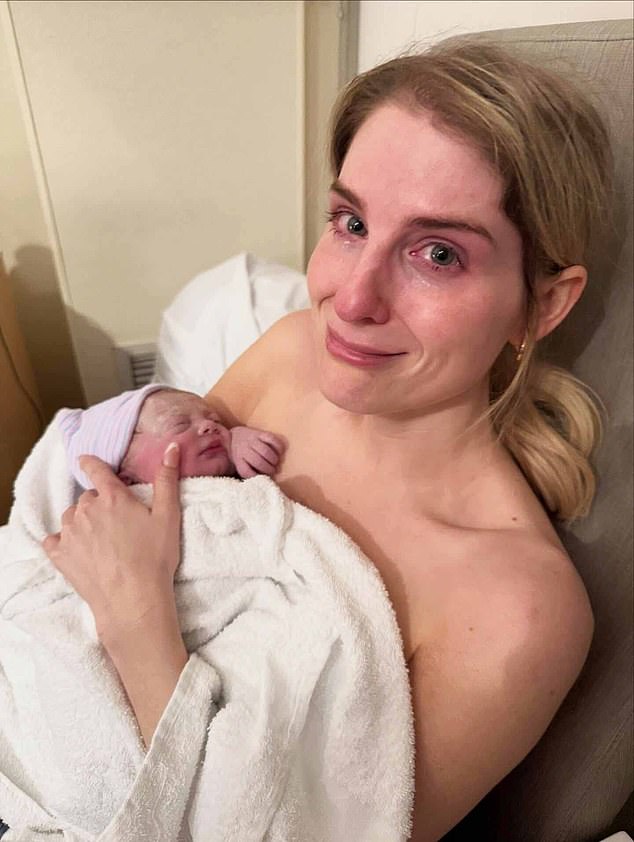
In early 2026, Meghan Trainor faced online backlash after revealing she had used a surrogate for her third child
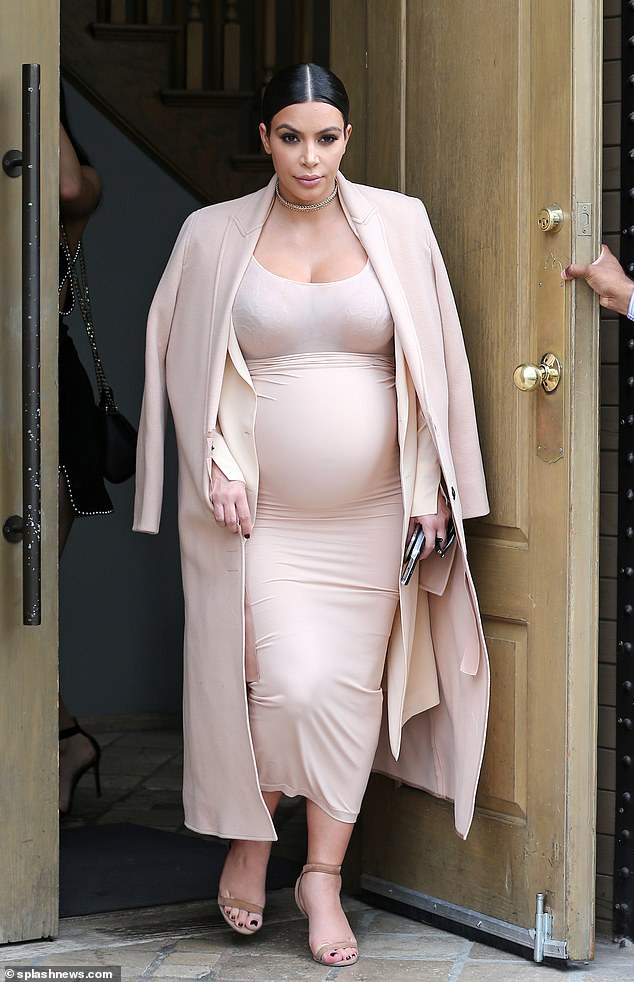
Kim Kardashian welcomed her third and fourth children, Chicago and Psalm, via surrogate in 2018 and 2019 (Kardashian is pictured in 2015 when she was pregnant with her second child, Saint)
Despite publicly discussing her medical struggles, Kardashian was still accused by some critics of ‘taking the easy way out’ to avoid the physical toll of pregnancy.
Beyond individual cases, critics argue that celebrity surrogacy highlights broader ethical concerns – including the commercialization of reproduction, the financial power imbalance between wealthy intended parents and the women who carry their children, and the emotional and physical labor that surrogates undertake, often out of the public eye.
Hernandez says she set clear boundaries about the types of intended parents she would carry for. ‘My preference was to carry for someone who medically couldn’t carry,’ she said. ‘I wouldn’t do it for someone who just doesn’t want to gain weight.’
Still, she acknowledges that every situation is different. ‘Pregnancy is hard,’ she said. ‘But for me, this was about changing someone’s life.’
For Hernandez, the experience left her with no regrets – only perspective. ‘People walk around with this child because of me,’ she said. ‘That’s incredible.’
But she’s quick to add that surrogacy isn’t a quick payday or a simple side hustle.
‘It’s physically hard. IVF is hard. The screenings are intense,’ she said. ‘You have to be mentally ready for all of it.’
Her advice? ‘Do it the right way. Protect yourself. And make sure you’re doing it for the right reasons.’
First Appeared on
Source link






