


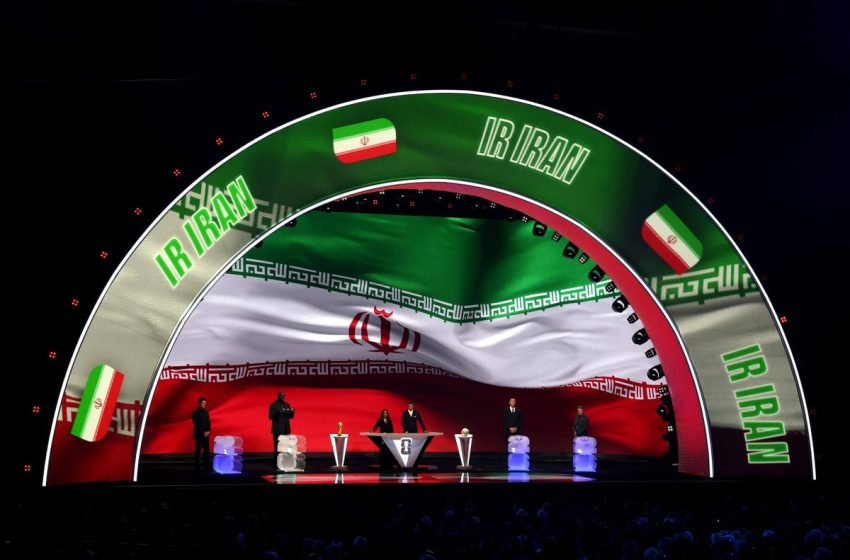
What happens if Iran do not play at the World Cup?
The ongoing U.S. and Israeli military strikes on Iran have plunged the Middle East into uncertainty.
The bombing of several major Iranian cities, which is “intended” to last “four to five weeks” if necessary, U.S. President Donald Trump told The New York Times, has killed the country’s supreme leader, Ayatollah Ali Khamenei, and also sparked retaliatory attacks.
In that context, the consequences for this summer’s men’s World Cup in the U.S., Canada and Mexico may seem trivial. Yet the events of the past 48 hours have raised questions about whether Iran will send a team to the tournament or if the U.S. government — which has already barred Iranian nationals from traveling to the States, though with an exemption for sports teams — would restrict Iran’s participation.
Mattias Grafström, general secretary of FIFA, football’s world governing body, said Saturday that, “of course, our focus is to have a safe World Cup with everybody participating.” And a FIFA source with knowledge of the matter told The Athletic Sunday that no plans have changed.
But the Iranian football federation’s president, Mehdi Taj, told local state media that, “after this attack, we cannot be expected to look forward to the World Cup with hope,” according to the Associated Press and several other translations. He said the “sports chiefs” would decide on participation.
The World Cup, which is owned and operated by FIFA, is set to begin June 11. Iran is scheduled to play all three of its Group G games in the U.S. — against New Zealand (June 15 at SoFi Stadium near Los Angeles), Belgium (June 21 at SoFi) and Egypt (June 26 at Lumen Field in Seattle).
So what happens if Iran can’t or won’t?
Why wouldn’t Iran participate? Could the U.S. government bar the team?
There are several potential reasons:
- Iran could essentially boycott the World Cup in response to the U.S. attacks.
- Several entities could decide that, for different reasons, the team’s participation isn’t safe.
- The U.S. government could also restrict their participation.
The Trump administration — both back in 2018 and over the past year — has repeatedly claimed that everyone, from teams to fans, is welcome at this World Cup. In a 2018 letter signed by Trump, a month before North America was awarded hosting rights, the president cited previous Olympics and World Cups in the U.S. and stated: “I am confident that the United States would host the 2026 FIFA World Cup in a similarly open and festive manner, and that all eligible athletes, officials and fans from all countries around the world would be able to enter the United States without discrimination.”
U.S. President Donald Trump and FIFA president Gianni Infantino are close allies (Mandel Ngan / AFP via Getty Images)
It’s not clear if the U.S. government has ever signed a binding guarantee, though, or if Trump would feel compelled to honor one. He has already barred travelers from Iran and three other World Cup-participating countries, with only limited exceptions for “any athlete or member of an athletic team, including coaches, persons performing a necessary support role, and immediate relatives, traveling for the World Cup, Olympics, or other major sporting event.” And in the fall, multiple Iranian delegates had visas denied ahead of December’s World Cup draw.
When asked why, Andrew Giuliani, head of the White House World Cup task force, said at the time that “every visa decision is a national security decision.” If FIFA wasn’t able to intervene and overturn those decisions, it likely couldn’t prevent the Trump administration from barring individuals or even an entire team before the tournament itself.
What happens if Iran pulls out?
If Iran were unable or unwilling to participate, FIFA regulations give the global soccer governing body broad discretion to call in a replacement team or adjust the tournament accordingly.
Article 6 of FIFA’s 2026 World Cup regulations, published last year, addresses cases of non-participation — but with little specificity.
Regulation 6.5 addresses “force majeure,” an irresistible force or unforeseen event: “If a Participating Member Association withdraws or a match cannot be played or is abandoned as a result of force majeure, the authorised FIFA organising body (including the Tournament Operation Centre) shall decide on the matter at its sole discretion and take whatever action is deemed necessary.”
Regulation 6.7 then states: “If any Participating Member Association withdraws and/or is excluded from the FIFA World Cup 26, FIFA shall decide on the matter at its sole discretion and take whatever action is deemed necessary. FIFA may decide to replace the Participating Member Association in question with another association.”
FIFA, therefore, would essentially have two broad options if Iran withdrew, either by choice or force. FIFA could cancel Iran’s games and tweak rules to treat Group G as a three-team group, or it could replace Iran with another nation’s team.
Finding a replacement, however, would be complicated by timing. It seems unlikely that Iran — as a country and as a national team — will have clarity on World Cup participation any time soon. With Trump pursuing regime change and power vacuums atop the country, experts believe that the World Cup implications of Saturday’s strikes are unclear in the near future.
Any withdrawal would therefore be relatively last-minute. FIFA and its chosen replacement would be scrambling to complete preparations, contracts and arrangements that typically take months to complete.
Which teams could replace Iran?
The multi-stage format of Asian World Cup qualifying makes choosing a replacement on merit tricky.
Iran qualified comfortably by winning Group A in Asia’s third qualifying round. Uzbekistan, the second-place team, also earned an automatic berth. The third- and fourth-placed teams, UAE and Qatar, went to a fourth round — where Qatar ultimately secured World Cup qualification. UAE, on the other hand, lost a playoff to Iraq who, with that win, earned a spot in another playoff — the intercontinental playoff in Mexico later this month.
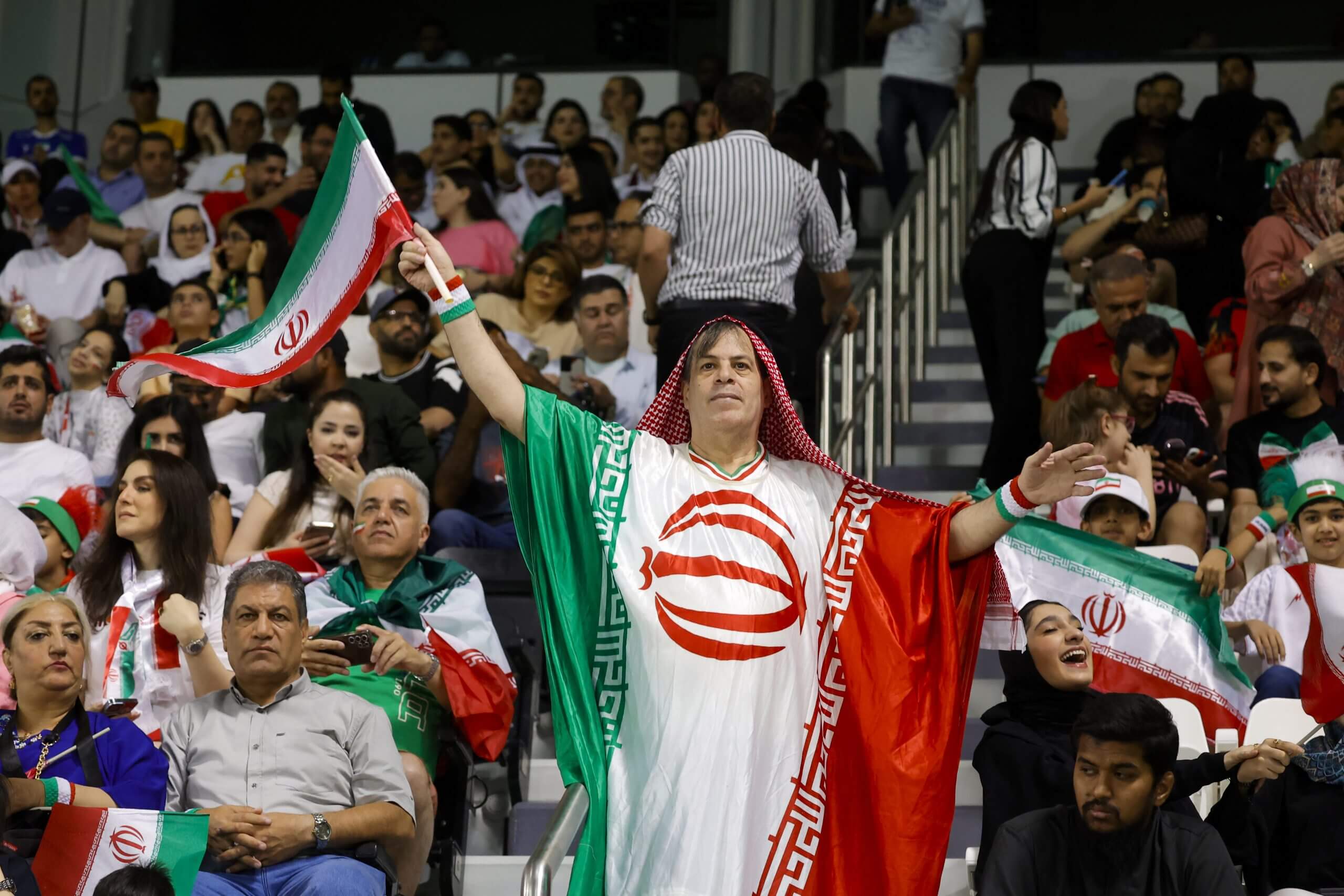
Iran fans celebrated World Cup qualification last year (Karim Jaafar/AFP via Getty Images)
Iraq will face either Bolivia or Suriname on March 31 near Monterrey, with a World Cup berth at stake. If Iraq wins that playoff, UAE would presumably be next in line as a potential replacement for Iran. If Iraq loses the playoff, either Iraq or UAE could be chosen.
Or, FIFA would look outside Asia. It could choose the intercontinental playoff loser (Bolivia or Suriname). Under FIFA’s own rules, it could do whatever it wants.
Is there precedent for replacement teams at World Cups?
There is no modern-era World Cup precedent. The last time countries withdrew from a World Cup after qualifying was 1950. That year, Scotland and Turkey pulled out before the draw, India and France pulled out after the draw, and the first post-World War II tournament was contested by only 13 teams — sorted into two groups of four, one group of three and one of two.
The most relevant modern precedent is the 2025 FIFA Club World Cup. Last March, less than three months before the novel tournament began, FIFA booted Mexican qualifier León, citing multi-club ownership rules. Appeals stretched into early May.
When the Court of Arbitration for Sport rejected those appeals, on May 6, FIFA — after discussing alternatives for months — announced that Club América (as the top-ranked Mexican team) and LAFC (as the team that lost to León two years earlier in the Concacaf final that originally earned León its place) would compete in a one-game playoff on May 31 for the last spot at the tournament. LAFC won the playoff and replaced León in Group D.
FIFA, in theory, could stage a similar playoff to replace Iran if necessary. The World Cup, though, requires significantly more logistical planning than the Club World Cup. Naming a replacement team with a few weeks of lead time would come with challenges.
Could the U.S. attack imperil the country’s hosting of the World Cup?
That’s unlikely.
Of course, there is no precedent for a World Cup host bombing a participating nation less than four months before the tournament. But there do not appear to be security concerns in the mainland U.S. stemming from the conflict.
And there have been no suggestions from anyone at FIFA that the governing body would consider relocating games as a penalty for the military assault. And there is no known regulation that would force FIFA to act.
Other countries could boycott, but international reaction to the attack has been mixed — far from the type of unanimous condemnation that would lead to meaningful calls for a widespread boycott.
First Appeared on
Source link






