


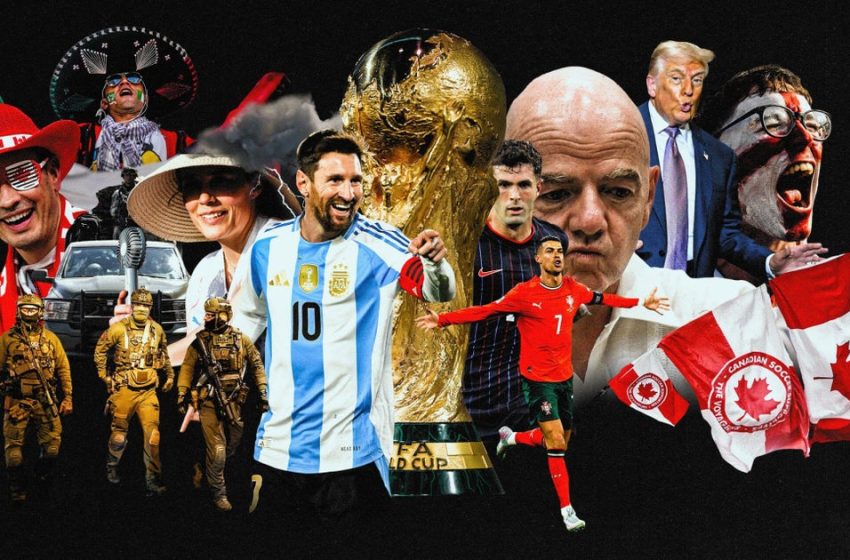
The World Cup is supposed to inspire hope and unity. This one feels different
Roll up, roll up for the greatest show on earth.
Tuesday starts a 100-day countdown to the biggest World Cup of them all: a 48-nation extravaganza, 104 games in 16 cities across the United States, Canada and Mexico over 39 days of what promises to be an unforgettable summer.
FIFA president Gianni Infantino is already calling it “the greatest event that humanity, mankind, has ever seen and will ever see” — and, in terms of the numbers, it really might be. Infantino claims six billion people, almost three-quarters of the world’s population, will engage with the tournament in one way or another and that ticket requests exceeded 50million in the first month of sales. “The world,” he has told FIFA’s media channels, “will stand still.”
Marvel at the enduring genius of Lionel Messi, Cristiano Ronaldo and Luka Modric, the goalscoring prowess of Erling Haaland, Kylian Mbappe and Harry Kane and the youthful brilliance of Pedri, Estevao and Lamine Yamal. Prepare to be amazed by the underdog stories of Curacao, Haiti, Cape Verde, Jordan and Uzbekistan.
And brace yourself for interference, for disruption, for turmoil and for an event that threatens to be even more politically charged than the last two men’s World Cups in Russia in 2018 and Qatar in 2022.
Where to start? Not so long ago, the greatest concerns about the tournament surrounded heightened tensions between the U.S. and its neighbours and co-hosts Canada and Mexico. Those fears were overtaken by the U.S. government crackdown on immigration, which raised the prospect of fans from four qualifying countries (Senegal, Ivory Coast, Haiti and Iran) being denied visas.
Then came President Donald Trump’s threat to annex Greenland, causing tensions with Denmark and much of the European Union. In January, two civilians, Renee Good and Alex Pretti, were killed by U.S. federal agents in separate incidents on the streets of Minneapolis, prompting widespread protests against the deployment and tactics of United States Immigration and Customs Enforcement (ICE) agents.
Last month saw an escalation in the battles between the Mexican government and drug-trafficking cartels, notably in Guadalajara, one of the tournament’s host cities.
An anti-ICE protest in Washington D.C. (Andrew Caballero-Reynolds/AFP via Getty Images)
Even to those who are accustomed to reporting on issues in the build-up to major sporting events, the scale of the turbulence has been alarming.
Saturday morning brought more shockwaves with the news that the U.S. and Israel launched a joint military operation against Iran, a series of air strikes that Trump said would “defend the American people by eliminating threats”. Iran responded with a series of strikes on U.S. military bases in Bahrain, Iraq, Jordan, Kuwait, Qatar, Saudi Arabia and the United Arab Emirates, deepening fears and tensions across the Middle East.
On Saturday evening, it was confirmed that Ayatollah Ali Khamenei, the country’s supreme leader, had been among many people killed in the strikes. It was followed by more strikes on Iran and more counter-strikes.
Now, where were we? Ah, yes, the World Cup. It will kick off on June 11, when Mexico take on South Africa in front of an 83,000 sellout crowd at Azteca Stadium. Canada will launch their campaign a day later in Toronto; the U.S. begin against Paraguay at the SoFi Stadium later that evening. But whether Iran will take their spot in Group G, along with Belgium, Egypt and New Zealand, is unclear.
An Iranian boycott might be welcomed in some quarters, but it speaks volumes that in January, some European football associations found themselves discussing a potential boycott scenario in case the Greenland situation should escalate over the months ahead. The German Football Federation (DFB) released a statement saying that a boycott was “currently not under consideration”, citing the “unifying power of sport and the global impact that a football World Cup can have”.
On the pitch, there is so much to look forward to. But there is so much cause for apprehension. “The greatest event that humanity, mankind, has ever seen and will ever see” is at risk of being consumed by geopolitical tension.
Scare stories before major sporting events are nothing new. Every recent men’s World Cup has been preceded by months of panicked reports about what awaits visiting fans. In South Africa in 2010 and Brazil in 2014, the reports were all about threats to personal safety away from the stadiums. Before 2018, in Russia, there were concerns about racism and hooliganism. The build-up to Qatar in 2022 brought a sharp and necessary focus on the conditions faced by migrant workers who had built the stadiums and infrastructure required to host the tournament, and LGBTQ+ rights in the country.
In some of those cases, concerns proved to be ill-founded. The greater anxiety surrounding the Russian World Cup in 2018 was that it effectively became a propaganda event, with Infantino fawning over Russian President Putin, accepting an “order of friendship” medal and telling the world, “this is a new image of Russia”. Within four years, FIFA had suspended Russia from its competitions until further notice after the country’s invasion of Ukraine — though Infantino has begun to talk of lifting that ban because he says it has achieved nothing and instead “created more frustration and hatred”.
Infantino says football’s and FIFA’s mission, showcased by World Cup tournaments, is to spread joy and unity. Last November, under its slogan “Football Unites the World”, the sport’s governing body announced the launch of its own “Peace Prize” to “reward individuals who have taken exceptional and extraordinary actions for peace”. Its inaugural winner, crowned at the World Cup draw in December, was Infantino’s “great friend” Trump.
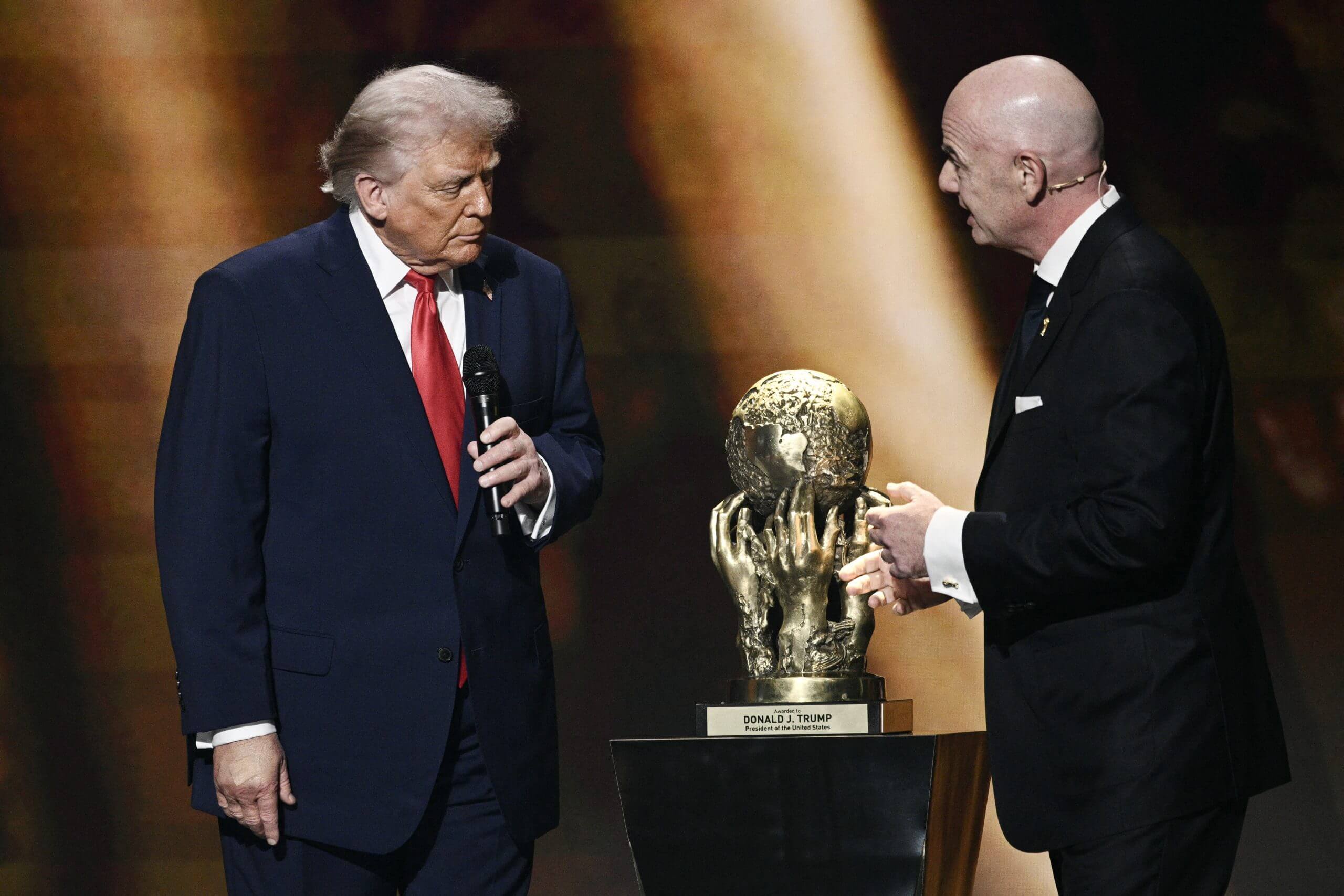
Donald Trump receives his Peace Prize from Gianni Infantino (Brendan Smialowski/ AFP via Getty Images)
Locally, regionally and globally, the political climate is so very different to that of a decade ago when the U.S., Canada and Mexico launched their “United” bid to host the 2026 tournament, pledging to “use sport to transform lives and communities”. The bid was built around three pillars: unity (three nations “united as one … more than neighbours, we are partners”), certainty (“low risk and operational certainty”) and opportunity (to “enhance and propel football forward for generations to come”).
That opportunity certainly exists: the expansion from 32 teams to 48 means more matches, even greater global interest, and an invitation to generate broadcast, commercial, and ticket revenue far beyond any previous tournament. Every World Cup ends up “bigger” than the one that went before. This one — in terms of attendances, viewing figures, engagement, sponsorship, revenue — is going to be off the scale.
But low risk? Operational certainty? Unity? None of those words spring to mind just now, with rising tensions on the streets, strained relations between the U.S. and Canada and Mexico and the global political climate growing ever more fragile. Throw in the astronomical prices of tickets, car parking and hotels, prompting claims that fans are being exploited, and warnings of potentially “catastrophic” security consequences if the 11 World Cup host cities in the U.S. do not receive funding that has been frozen during the partial federal government shutdown, and the picture becomes even bleaker — and that is before you get to the complications that could be posed by Iran withdrawing from the competition (something no nation has done since 1950).
The hope is that, once the football starts, the tournament offers an escape from all of that. “Football is — and unites in — hope. It unites in joy. It unites in passion. It unites in love, as well as in diversity,” Infantino declared at the FIFA executive summit in 2022 — and as much as the FIFA president’s words often grate, there is truth in that message.
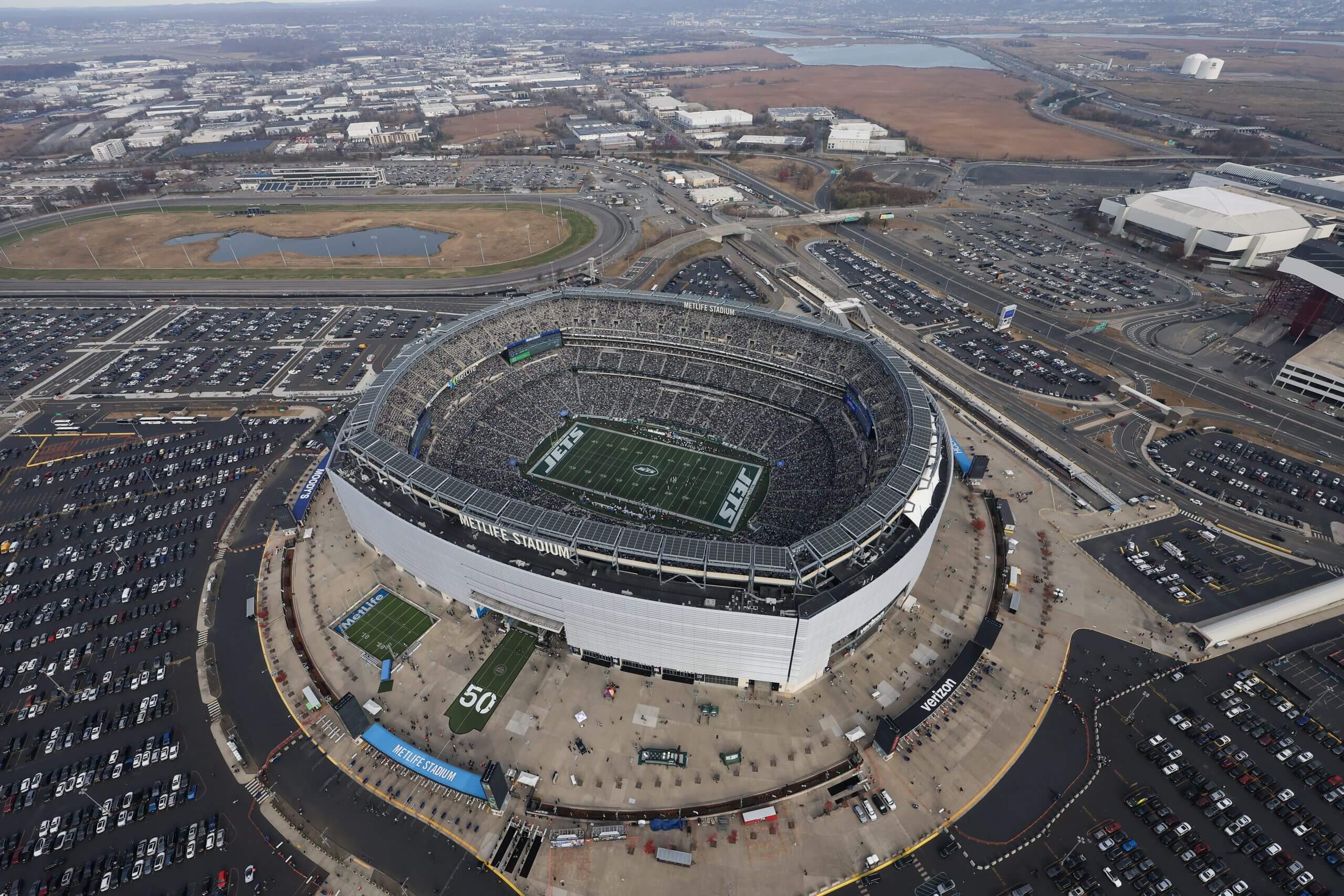
MetLife Stadium will host the 2026 World Cup final (Al Bello/Getty Images)
Geographically and emotionally, football brings people together. It reaches parts that other initiatives cannot. Anyone lucky enough to have attended a World Cup has stories to tell about the joy and conviviality they have witnessed. That opening game between Mexico and South Africa evokes memories of the scenes between those two countries’ fans at Soccer City in Johannesburg for the start of the 2010 tournament. The meeting of Brazil and Scotland in Miami on June 24 calls to mind images of supporters mingling and swapping jerseys and drinks in Seville in 1982 and Paris in 1998.
That is what the World Cup represents: passion, joy, togetherness. In a divided world, it offers an escape. This summer will see at least four nations (Cape Verde, Curacao, Jordan and Uzbekistan) appear on the World Cup stage for the first time and two of the game’s all-time greats, Messi and Ronaldo, do so for the last time. They will dream, like everyone else, that their campaign will end in glory at the MetLife Stadium in East Rutherford, New Jersey on July 19, with billions watching worldwide.
In terms of attendances, viewing figures and revenue, it will break all records. That is among the few certainties that surround a World Cup that will be far bigger than any other since the competition was launched in 1930. In so many other ways, there is uncertainty and apprehension as the clock ticks and the world, in a state of heightening anxiety, waits.
First Appeared on
Source link






