


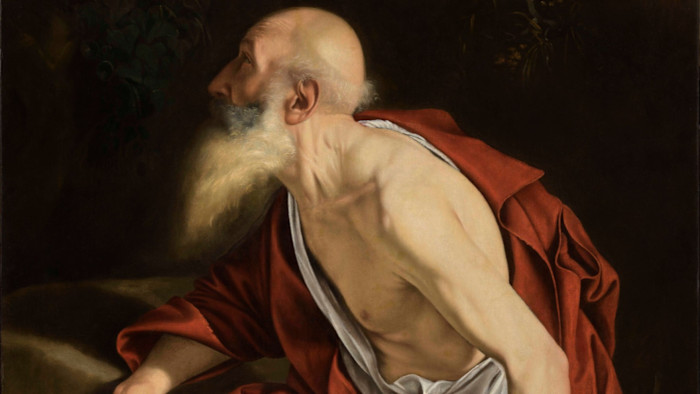
Can looking at this painting slow dementia?
As if his careers in politics, philosophy, engineering and the army were not enough, Benjamin Franklin also found time to invent the glass harmonica. Thirty-seven glass bowls of different sizes, arranged along an iron spindle and turned by a foot pedal, produced a quavering sound, much like the one made when running a wetted finger around a wine glass. When Princess Izabela of Poland had a nervous breakdown in London, and started composing teary lines of farewell to friends and family, Franklin nipped round with the instrument to cheer her up. “Madam,” he announced when he was done, “you are cured.” And up she leapt, her melancholy quite dispelled.
In the 250-odd years between then and now, germ theory, pharmaceuticals and public health measures have roughly doubled the human lifespan, which means our poor brains today have twice as many opportunities to go wrong. Alongside depression, a host of other conditions are increasing, many set later in life. In the UK, more than one in 10 of us now dies with dementia, and it seems drugs alone cannot halt the spectre of neurological decline.

Who would have thought that, at the end of our long road of medical progress, we would find Benjamin Franklin waiting for us, poised over his harmonica? And yet, at a summit on culture and public policy hosted by The European Fine Art Fair in Maastricht on March 16, a panel of experts will pay unconscious homage to Franklin as they set out what the arts can do to delay, soothe and manage our physical and mental decline.
In her recent book Art Cure, Daisy Fancourt — one of the speakers at the Maastricht summit — traces the history of the relationship between the arts, medicine and mental health. The absence of the arts in healthcare is, she reveals, a largely postwar phenomenon. We need only look back at the Victorian era, whose asylums could be, contrary to expectation, hotbeds of humane innovation. Hospitals in Dumfries and Montrose employed artists and maintained studios for painting, sculpture and woodcarving. Worcester City and County Lunatic Asylum employed Edward Elgar to compose dance sets specifically for its patients. In Germany, the Illenau “Cure and Nursing Home” maintained a house choir, a marching band, and chamber orchestra, hosted 140 performances a year, and published specially composed hymns for other asylums to use.
Fancourt, a professor of psychobiology and epidemiology at University College London, runs clinical trials to test the medical impact of the arts, and advises governments on how to integrate community support activities into their national health systems. The World Health Organization commissioned her to write an evidenced report on the arts and health. Published in 2019 and co-written with her colleague Saoirse Finn, it has been downloaded 250,000 times, says Fancourt, who is keen to talk up a new era of arts-based complementary healthcare. “This led to the realisation that this is not a niche thing.”

That thinking can expect some pushback. “If you’ve trained for seven years to be a doctor,” says Giles Wilmore, director of community for the chamber orchestra Manchester Camerata, “you don’t necessarily want to be told that somebody with a box of percussion instruments can achieve just as much as you can.”
But with a long career in the Department of Health and the NHS, Wilmore reckons that the clinical case for therapeutic arts is as compelling as the economic one. Social prescribing — an approach to healthcare that connects people to community-based activities — brings a return on arts investment of between £2 and £9 for every £1 invested, lowering demand on GPs and the pharmaceutical system.
It’s easy enough to capture what the arts can do for people with dementia. Camerata CEO Bob Riley recalls one woman who was brought in by her children, slumped and unresponsive, to one of the orchestra’s “music cafés”, where improvisational techniques are used to engage both clients and carers. “We were told she’d just come out of hospital, had barely eaten and hadn’t been out of bed for three weeks. The musician saw a gentle bouncing in her knee — a tiny thing, you almost wouldn’t have noticed it. The musician started mirroring that movement, and all of a sudden her head rises, she’s back in the room and her eyes are open. The flautist improvises on the shake in her knee — a tango-esque melody — and after five minutes she’s dancing around the room.”

This is touching, but what is art actually doing in these situations? “We went through a phase where we had a lot of laboratory experiments on arts activities that tried to dissect which element of an artistic intervention was responsible for which therapeutic effect,” Fancourt recalls. “But that was completely missing the point, which is that the arts offer the brain the equivalent of a whole-body workout.”
Fancourt is referring to art’s effects on the mesolimbic pathway, the neurochemical engine in the brain that keeps us engaged with the world through a dopamine reward system.
Whenever there’s a mismatch between what we expect and what we get, dopamine is released, encouraging the formation of new neural pathways. Music exploits this phenomenon on an almost bar-by-bar basis, since when we listen to a new song, our brains are constantly trying to guess where the melody is going, based on every other song we’ve heard. The trick is not to release dopamine into the brain haphazardly, rendering us all addicts to bovine pleasure, but to control the release of dopamine to promote its most therapeutic effects.
When we see waterlilies emerge from Monet’s seemingly chaotic canvases, aesthetic pleasure arrives on a wavelet of dopamine. By establishing some visual or auditory or narrative pattern and then violating it, art stimulates the release of dopamine in a measured and sustained manner that dopaminergic medicines cannot even begin to match. This is probably why artists often possess structurally “younger” brains, with greater grey matter density (thicker neural connections) than you would find in the brains of non-artists. It’s an effect that seems to resonate through the rest of the body. Adults who are active in the arts are biologically about 9.5 months younger than those who never engage.

More importantly, people with greater grey matter density, nurtured by arts involvement, may delay the onset of dementia symptoms by years.
The effects of the arts on the mesolimbic system makes them particularly useful in the treatment of that other great neurological scourge of our times, Parkinson’s disease.
In the UK, partly due to an ageing population and longer survival times, Parkinson’s is a serious and increasingly common contributory cause of death. Bas Bloem, professor of neurology at Radboud University in the Netherlands, argues that art acts as a “lever” that can help overcome the frozen, dopamine-depleted motor patterns associated with the disease. He is currently midway through a rigorously designed 18-month study comparing the experiences of three groups of people with Parkinson’s: a control group that isn’t exposed to art, a group that gets free trips to the Rijksmuseum, and a group that actively makes art.
His results will be analysed closely. One of the more curious findings in the field recently has been the discovery that enjoying art as a punter is quite as therapeutic — and maybe even more therapeutic — than making art. A large-scale study led by Monash University published in late 2025 followed more than 10,000 older adults and found that those who regularly listened to music had a 39 per cent reduced risk of developing dementia. Surprisingly, those who played an instrument had a slightly lower (33 per cent) reduced risk.
Another study last year, using Wisconsin Longitudinal Study data, asked the question: “How much art is enough?” It turns out that engaging in arts activities for up to one hour a week (painting, or playing an instrument, for instance) yielded cognitive benefits comparable to vigorous physical exercise. As Fancourt wryly observes in her book, “I’m really not convinced that the arts are so much less enjoyable than eating broad beans or sweating in the gym.”
She advocates for a future that values the arts as much as it values sport — as a social institution that sustains public health on a local, everyday level, even as it nurtures and celebrates elite excellence through our museums and concert halls. “We manage to have leisure centres and climbing walls and indoor skiing, just for the fun of it. And at the same time we have exercise-on-referral programmes and we integrate exercise into clinical care. And while all that’s going on we have Olympic-level training programmes. I feel we can surely get to that same point with the arts.”
March 16, tefaf.com
Find out about our latest stories first — follow FT Weekend on Instagram, Bluesky and X, and sign up to receive the FT Weekend newsletter every Saturday morning
First Appeared on
Source link






