


What the Keyboard Warriors Got Wrong About the U.S. Half Marathon Champs Fiasco
Updated March 3, 2026 06:23AM
Atlanta, GA – Sunday morning at the U.S. half marathon championships began the way race mornings are supposed to begin.
Cool but not cold. Crisp. Barely a whisper of wind. A sunrise that painted the skyscrapers in peach and gold as thousands of runners pinned bibs to singlets and jogged nervous strides along quiet streets that would soon belong to them. The marathon, half marathon, and 5K all open to the public had sold out. Spectators lined the sidewalks with coffee cups and handmade signs. Volunteers in neon vests smiled through their pre-race briefings.
For over an hour, it felt like a celebration of everything road racing can be: neighborhoods stitched together by barricades instead of divided by them, elites and everyday runners sharing the same asphalt.
And then the celebration crumbled.
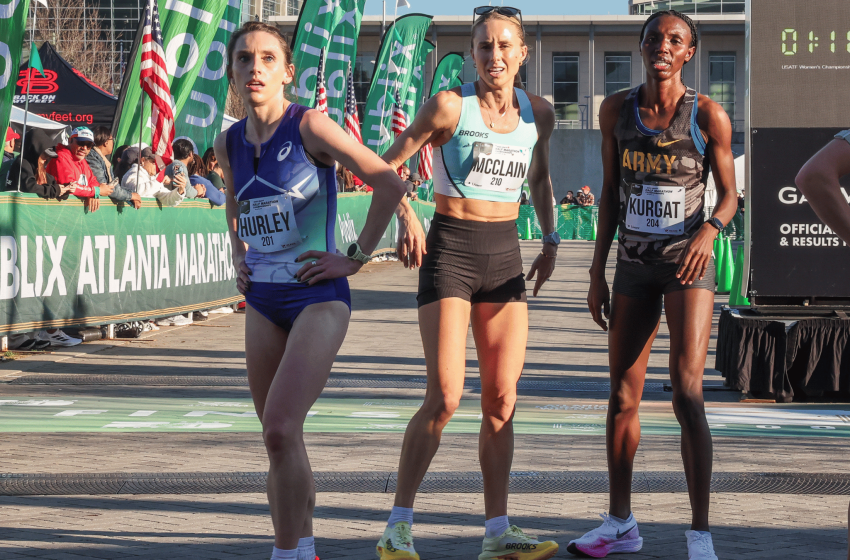
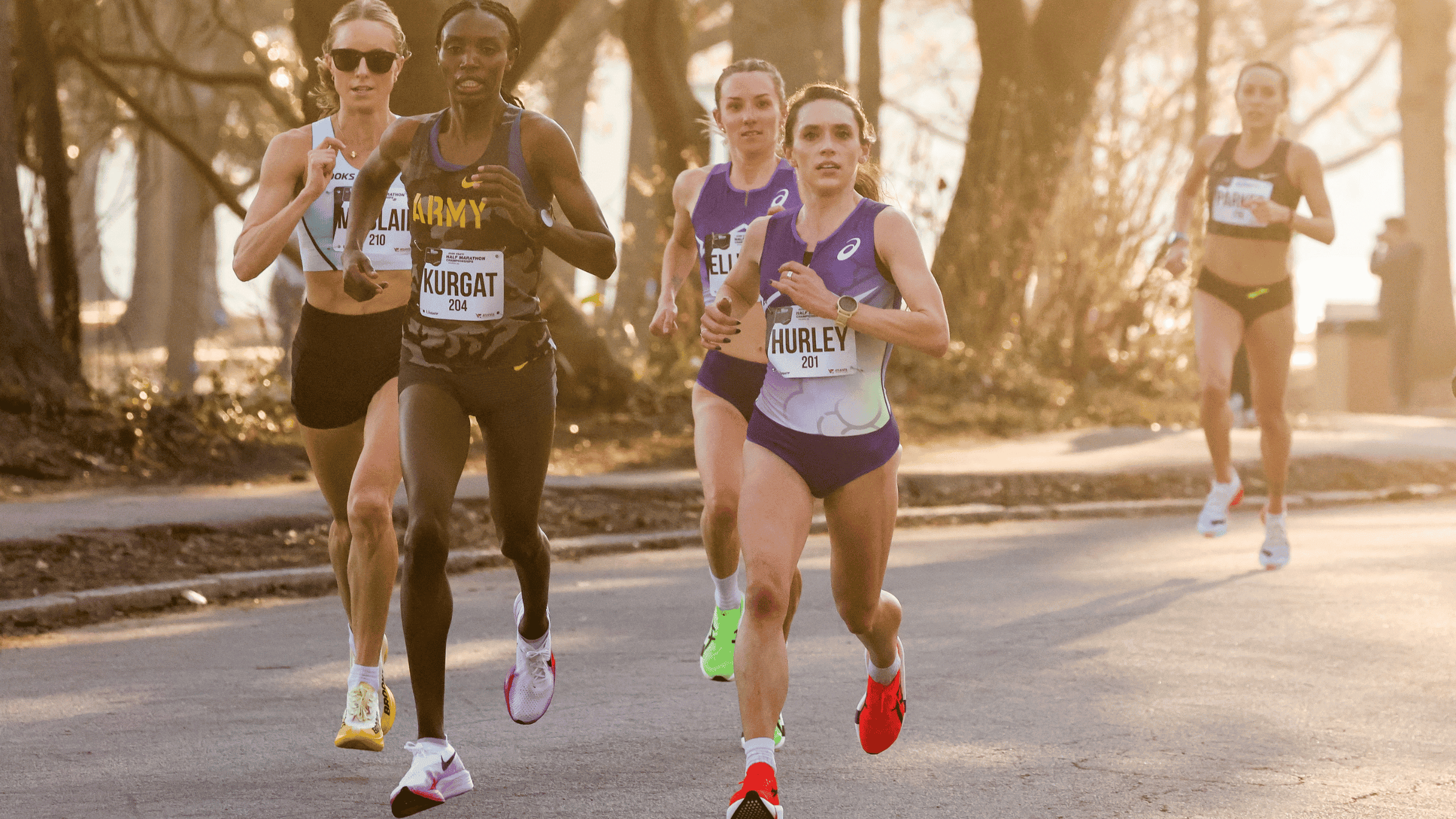
Jess McClain was at the front of the women’s U.S. Track and Field Half Marathon Championship with less than a mile to go when the lead vehicle led her off course. Emma Grace Hurley and Ednah Kurgat, running in second and third about 50 meters back and well ahead of the chase pack, followed.
McClain ran for about 80 seconds, or half a kilometer, in the wrong direction before pulling a sharp u-turn to retrace her steps and reconnect with the course. Ultimately, the three leaders ran about an additional kilometer—close to three extra minutes—finishing 9th, 12th, and 13th. A visibly peeved McClain stopped the clock 1:44 behind a confused Molly Born, who crossed the line first.
Breaking the tape came with a lot more than bragging rights—$20,000 for the win (and ostensibly more in sponsor bonuses), plus automatic entries for the top three finishers to the World Athletics Road Running Championship in September.
Understandably, athletes, coaches, and fans wanted answers and solutions. And they wanted them immediately. Within a few hours, U.S. Track and Field, the sport’s national governing body, put out a statement saying an appeal had been denied, there is “no recourse within the USATF rulebook to alter the results of the finish,” and “any questions pertaining to the course and vehicle should be directed to local organizing committee, Atlanta Track Club.”
The statement also said the world’s team will not be officially selected until May.
A few hours later, Rich Kenah, CEO of the Atlanta Track Club, issued a statement. “As race director, I take full responsibility for what occurred,” he wrote. “We are conducting a full review to determine exactly how and why the vehicle left the course to strengthen safeguards moving forward. Atlanta Track Club will make best efforts to ensure the affected athletes — Jess McClain, Emma Grace Hurley and Ednah Kurgat — are made whole.”
To Be Clear, No One Wanted This
A few keyboard warriors (erroneously) blamed McClain for not memorizing a race course with over 30 turns on major city streets. Most understood the stress of making that split-second decision as officials pointed her the wrong way. Many were quick to point fingers at USATF and the Atlanta Track Club.
It’s fair to call it a debacle. It’s also fair to ask what happened and why. And it’s fair to ask that reparations be made to McClain, Hurley, and Kurgat. But there is another truth that deserves equal space.
USATF officials did not wake up wanting this outcome. Leadership at the Atlanta Track Club did not wake up wanting this outcome. No race director, volunteer captain, official, or board member gathers a city at dawn hoping for chaos. They gather hoping for joy.
The Atlanta Track Club has built one of the strongest road racing communities in the country. Year after year, it closes streets, mobilizes thousands of volunteers, and produces events that bring together professionals chasing national titles and first-timers chasing personal dreams. It hosted the 2020 Olympic marathon trials, paying for travel and lodging for all 700-plus athletes. For the past 56 years, it’s also hosted the Peachtree Road Race, the largest 10K in the world.
No race director, volunteer captain, official, or board member gathers a city at dawn hoping for chaos. They gather hoping for joy.
USATF, meanwhile, has the unenviable job of governing championships across disciplines, distances, and cities. On the exact same day, it was overseeing the U.S. indoor track national championships in New York. These institutions are made of people. People who care. People who lose sleep over details most of us never see.
It is easy, in the age of instant reaction, to armchair referee.
From the couch or the comment section, everything looks obvious. Someone should have noticed. Someone should have double-checked. Someone should have communicated sooner. And yes, there will be legitimate process questions that need answers. That accountability matters.
As someone who’s been on both sides—I’m a member of the Atlanta Track Club and volunteer at events, and I’ve also competed for the U.S. on world championship teams—I’m saying it’s worth remembering that road racing is a choreography of moving parts that would make air traffic control blush: police escorts, course marshalls, timing mats, lead vehicles, split clocks, broadcast teams, hydration stations, volunteer waves, athlete check-in, qualification standards, championship overlays on top of mass participation fields. All of it unfolding across miles of public roadway in real time.
Perfection is the goal. Perfection is not the guarantee.
In a Sport About Speed, It’s Time to Slow Down
The women in this race deserved a flawless stage. Instead, they received one that was flawed deeply. They deserved certainty and fairness, and now they deserve clarity and equity. When it comes to the prize money and world championship spots these women lost, hopefully USATF officials will think about the spirit of its laws rather than simply the literal laws themselves.
The women in this race deserved a flawless stage. Instead, they received one that was flawed deeply. They deserved certainty and fairness, and now they deserve clarity and equity.
And yet even in the confusion, what stood out was not anger but resilience.
“This truly sucks for everyone involved,” McClain wrote on Instagram after the race. “No one wants this outcome, ever. Mistakes happen & I am sure those who were leading us feel terrible about the outcome. I just hate that the athletes are ALWAYS the ones who pay the price (literally $$$)… time & time again.”
Carrie Ellwood, who was in fourth when she also took the wrong turn and ultimately finished second, shared a similar sentiment: “Walking away sad and frustrated at how the morning played out for the women ahead of me who rightfully deserved a spot on the podium and all the joy that comes with that.”
Born put it bluntly: “I want everyone to know that I do not feel like the winner of the 2026 USATF Half Marathon Championships, because I know I should not actually be the winner,” she wrote on Instagram. “If a spot on the world team for Copenhagen is offered to me, I do not plan to take it regardless of who it goes to because I did not fairly earn it.”
These women are professionals. They adapted as best they could. They competed through uncertainty. They finished with the grit that defines championship racing in the first place, and they’ve responded with the grace of champions.
That matters.
It also matters that the broader race still accomplished something powerful. I was pacing the 3-hour group in the marathon, and I witnessed thousands of runners complete their half marathons and marathons. Families and friends reunited in finish-line hugs. First-timers crossed into new identities. Veterans added another medal to a drawer that tells a lifetime story. The city saw itself in motion. For most participants, the morning still felt like what it was intended to be: a celebration of achievement and community.
There is a risk, in moments like this, of allowing one failure to eclipse everything else around it. The narrative becomes singular and oversimplified. The discourse becomes accusatory. The goodwill built over years evaporates in less than a kilometer.
Grace does not mean silence. Grace does not mean excusing mistakes. Grace means recognizing humanity in the midst of them.
USATF and the Atlanta Track Club will review what happened. They will analyze procedures. They will meet with athletes. They will adjust. They have to. Championship integrity demands it. But learning requires space. Improvement requires humility, not public humiliation. One of these things feels rare in our country right now; another we have in surplus.
Improvement requires humility, not public humiliation.
There is a broader cultural tension at play. We expect excellence, and rightly so. We also demand it instantly, publicly, and without error. When institutions and people fall short, we rush to assign blame before we fully understand the chain of events. The speed of reaction often outpaces the speed of facts.
On Monday morning, news broke that a retired deputy working the race was hit by a car just after 8 a.m., about 100 yards from where the wrong turn occurred. I’m absolutely not suggesting there is a connection between this accident and the wrong turn, but I am saying we don’t yet know the whole story of what transpired on the streets of Atlanta on Sunday morning.
Running, at its best, teaches a different rhythm. It teaches patience. It teaches that improvement is iterative. You review the workout. You adjust the plan. You come back stronger next cycle. You do not throw away the entire season because one race went sideways.
The work ahead is clear. Transparency from organizers. Justice for the athletes wronged. Concrete steps to ensure championship races yield fair results. That is the responsibility of governing bodies and local hosts alike.
The work for the rest of us is also clear. Advocate for fairness without dehumanizing those responsible. Ask hard questions without assuming bad faith. Hold institutions accountable while recognizing they are staffed by people who care deeply about getting it right.
Sunday was not perfect. It was messy. It was disappointing in ways that sting and have financial and career-altering consequences.
But it was also human.
And if the running community can do anything well, it is coming back the next morning, lacing up again, and choosing to build something better from the miles behind us.
Editor’s note: Allison Mercer is a member of and volunteer for the Atlanta Track Club as well as a USATF member. She has qualified for Team USA at the ultrarunning world championships in the 50K and 100K and was a runner-up at a U.S. 100K national championship.
First Appeared on
Source link






