


Leaving ‘Top Chef’, ‘America’s Culinary Cup’
Padma Lakshmi didn’t think she’d ever return to cooking competition shows. In 2023, when she stepped away from the Bravo touchstone “Top Chef” after hosting for 19 seasons, Lakshmi was “burnt out” and ready to focus on other projects — like “Taste the Nation,” her Hulu travel series tracing American foodways, and its accompanying cookbook “Padma’s All American,” released last fall. “I just needed to be challenged and do something bigger, to be honest,” Lakshmi says.
But then CBS Entertainment president Amy Reisenbach took Lakshmi out to dinner and started asking questions. “What if you could do it your way? What if you could have total control? What if we gave you all the things you needed to go out and make the show you wanted?” Lakshmi remembers her asking. Over more than a year, Reisenbach “just wore me down.”
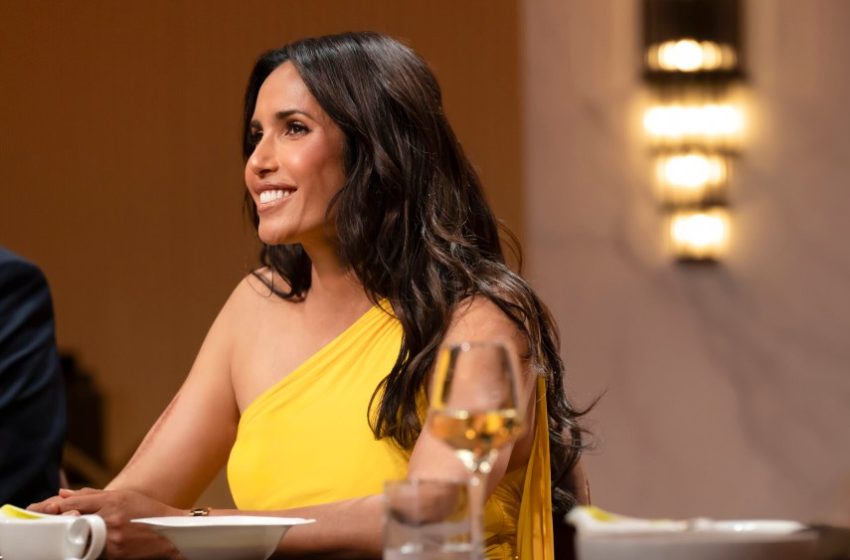
Lakshmi’s answer to those queries is “America’s Culinary Cup,” which she calls “the biggest swing of my professional career.” Unlike “Top Chef,” where she was initially a hired hand and grew into an executive producer, Lakshmi built the show — which premieres on CBS on March 4, just five days before the season premiere of “Top Chef” — from the ground up alongside her producing partner Susan Rovner, a former NBCUniversal Chairman Lakshmi knew from her time at Bravo. The pair hadn’t worked together directly, but reconnected after hitting it off over a meal in L.A. “If I have the ability to choose,” Lakshmi says of starting a series from scratch, “I’m going to work with people I not only respect and admire, but who are fun and make it fun.”
Courtesy of CBS
“This is Padma’s vision,” Rovner says of “America’s Culinary Cup,” and the producer sees her role as helping bring that vision to life. By liaising with the network, overseeing the budget and handling other production duties, Rovner freed Lakshmi up to “really focus on the creative and be the boss that she is.” After being so hands-on with “Taste the Nation,” where she supervised everything from color correction to sound mixing, Lakshmi recalls, “I didn’t want to go back to just being talent.”
So she threw herself into a show she describes in unapologetically ambitious terms. Lakshmi’s goal with “America’s Culinary Cup” is nothing less than to “create a new institution,” one she compares not just to culinary gauntlets like the hallowed Bocuse D’Or but to athletic ones like the Olympics or Wimbledon. She’s doing so on a platform far more mainstream than Bravo’s coastal elite catnip, with a potentially bigger reach. CBS is where the NFL is, and that’s the kind of blue chip brand Lakshmi wants “America’s Culinary Cup” to become. And she’s offering a cash prize of $1 million, the largest in the history of the cooking competition genre.
“That’s something Padma was adamant about from the beginning,” says showrunner Josh Silberman, whose past reality credits include “Fear Factor” and “Double Dare.” “A million dollars brings chefs out of the woodwork that would never compete in any other cooking show.” The prize, furnished by presenting sponsor Dawn Powerwash — luckily, smooth delivery of product placement is old hat for Lakshmi — is also a statement of purpose for the first cooking show to air on CBS in over a decade.To sell the Eye’s viewership on a relatively unfamiliar setup, Lakshmi and Rovner wanted to frame “America’s Culinary Cup” as a kind of sporting event. “I thought it was important to put in a little hint of ‘Big Brother’ and a little dash of ‘Survivor,’” Silberman says, citing CBS series known for their gamesmanship. “Adding that helps the CBS audience to find something recognizable, yet still culinary-based.” In the premiere, safe contestants are tasked with pairing up their peers for head-to-head elimination matches, adding an element of strategy to what’s otherwise a test of their kitchen skills.
Surprisingly, Lakshmi doesn’t shy away from comparisons to “Top Chef,” both explicit and implied. Lakshmi is not a regular watcher of reality competitions, a preference she attributes to the genre’s reliance on restrictions: “They seem to all put obstacles in the way of chefs, or have gimmicks or tricks. You can only use this equipment, or you have to fight for this. All these concocted ideas.” For her own take, Lakshmi asked herself, “What if I gave these chefs everything they could ever want to do their job well?” Every contestant was given a state-of-the-art work station on the Toronto set as well as access to a top-of-the-line pantry stocked with edible flowers and quail eggs. Lakshmi even labored over the shape of the studio, citing studies that conclude rounded shapes facilitate focus and creativity. As a result, the “America’s Culinary Cup” shape is oval and cornerless, in contrast with the rectilinear arrangement standard for most game shows.

Courtesy of CBS
“I didn’t want them to have to run around some grocery store,” Lakshmi says — perhaps an allusion to the breakneck sprint through Whole Foods that’s a staple of “Top Chef.” Nor did Lakshmi want a fixed, predictable format that might not display the full range of chefs’ abilities, citing her former show’s Quickfire challenge. “America’s Culinary Cup” shifts shape from episode to episode; no sooner have the chefs settled into the studio than they’re shipped off to a farm for a team butchery race. “Chefs in this country have been through an awful lot, especially with the economy and COVID,” Lakshmi says. “So I wanted to show how hard the work of being a world renowned chef is.”
Instead of imposing limitations to that end, Lakshmi wanted to test the inaugural group of 16 contenders, including “Top Chef” alum Buddha Lo and Bocuse D’Or gold medalist Matt Peters, on 10 “culinary commandments,” ranging from basic building blocks (vegetables and dessert) to more abstract concepts (“sustainability” and “innovation”). Lakshmi and her fellow judges, molecular gastronomy pioneer Wylie Dufresne and Michelin-lauded chef Michael Cimarusti, grade dishes using a numerical rubric. The hope was to avoid the ambiguity Lakshmi experienced on “Top Chef,” where viewers only see judges’ edited, subjective feedback, and instead create the feeling of a sporting match with stats to obsess over and a family-friendly appeal. Lakshmi has fond memories of her grandfather breaking down cricket players’ performance by hits and runs, and hopes “America’s Culinary Cup” can have a similar draw.
“It’s going to take some time,” Lakshmi admits of her lofty aims for the show. To turn the title of cupholder into something worth pursuing for the prestige, and not just the eyebrow-raising cash prize of $1 million, “I knew that I would have to prove what this arena was going to be.” But she sees a path to getting there — one that combines food world bona fides even more elite than those of “Top Chef” with the “calling in” of a broader audience.
“Yes, it’s very high-end cooking. When you hear us discussing the food, you may not know what a yuzu kosho is, and it’s my job to bring the audience into that,” Lakshmi says. “My task was to build our show in a way that was clear that it was reaching for the best of the best — but at the same time, making what they were doing very approachable.”
Of course, Lakshmi’s familiar, trusted screen presence is part of that undertaking. But so is designing the set, vetting the contestant pool and developing the concept, from pitch to final cut. “So much of what was engrossing to me about working on and developing this show was not on camera,” Lakshmi says. “That was the least interesting part.”
Correction: An earlier version of this story misstated Silberman’s first name and credits.
First Appeared on
Source link






