


Rare Baby Dinosaur Fossil Found in Canada, It’s a Game-Changer for Paleontology
Now, a newly discovered juvenile fossil provides the first glimpse of a pachycephalosaur body, offering scientists a clearer picture of how these dinosaurs moved and matured in their earliest months of life.
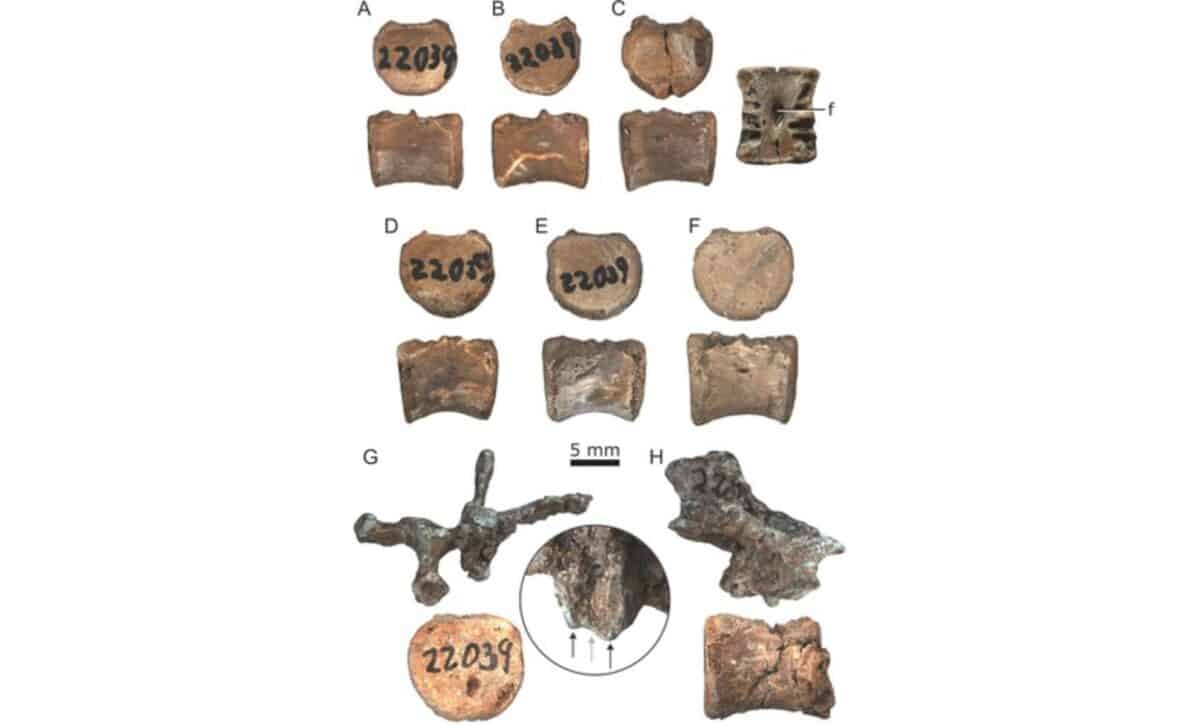
The specimen, cataloged as CMNFV 22039, was found in the Frenchman Formation of southern Saskatchewan, Canada. This discovery is significant for several reasons. Not only does it represent the youngest known example of pachycephalosaur skeletal remains, but it also offers rare insight into how these dinosaurs developed in their early stages.
According to the researchers, much of what we knew about these creatures came from skulls, with little known about their postcranial anatomy, particularly during juvenile growth stages.
Breakthrough in Understanding Pachycephalosaur Development
Pachycephalosaurs were small, bipedal dinosaurs that lived during the Late Cretaceous period, between 85 to 66 million years ago. These dinosaurs are most famous for the distinctive dome-shaped skulls formed by fused frontal and parietal bones. However, due to the skull’s durable nature, the fossil record of pachycephalosaurs has mostly consisted of these cranial remains, leaving scientists with limited information on their bodies and development. The newly discovered fossil, CMNFV 22039, is about 67 million years old and offers an unprecedented look at the skeletal remains of a pachycephalosaur that was likely under a year old when it died.
According to paleontologist Bryan Moore and his team, CMNFV 22039 is only about 90 cm long (about 3 feet in total length) making it the smallest pachycephalosaur with postcranial material available for study. Despite its small size, the juvenile fossil shows several characteristics that are typical of the adult pachycephalosaurs, such as a long, proportionally developed set of hindlimbs. This finding challenges previous assumptions about how these dinosaurs grew, suggesting that even young pachycephalosaurs may have displayed some adult features earlier in life.
Insights into Juvenile Locomotion
One of the most striking features of CMNFV 22039 is the relatively long hindlimbs compared to its body size, a trait that suggests the juvenile was built for speed. According to Moore’s team, this indicates that the young pachycephalosaur may have been more cursorial, or speed–oriented, in its early life, a trait that would have helped it escape predators or catch prey. This juvenile form is quite different from the stockier, more robust build of adult pachycephalosaurs, whose bodies appear to have become shorter and heavier as they matured.
The discovery of these proportions provides crucial information about how juvenile pachycephalosaurs moved. Moore suggests that the relatively long hindlimbs would have facilitated faster movement, a notable adaptation that contrasts with the more ponderous and defensive posture seen in adult individuals. This insight helps paleontologists better understand how these animals grew and developed their unique physical traits, like their dome-shaped skulls, over time.
Rewriting the Juvenile Dinosaur Narrative
Before this discovery, the juvenile form of pachycephalosaurs was largely unknown, with adult cranial fossils being the primary source of information. The lack of postcranial fossils for younger dinosaurs left many questions unanswered about their early growth and behavior. The CMNFV 22039 fossil is now setting the record straight, revealing that juvenile pachycephalosaurs were already exhibiting characteristic features of their species long before they reached adulthood.
Histological analysis of CMNFV 22039’s bones supports this conclusion, showing evidence of rapid growth typical of a young dinosaur. The bones exhibit a highly vascularized, woven bone texture, a sign of the fast bone deposition seen in rapidly growing animals. There are also no signs of secondary bone remodeling or growth marks that would suggest the dinosaur lived long enough to form them, further indicating that it died at an early, pre-adult age. This new perspective on dinosaur development opens the door to future studies of other juvenile specimens, potentially rewriting much of what we thought we knew about the early life of these remarkable creatures.
CMNFV 22039 offers paleontologists a rare and valuable look at the juvenile form of a pachycephalosaur, changing how we understand the growth and locomotion of these ancient dinosaurs. As more of these fossils are uncovered, scientists can refine their understanding of dinosaur development, offering new insights into the evolution of some of the most unique creatures that ever walked the Earth.
First Appeared on
Source link






